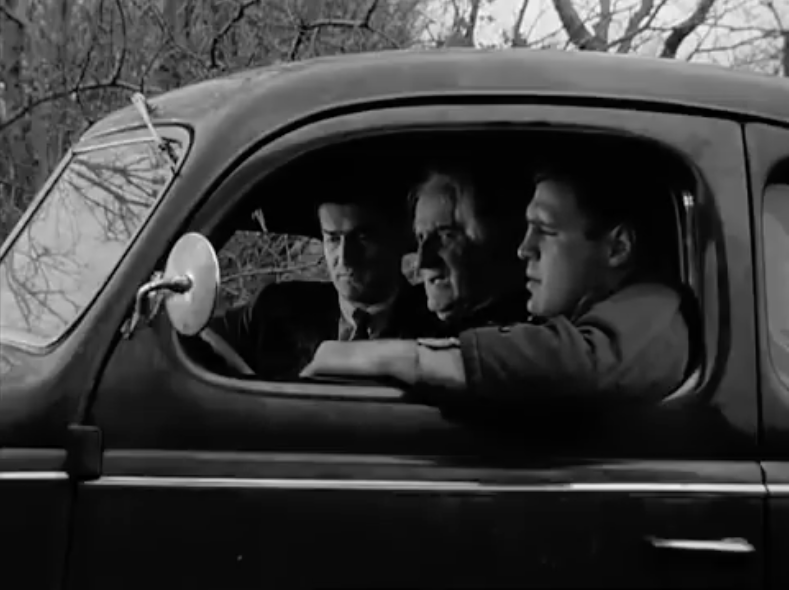
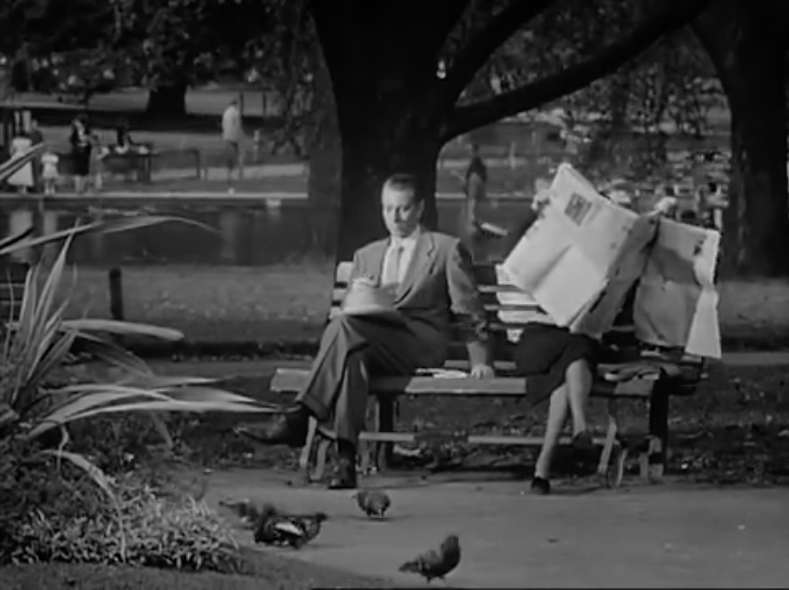
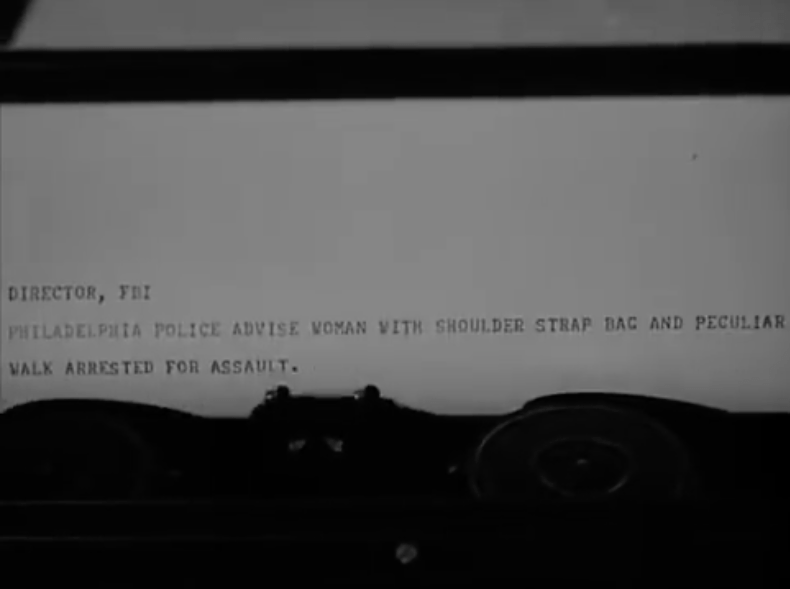
This Noirvember film is an odd one (but can I really call anything odd after Pillow of Death? And yes, I am going to keep bringing it up). It is, I would say a proper(-ish) spy film, with the War background and all the possible European connections. It was allegedly inspired by J. Edgar Hoover’s article about the Rosenberg Case but the film is pretty vague about what actually are the details of the espionage being carried out.
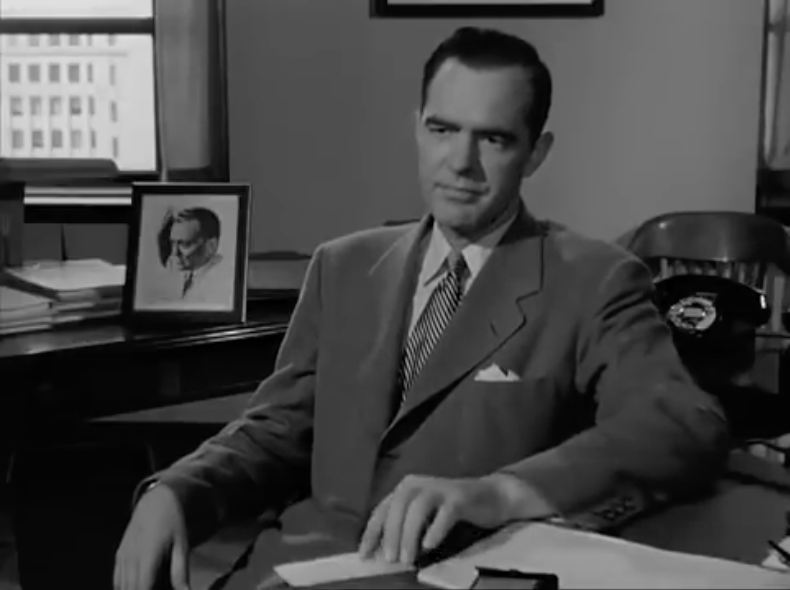
Walk East on Beacon was directed by Alfred L. Werker and stars George Murphy, Finlay Currie, Virginia Gilmore, and Karel Štěpánek.
The film begins with a fairly long introduction through voice-over where we learn that the story was „recorded from recorded experiences of the FBI”. Essentially, we follow an agent tasked with finding out who among the higher-ups is the spy working for the Communists. Top secret missions and high-tech solutions happen. A lot of characters are introduced, I did not care for a single one of them. The end.
This is essentially a red scare film. Maybe it’s me being European (or just me realizing that for VERY MANY PEOPLE the US was not exactly the utopia the film insists it was) but those are not exactly my cup of tea. And the politics of the film aside, Walk East on Beacon is just not that exciting of a story. And with it being a spy film one would expect more. I guess you could make the case that this lack of dramatization is a deliberate choice, since it is supposed to look like a documentary, but I was not convinced.
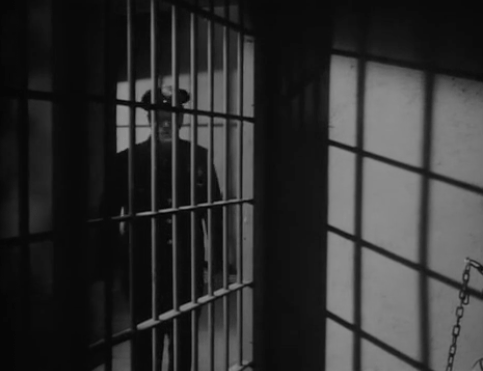
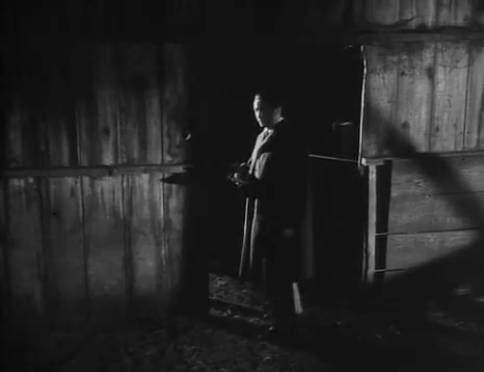
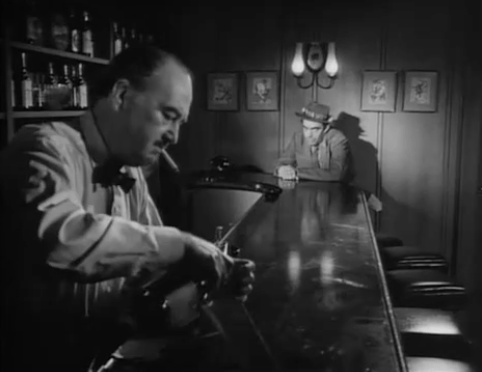
This Noirvember entry is a 1953 film Count the Hours starring Teresa Wright, Macdonald Carey, and Dolores Moran. It was directed by Don Siegel – yes, the director of Dirty Harry (and my favourite of his, Invasion of the Body Snatchers).
Macdonald Carey plays a lawyer defending an innocent man, Teresa Wright’s husband, who faces the death penalty. He is accused of killing two people, a farmer and his wife. He owns a gun, his wife freaks out and throws it away, he is scared of her well-being and doesn’t want for her to go through more stress (she is pregnant) so he confesses. „Count the Hours” refers to Carey trying to prove his client’s innocence before it’s too late.
Let’s face it, plot-wise this film is no Pillow of Death. Then again, what is? The thing I am probably going to remember best about Count the Hours, and the thing I enjoyed most, is the cinematography which is truly gorgeous.
The ending feels a bit like deus ex machina and I know you are never supposed to be okay with something like that but I often don’t mind when it’s used if I enjoy the story overall. But I’m not sure if the story of Count the Hours is thrilling enough for me to be okay with a simple solution.
I do want to shout-out Teresa Wright’s performance who is definitely the heart of the film. I did find her very compelling, the only problem is that I have actually seen quite a few films of hers lately and a supportive wife seems to be a character type she plays A LOT.
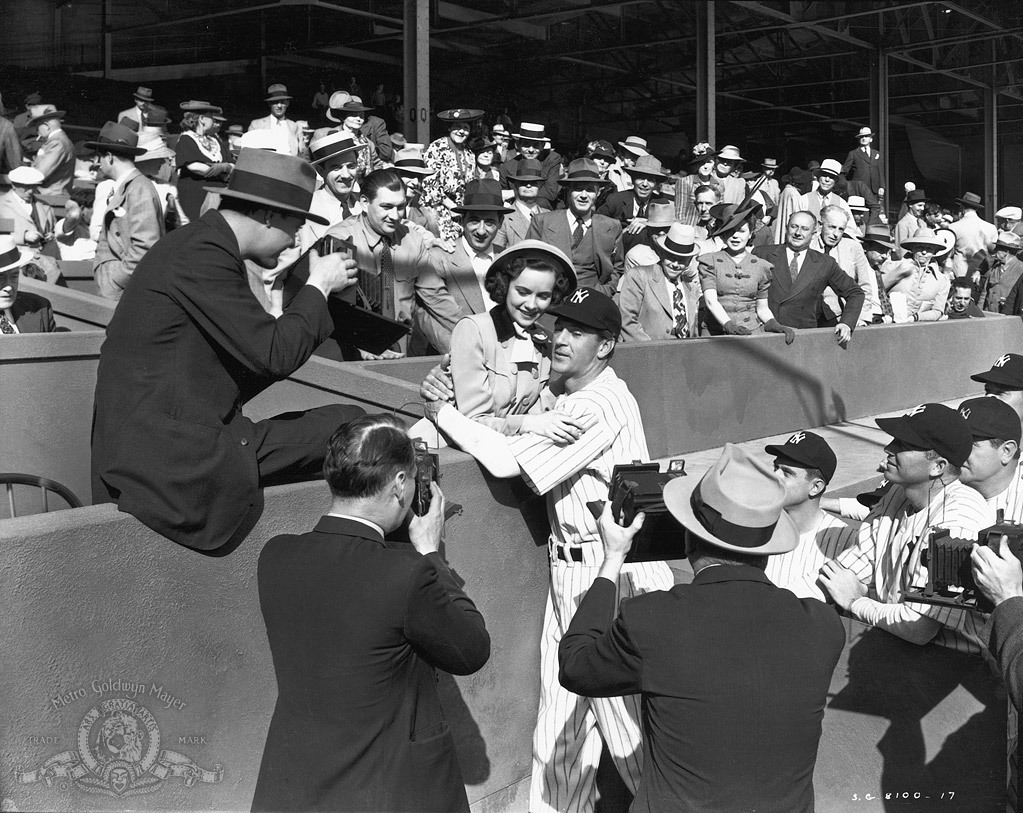
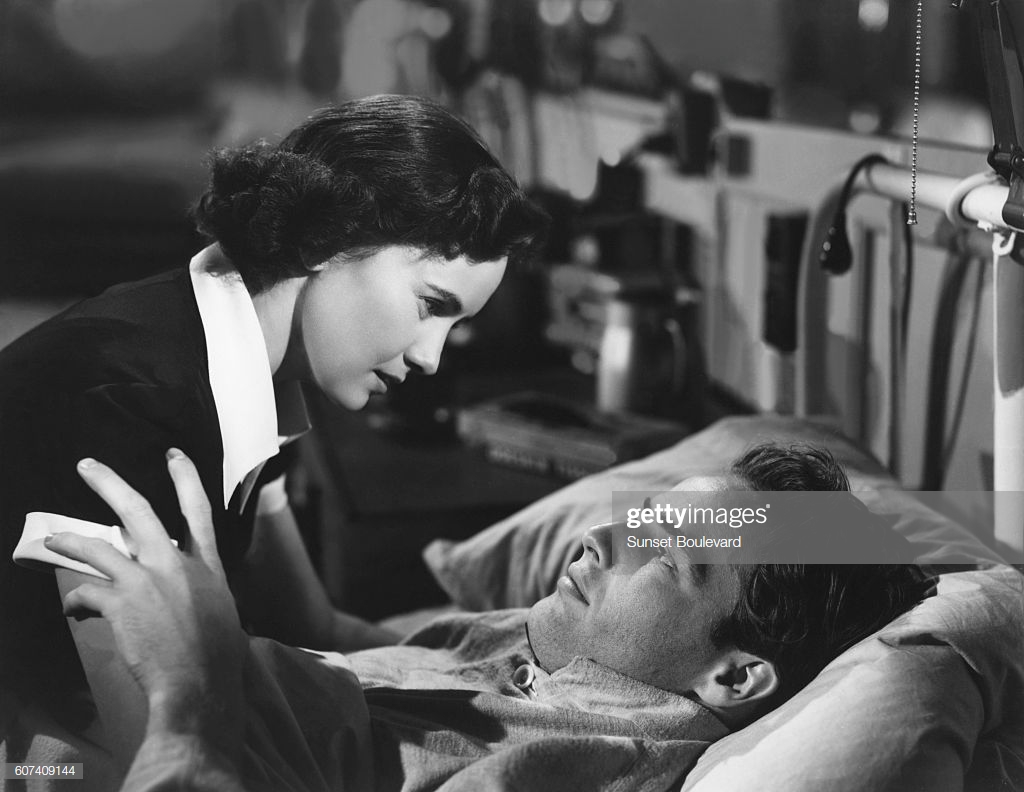
The Pride of the Yankees (1942)The Men (1950) [Excuse the getty watermark but I think you know what Marlon Brando looks like]
Greetings. Time for another entry in our Noirvember series. And this one is… possibly not noir… Oops. But it IS classified as „Film-noir, Horror, Mystery” on IMDb and that is enough for me to justify making it a part of this „series” because it is truly something.
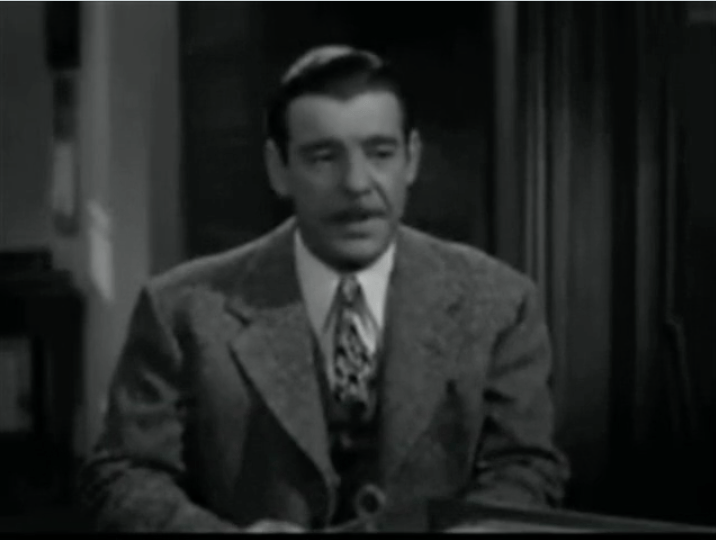
Pillow of Death stars the world’s least charismatic man, Lon Chaney (Jr.), in the leading role. It was directed by Wallace Fox, who made quite a few low-budget horror adjacent flicks (I have seen The Corpse Vanishes and Bowery at Midnight, both starring Bela Lugosi; both pretty bad).
I liked Pillow of Death right from the get go because the action begins in an old, dark mansion which is my absolutely favourite setting for anything. Another thing I love are jolly or quirky old people and we get introduced to a few right at the start. These are the Kincaids (until the very end I could not be sure about how exactly they are related but I think it’s the brother with his two sisters), a rich family discussing what is going on with their niece who runs around at night with her married boss.
The boss is Lon Chaney Jr. himself – who would NOT want to run around at night with Lon Chany Jr., huh? He drops off the niece, Donna, who is his secretary, at the mansion. It seems that they may have a relationship that is not strictly professional, let’s put it this way.
The discussion of Donna’s behaviour does not last long because it turns out that Lon Chaney Jr.’s, or Wayne Fletcher’s, wife was murdered. (Yes, he has – had a wife). And let me tell you, his reaction to the news is incredibly dramatic.
“Oh no, my wife is dead :(“
The police are at the scene pretty quickly but what’s more important is that there is also Julian – the psychic investigator. Not only is he a psychic investigator, he is also a good friend of the deceased, Vivian. He claims to have gotten a „message” from Vivian about the suffering she was going through. You see, Vivian was really interested in the paranormal and Julian even called her a medium. It soon turns out that Julian is also a well-known figure in the Kincaid family.
As the husband of the victim, Wayne Fletcher becomes a suspect pretty much immediately. Since they were together the evening of the murder, Donna provides him with an alibi. She showcases a true feminist attitude, proudly declaring that she DID spend the night with her married boss and she did not think there was anything inappropriate about two coworkers spending time together. Besides, Wayne wanted a divorce anyway. Let’s just say that that last part does not exactly help his case.
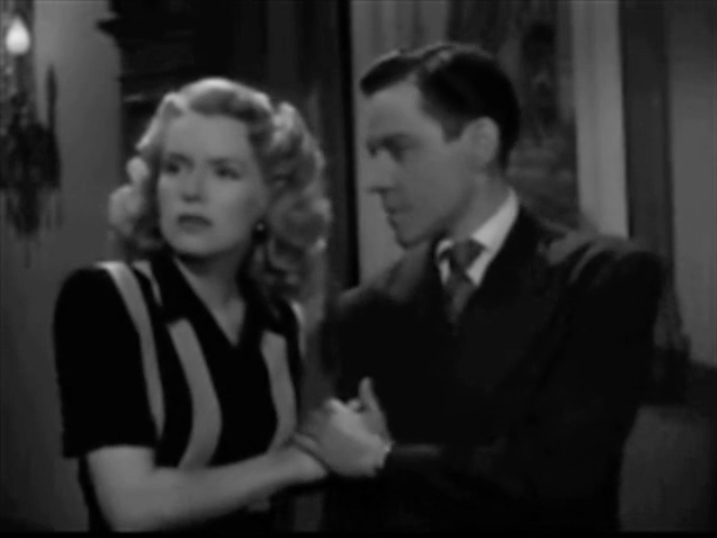
Donna seems to be the only person who thinks that Wayne is innocent. The police, her family, and her ex-lover/stalker Bruce are all convinced he killed Vivian, especially when it comes out that the timelines do not match: Donna was still at home with her family when the murder was committed.
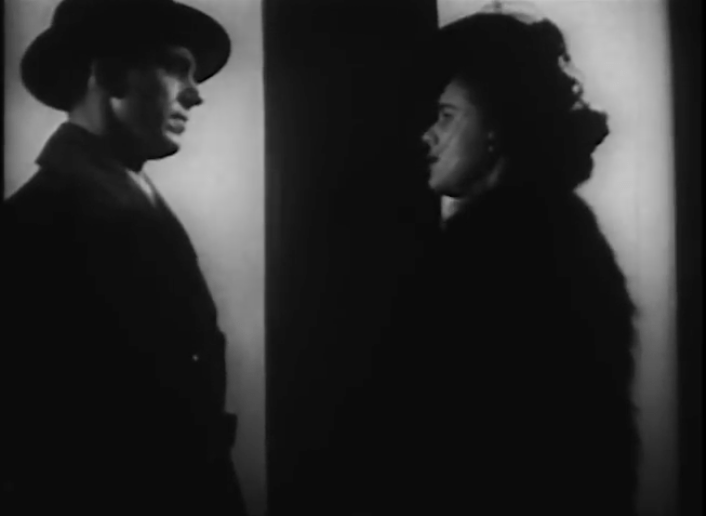
Donna and Bruce
I am going to go through the entire plot of the film, so spoilers ahead.
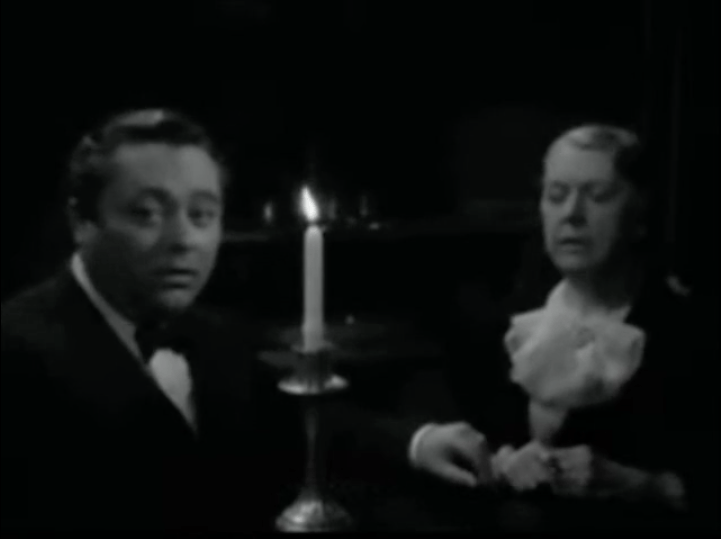
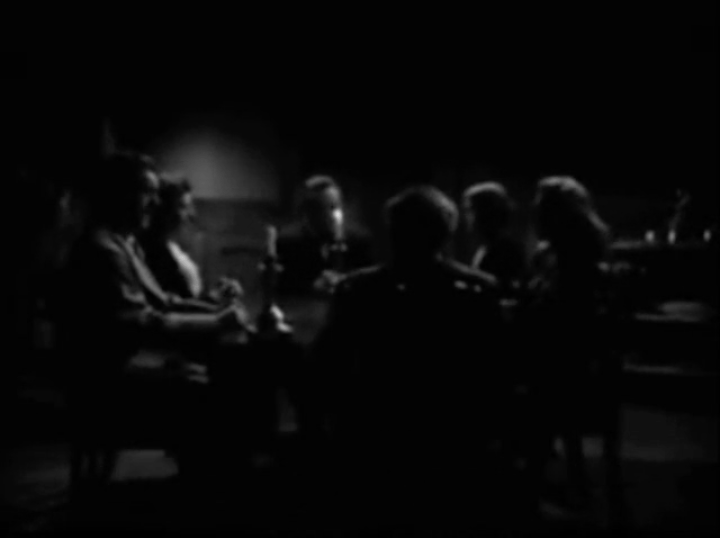
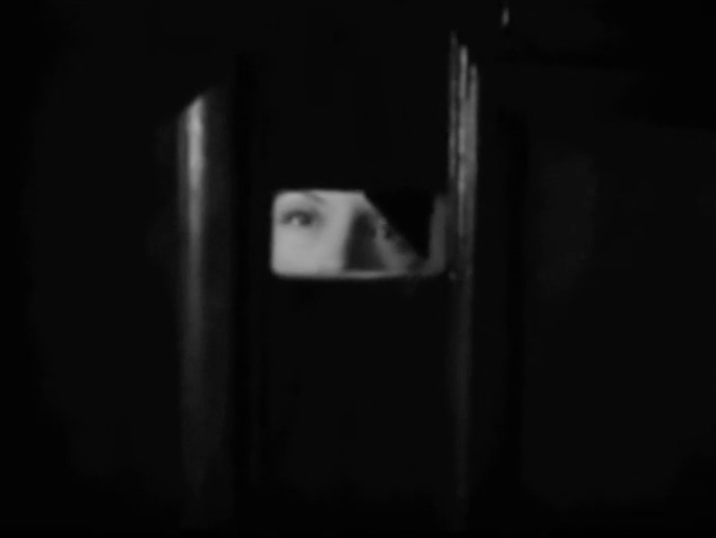
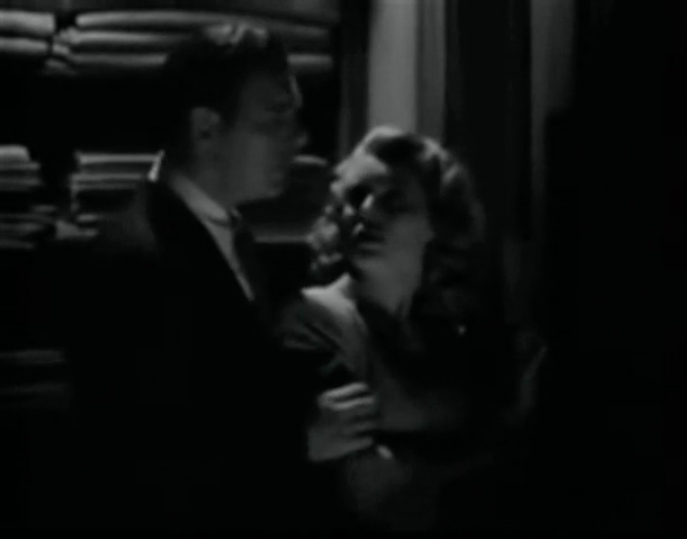
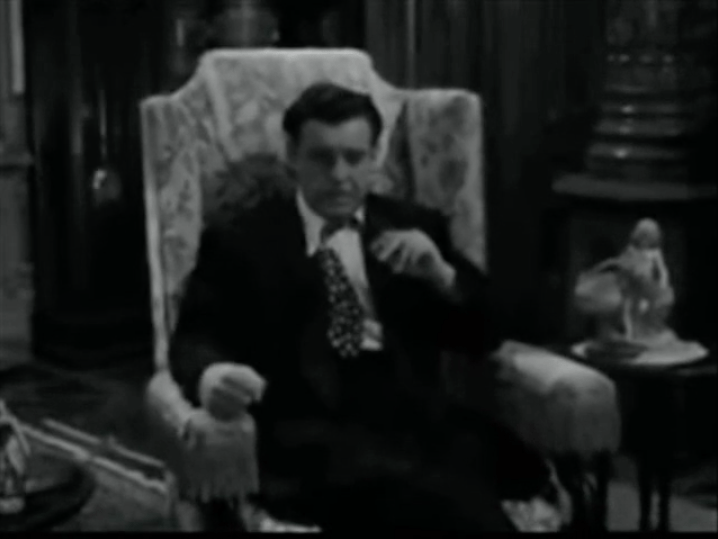
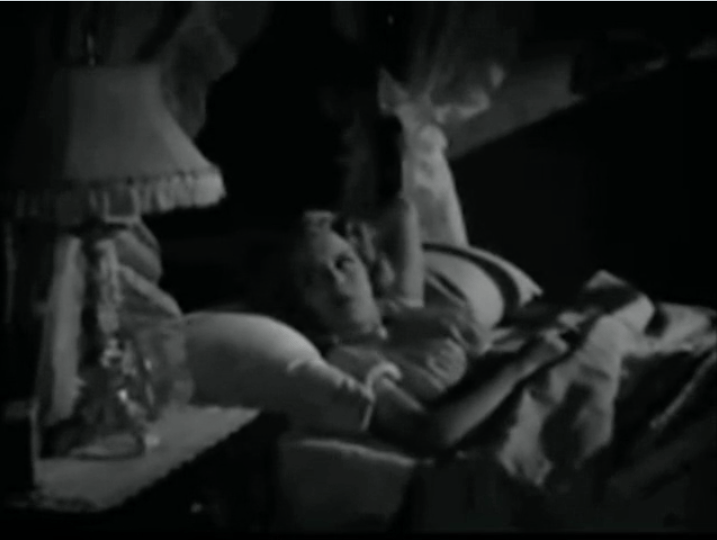
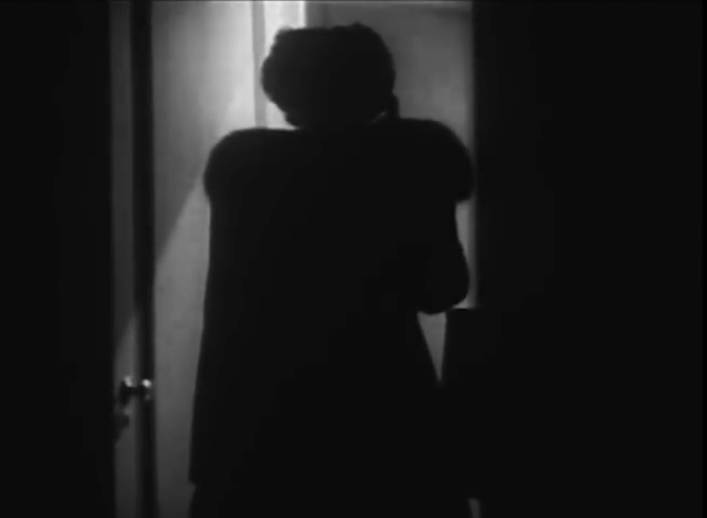
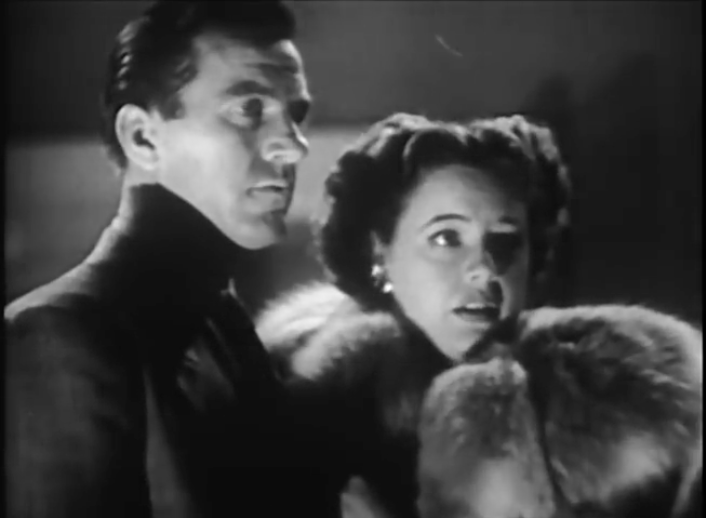
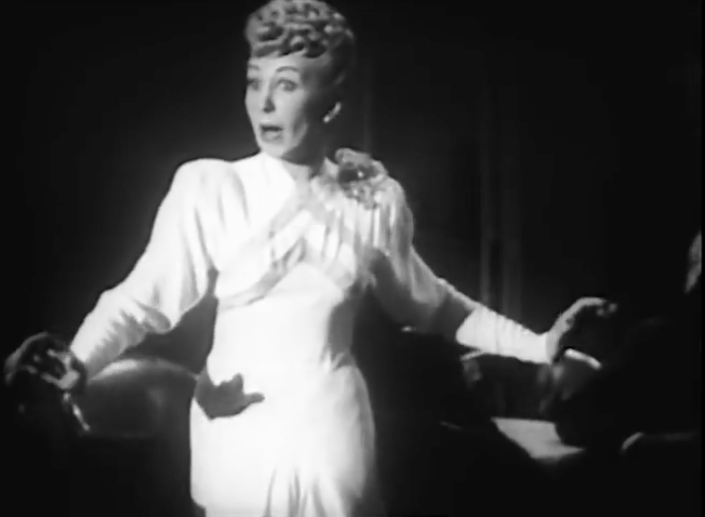
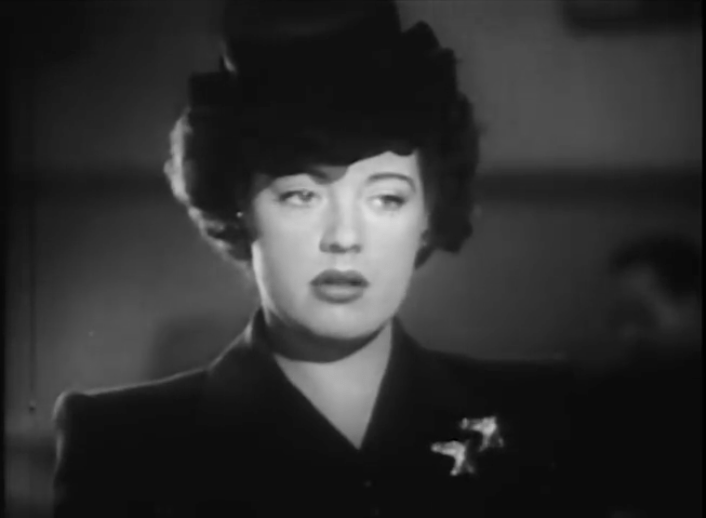
Because this movie is incredible, the logical course of action for everyone connected to the case is to have a seance in which Julian is going to talk to Vivian and ask her directly who murdered her. As you do. And she does speak (out loud, everyone can hear) that it was, in fact, her husband that killed her.
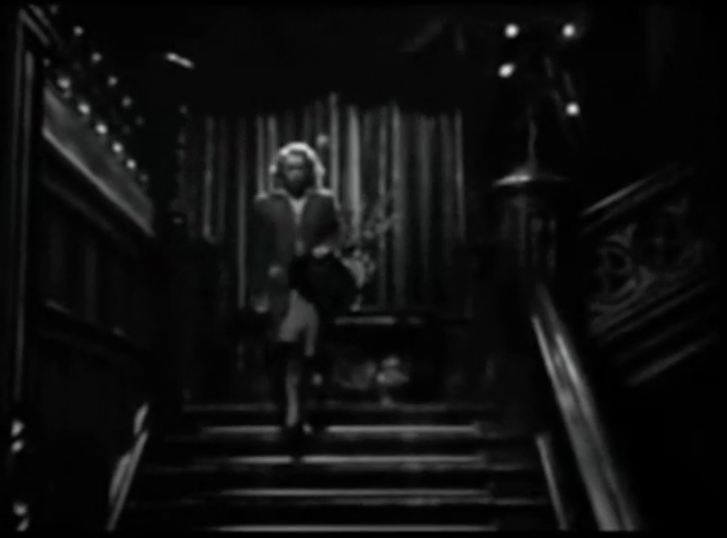
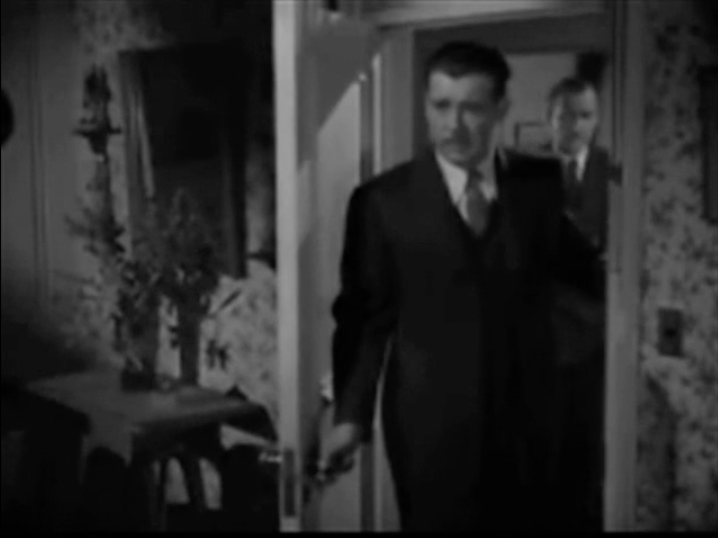
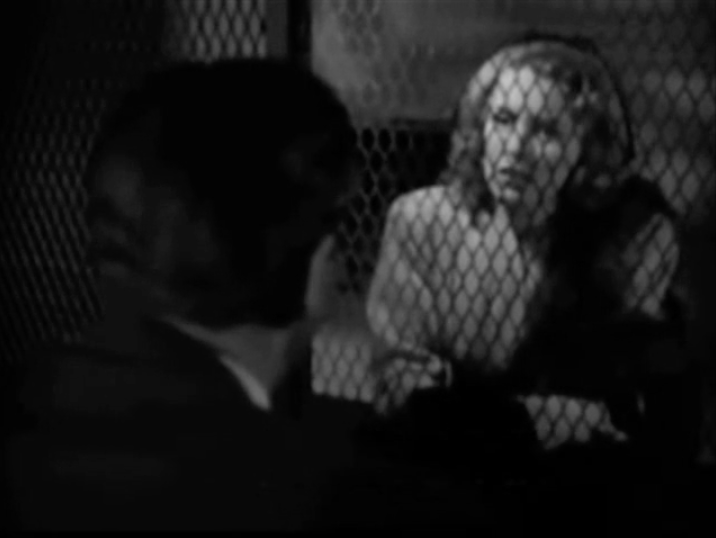
Swingin’ at the Seance approved
Then it gets even weirder as Vivian’s ghost continues to talk, this time to Wayne himself, and lures him into the cemetery when it turns out her body disappeared from the mausoleum. He, a murder suspect, tells about all of that to the cops (because he is a dumbass).
Sadly, a new tragedy strikes: Uncle Sam Kincaid dies in his sleep. Or, as the newspapers put it, „Killer claims a new victim!”. They have a new seance (of course) and while it’s happening Donna discovers that her stalker Bruce has been sneaking around the house via some secret tunnels and peeping on the family. She does not seem too concerned about it.
Soon, an aunt (I think), Belle, is also dead and Julian turns himself in for murder. He does not confess, just assumes that they will arrest him because of his peculiar connection to the Kincaid family.
That night Wayne stays at the mansion with Donna. Another woman living there, Amelia, still thinks Wayne is guilty so she locks him alongside Donna in a closet where she will kill them with gas (I did not omit much of the plot, this all really happens as I wrote it). Luckily Julian appears, he was let out because the police literally did not have any proof to keep him locked in, and saves everybody. He also manages to shade Donna, who does not seem that concerned that her entire family is dead, by congratulating her on inheriting the Kincaid fortune.
Donna and Wayne decide to spend the rest of the night by exploring Bruce’s secret passages she finally mentions casually. There, they find… Vivian’s body. And Bruce appears and says he stole it to freak Wayne out so that he would confess to the murder. Which is an absolutely normal human behaviour and a rational thing to do.
But! It’s not over yet! Wayne hears Vivian’s voice once again and she tells him to describe how he murdered Uncle Sam. And he does! He really was the murderer all along! He killed both Sam and Belle with… a pillow. With a pillow. Get it? The Pillow of Death? I… have no words.
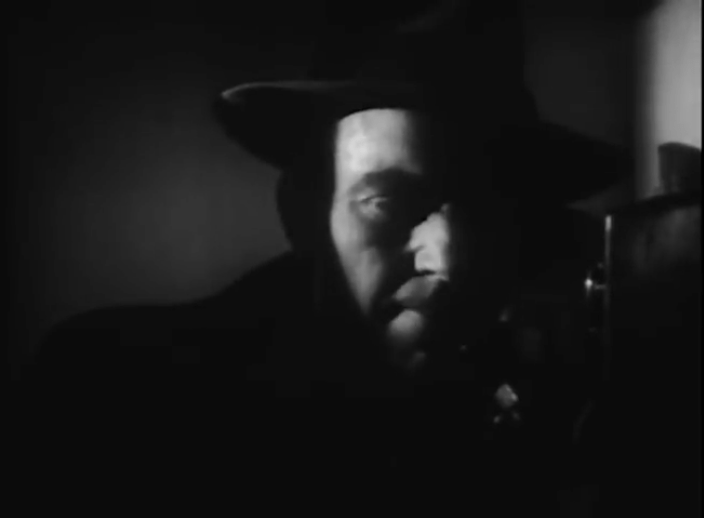
The realizationThings that go bump in the night
Vivian’s ghost tells Wayne to kill Donna who was standing in the doorway and heard Wayne’s confession. Luckily, she is saved at the last moment by the police and Bruce who truly is the one for her.
(But Bruce is still creepy, right? I mean, he saved her life but he also literally broke into her house on multiple occasions to peep on her. Oh, and he stole a dead body. Oh well, things we do for love).
The Pillow of Death is an absolutely ridiculous movie and it it not exactly a noir but I DID have a lot of fun watching it and I know I spoiled the whole thing here but I still recommend checking it out and experiencing the madness firsthand.
Happy Noirvember! I thought this month was a perfect opportunity to, hopefully, get back into writing here (but – I am also participating in NaNoWriMo this year so I won’t make any promises). My goal is to watch at least ten noirs this month and I selected some obscure titles so I hope it is going to be thrilling.
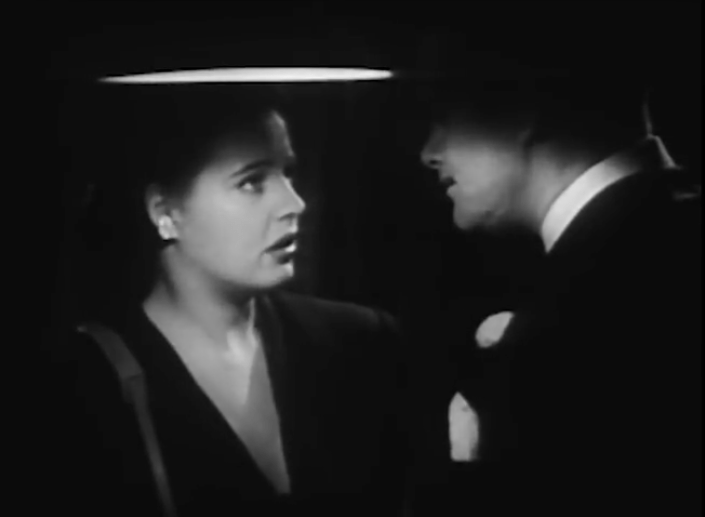
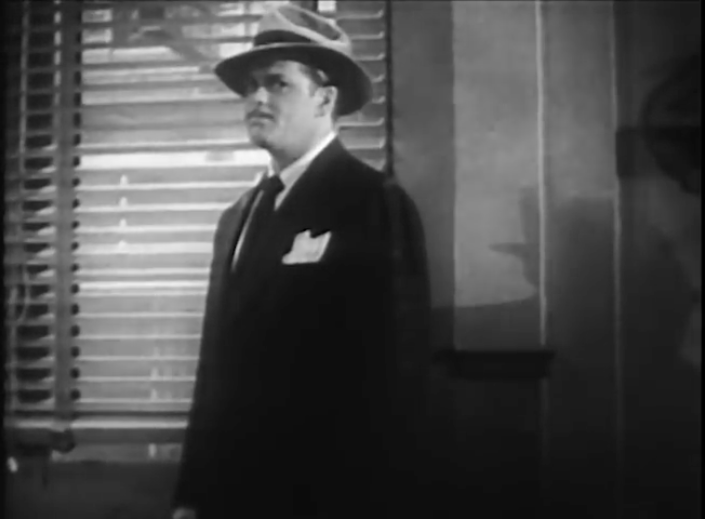
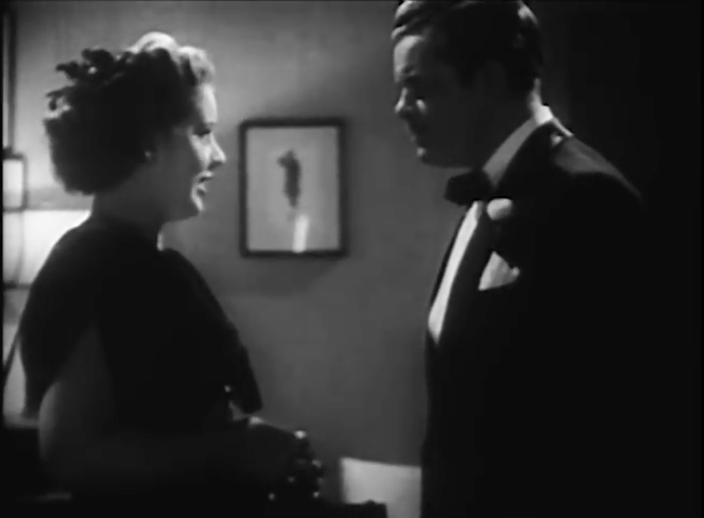
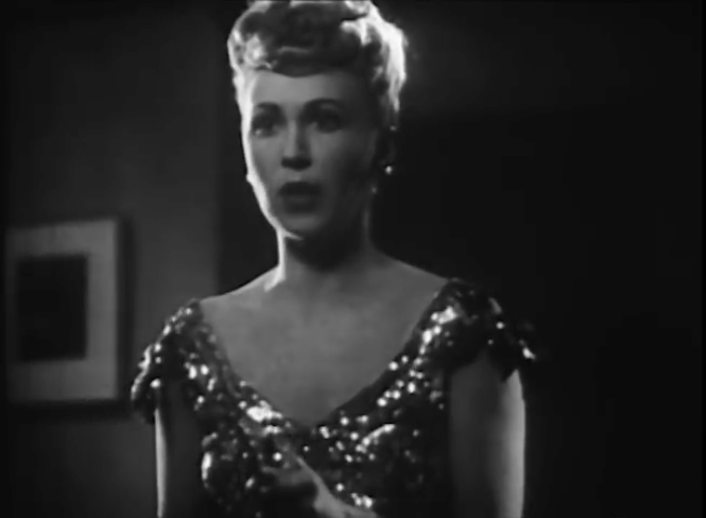
The Lady Confesses (1945)
Mary Beth Hughes plays Vicki McGuire, a women who is about to get married to her love, Larry Craig. How wonderful. But in the very first scene of the film her life is disturbed by an unexpected visitor. Larry’s WIFE herself knocks on her door and says that while she does not care about her own relationship with Larry, she will not let Vicki marry him. Let me explain: Larry’s wife was missing for seven years, their marriage was about to be legally annulled. It’s a problematic situation but not a matter of a man hiding the fact he was married.
So, we get introduced to a mysterious intrigue pretty much right off the bat, and the noir just becomes darker as we move into… a nightclub. Of course. Larry is there, clearly having a great time as he is drunk and wants to have fun with club’s patrons, including Lucile, the singer. It gets even wilder than that, as when Larry meets Vicki they find themselves in, basically, the middle of crime scene as it turns out Larry’s wife was murdered! Strangled with a thin wire!
Since Larry is the one with a reason to get rid of his wife, wanting to marry someone else, the detectives start their investigation by checking his alibi, which is that he spent the night of the murder at the aforementioned nightclub (called 7-11. Hmm). Lucile confirms he was there but the owner of the club, Lucky, claims he did not see Larry. This casts the shadow of the doubt on both men, especially when the detectives learn the dead wife, Norma, lent Lucky the money to open the club.
It becomes pretty clear early on that there is something about Lucky. Vicki decides that what she should do is conduct an investigation of her own – she meets up from one of the nightclub employees (apparently, the club’s official photographer) and arranges for herself to take her job for a few days. Vicki is the one who starts working the case harder than the police.
The film was directed by Sam Newfield who, as it turns out, had multiple aliases and was actually one of Hollywood’s most prolific directors. He made over 250 films and his credits include such gems as The Terror of Tiny Town, I Accuse My Parents (featured on MST3K), and the anti-marijuana flick The Wild Weed. Say what you want about the quality of these pictures, but I love a man with a passion for his work.
This is a Poverty Row production and it shows – it is only 60 minutes long, it does not feature any big names, and the sets are very bare. But there is a visible attempt to create the noir atmosphere, from introducing a nightclub and shady business practices to incorporating a lot of shadows in the cinematography. And I really appreciate that. And, while not being the most inventive of stories, it is still pretty enjoyable and engaging. Plus, it’s always great to see a woman taking matters in her own hands. I support Vicki’s detective aspirations.
(The one thing I don’t understand is the title. Oh well).
Luca Guadagnino’s 2018 remake of Dario Argento’s 1977 Suspiria was one of the most talked-about films of last year among film enthusiasts. As soon as the project was announced (or, in a way, even before that, considering the remake was planned for years and there was always something stopping it from actually being made) people began to speculate about it and the more and more we learned about the production itself the more questions and worries were being brought up. And then the film was made. And then it premiered. And the reviews and reactions were said to be mixed. Personally, I would say there were mostly positive, considering that people either absolutely loved it and were in awe of seemingly every aspect of the film, or they praised a lot of its elements while voicing concerns that were less of a simple bashing of the film, and more of a wish for it to have expended on its themes and allegories that the critics felt maybe Guadagnino did not explore enough. Still – they did notice them and they did notice the depth of the film.
To proceed with my own thoughts about Suspiria, I need to be direct about something – I consider the original film, the 1977 version by Dario Argento, my favourite film of all time. Yes, THE favourite. I am not even sure if this is actually true, or should be true. There are probably films I saw more times, there are films I love that are objectively more influential or groundbreaking, maybe better acted or written. There are other films that I could name as my favourites that would give me more respect among the film crowd. But I remember seeing Suspiria for the first time as a teenager and feeling like my whole life has changed and to this day I have not been able to experience what I felt surrounded by that music, that colours, that nervousness of not being able to say what it is that is happening as I am watching a young girl running through the dark rainy night in a German forest again. So even if I could sit down and maybe be more honest with myself, choose another film that could be a better representation of My Favourite, I am not going to. I am okay with the decision I made years ago when I chose Suspiria (1977) as my favourite film of all time.
It was important to me to not let this affection I have for the original film to cloud my judgment of Suspiria (2018). Guadagnino’s previous film were not exactly my cup of tea – I did not like I Am Love nor A Bigger Splash. But then I watched Call Me By Your Name and I did understand why people liked him because the film was truly beautiful. Maybe there was hope for Suspiria after all. But then it came out and I heard a lot of praise from a lot of people I did not trust in being fair to the new while also respecting the old, meaning: I thought those people had no idea what Suspiria was all about and got charmed by Guadagnino’s visual tricks. Alternatively, the new film resembled the original so much that people who did not see the 1977 version thought they were watching something fresh and innovative not realizing Suspiria already existed. Those were not good thoughts to have before seeing a film one wanted to be fair to, so I decided to wait. And I waited. And waited. And then a whole year has passed. And I finally decided it was time this Halloween season (or, if you prefer putting it that way, this October).
I would like to shout out the podcast Gaylords of Darkness here. They are horror lovers, very appreciative of the original Suspiria, very knowledgable in the subject, and they LOVED the remake. „Loved”, even capitalized does not even begin to cover it. They are absolutely obsessed with the film, at this point I think they have dedicated four episodes to it. So they talked a lot about all the reasons why Suspiria (2018) is pretty much a masterpiece. And I knew that those are people I could actually trust – so I thought it was time. I watched the film.
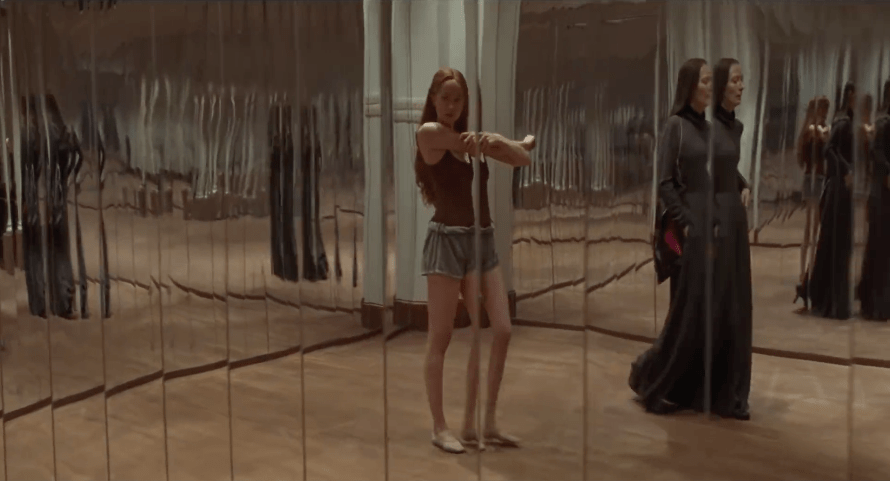
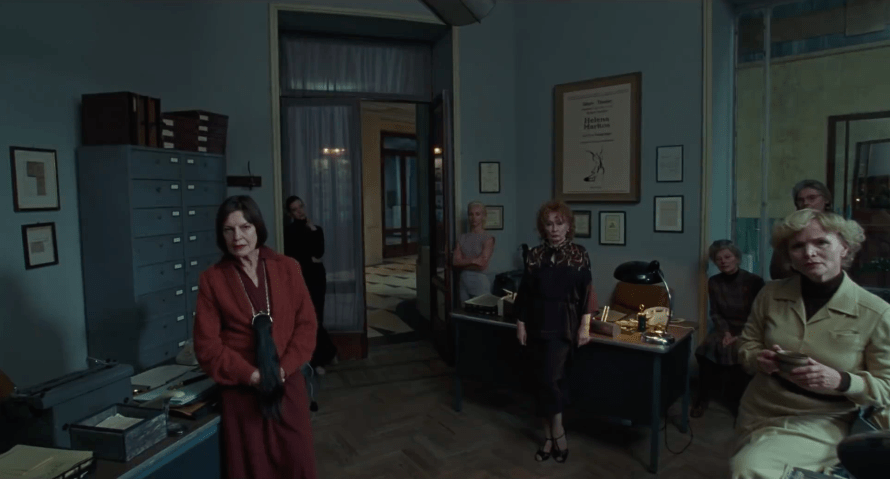
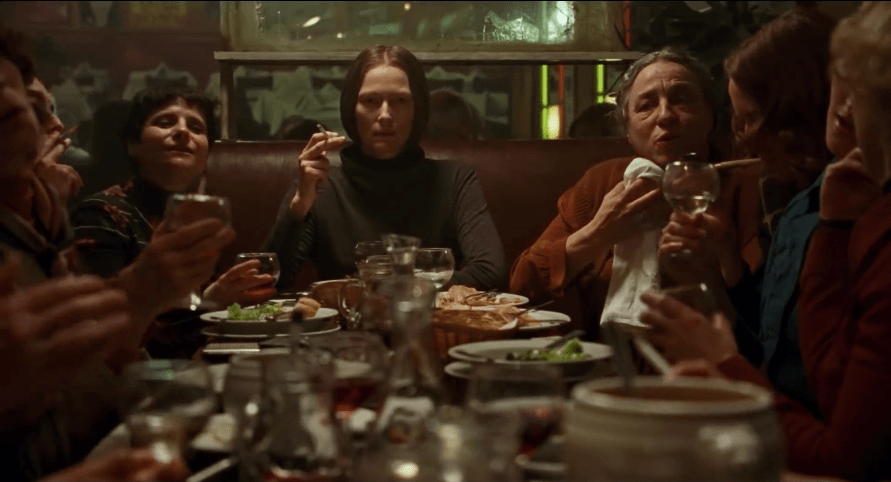
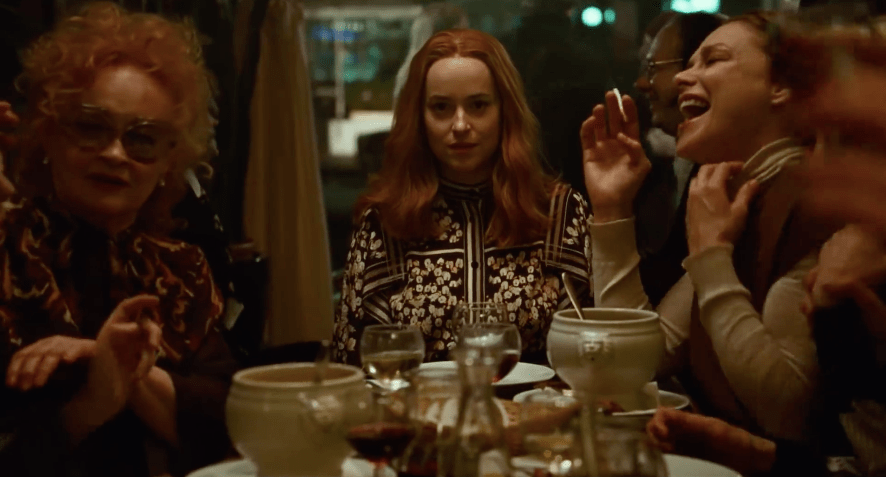
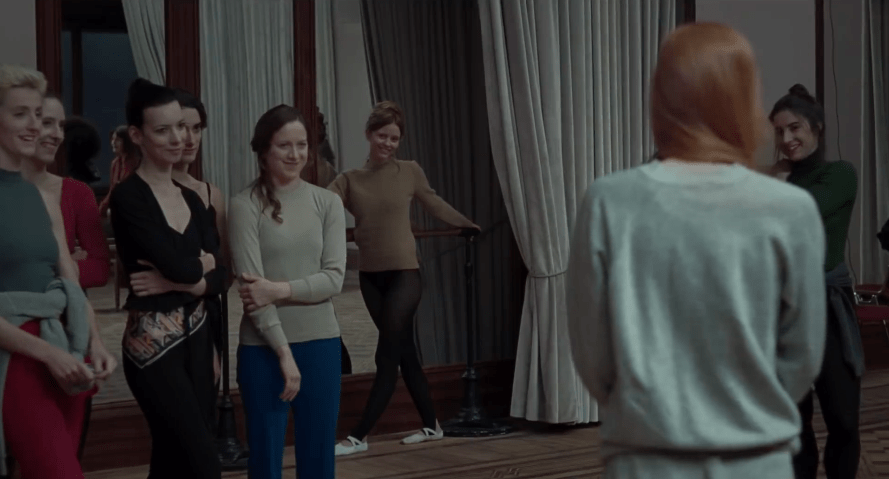
It started kind of oddly, a confused girl is visiting her therapist, she is saying weird, creepy things, it is all dim and grim, well, it started like a lot of modern horror films do – with a creepy cold open. Then we see Dakota Johnson, our new Suzy Bannion. Like Jessica Harper forty years ago, she has just arrived in Germany. She does not have Jessica Harper’s eyes, her face full of wonder but also nervousness, uncertainty about the future. She looks kind of calm, determined. When she arrives at the dance academy (this part of the plot does not differ from the original, both Suzys are aspiring dancers) it is not what it was in the 1970s. While people have been praising the production design in Guadagnino’s film (rightfully so), it is completely different from the colorful extravaganza of Argento’s original. The new Suspiria, the cinematography, and the world of that story is pretty grim, toned-down, dark, and earthy. This is not a criticism, just an observation, and the fact that the colours here are dim and cold only makes the richness of reds when they do appear even more prominent. But those colours are a dead giveaway that we are not in Argento land anymore. Another sign is the music. Goblin’s 1977 score is iconic, creepy and exciting, with the whispers mixed with electronics. There are some wonderful musical moments in the new Suspiria as well, but they do not compare in my taste. And I actually do want to complain here: Thom Yorke’s original songs did not work for me at all. They felt awkwardly out of place, did not fit the world of the witches of the academy, nor the 70s Berlin.
And the 70s Berlin, the atmosphere of the divided city, the political unrest of the era are important parts of the new Suspiria. Or, are they? Guadagnino reminds us periodically of where we are. Olga, a student of the academy, after Patricia (the girl from the beginning) „quits” the school, accuses the professors of being neutral while their country is going through such important changes. Guadagnino also does it with not-so-subtle-at-all shots of TVs showing the news about terrorist organizations bracing up. The time and place, this specific time and place surely matters a lot to him and he wants the viewers to realize that. History seems to be incredibly important to the world of Suspiria. There is personal history, like Suzy’s life in a religious compound in the US, there is the world history, like aforementioned tumultuous events in 70s Berlin, and there is a place in which personal history meets the historical events. And this is where we get the cameo.
Jessica Harper has a cameo in this film. She plays the long-lost wife of the only man in the film, Dr. Klemperer (the therapist Patricia sees in the beginning, played by Tilda Swinton). She comes back to him one night, when the students’ big performance is happening. He thought she died in a concentration camp during the war but now she is standing in front of him. This is an incredibly touching but also loaded moment – we are seeing supposedly a victim of the Holocaust, who, as it turns out, actually survived miraculously. But we are also audience members getting a „present” of sorts from Guadagnino: look! It’s the actress from the first film! Are those two situations comparable? I would say no. Am I being nitpicky for no reason at all? Possibly.
Guadagnino introduces all these broader contexts, all these historical moments, dramatic, tragic moments, and he makes sure we notice. And we do – but what comes next? The prevailing (confirmed?) theory seems to be that he tries to warn the audience about the dangers of people in power abusing said power. The teachers at the academy are the coven that sacrifices their students for their own interest, to make their magic more powerful. Is Nazi Germany really something that fits well with such themes? I find separating Nazi ideology from the inherent antisemitism, racism, homophobia – and those are VERY weak words for what Nazi ideology actually is, and boiling it down to „abuse of power” a stretch at best, and a total disrespect at worst. As for the context of 70s Berlin, I actually appreciated Olga calling the teachers out for shutting themselves away from the real world changes happening. Maybe the theme of apathy and „neutralism” in the context of political tumult would be a theme worth exploring?
And I guess we cannot escape talking about something else when it comes to the abuse of power by the convent: is fear of powerful women a part of this all – is Suspiria misogynistic? All the witches are women, they are extremely powerful and extremely cruel. I guess women watching women in power portrayed as something wrong are deemed to be suspicious, maybe even hurt, since this is still not something we get very often. But there is also the most powerful of all, Suzy – a woman and a force of justice. Is that alright, then? But then almost all of the women who played a larger part in the film die and they die in a horrific manner, Then again, this is a horror film. But there is a person who gets to have a gentle ending. And he is a man. Dr. Klemperer gets to live. His wife did actually die, but it is not that painful, since his memories get erased. He also gets told that none of the evil is his fault, those in power are always at fault. How is that for a message in 2018, a year in which staying neutral, not rebelling against the oppressors seems like a slap in the face for those underprivileged?
The aforementioned „epilogue”, Suzy coming to comfort Dr. Klemperer after she annihilated the coven feels very bizarre and out of place for the film. The man being the one person whose faith seems to be the easiest does not fit in with my version of female-led story. One might say Olga, Patricia, and Sara get a „happy ending” of sorts, since in the finale Suzy allows them to die peacefully in her arms, in opposition to her ending the teachers’ lives in pain and torture. But let us not forget that earlier in the movie they did actually have to endure horrific torture. The not-Pina-Bausch character of Tilda Swinton seems problematic (as in: posing problems causing one to wonder about them, I am not necessarily using this word in a Tumblr way). She does not seem like your typical strong mentor type, Suzy seems to get a hold on her pretty early on. She is destroyed as well but maybe the fact that Tilda Swinton plays Dr. Klemperer as well is significant? Maybe she does get a redemption of sorts – if only through him? (Disclaimer: this is just me brainstorming. I do not think that, to be honest).
I also have some thoughts that are definitely nitpicks and I could be thinking too much about this. But hey, if Guadagnino gets to make a heavy piece of arts with metaphors and references galore, why can’t I actually give it a lot of thought? I could not help but think a little more about Suzy’s nationality than I did in the context of Argento’s original. She is an American which, of course, is most likely due to aforementioned original Suzy, but also to Dakota Johnson herself. But in this heavily politicized remake one wonders about the implications of an American coming to Europe and „taking care” of our bloodthirsty (literally) despots. A throwback to the imagery of American soldiers arriving from across the Atlantic and defeating Nazis, perhaps? And the whole fact of Germany as the land of authoritarian tyranny: of course, this is not wrong. But Guadagnino (like Argento before him) is from Italy – not exactly the land separate from the fascist ideology. Maybe one could have looked closer to home to pick up on certain elements of the metaphors of Suspiria?
I do believe that Luca Guadagnino had a lot to say with his film. The problem is, I think, that he was okay with dropping hints about the things he would want to present without actually expanding on his ideas. As a result you have people who praise the film for things it did not even do, and people bashing it, possibly, unfairly (like myself?). There is also a large group of viewers who were absolutely in awe of the film’s visuals and that was enough for them. I have read reviews that did not touch on the political context (or subtext) at all. Maybe that is alright as well. Maybe, oddly enough, the key to enjoying Guadagnino’s work is completely ignoring his attempts at saying something more meaningful and focusing on the film language alone. Maybe that is what I should have done in the first place. Maybe I should have skipped the film. Maybe I am right about some things.
Maybe Guadagnino’s Suspiria is not worth criticizing. After all, we live in a world in which Mother of Tears* exists.
*Having said that, I genuinely enjoy it as a bad film.
This is the last day of Summer Under the Stars. And sadly, we have an Errol Flynn situation on our hands, meaning the star of today is someone I am… not a fan of. But, I pushed through. Here’s Kirk Douglas.
The Bad and the Beautiful (1952)
This is Hollywood. I read The Day of the Locust a few weeks ago, a novel praised for its accurate and brutal portrayal of what goes on under the facade of Tinseltown and The Bad and the Beautiful felt very similar.
Kirk Douglas plays a son of a studio head who was successful but hated to a point where Kirk had to hire extras for his funeral. Kirk wants to make a new film and gathers a group of people he worked with earlier in his career to, hopefully, collaborate with them again. The problem is, they all think he ruined their lives and don’t want to associate with him again. The story is told in flashbacks by each of the people.
Gloria Grahame won an Oscar for Best Supporting Actress for her portrayal of the wife of a novelist who wrote a big hit for Kirk. But the person who impressed ME the most was Lana Turner. Many people write revisionist history in which she’s not a great actress but I found her absolutely mesmerizing in her portrayal of a woman hurt and desperate in this. Good to have this after the mess that was yesterday’s Where Love Has Gone.
In the end, the Hollywood allure wins over the personal grievances. But is the art (or, the business) really worth your soul? I don’t think The Bad and the Beautiful tries to make judgments here – this is just show business and this is the way those people live.
The Big Sky (1952)
Westerns galore this Summer Under the Stars! Kirk and Dewey Martin are traveling through the wilderness eventually going a team of fur trappers. They kidnap a woman of the Blackfeet tribe so that they can trade with her people. Other trading companies don’t have such opportunities.
This is a Howard Hawks film that to me seems more like a TV series. There’s are many plot lines happening and the colours of the copy I had access to looked like an episode of Bonanza.
It’s an entertaining western for the most part but the portrayal of Teal Eye (the Blackfoot girl) made me cringe a bit (even though the actress, for whom this was the only film, was actually Native American which is always nice to see in Old Hollywood) and sometimes it gets tiring to focus when so much drama is introduced when most of it doesn’t even seem like a big deal.
Gunfight at the O.K. Corral (1957)
Gunfight at the O.K. Corral is O.K.
It’s a western.
Kirk Douglas annoyed me to no end.
But Dennis Hopper was weirdly adorable.
It’s almost 11 PM on August 31st. It’s the end of Summer Under the Stars. I am exhausted. But I did it. I watched films and posted every day, even if it was just some nonsense.
(And while I’m glad that I’ll get to rest a bit now, I got a bit sad that there is no filmography to check out for tomorrow).
The way Summer Under the Stars is constructed is that female stars and male stars alternate, meaning one day a male star is featured, the next one a female star and so on. And that means that today we are celebrating a woman for the last time this August. And the woman is Susan Hayward who fittingly stars in…
Smash-Up: the Story of a Woman (1942)
Susan plays a nightclub singer. She falls in love with and marries a man who is also a singer. They are very happy, eventually they have a child. The problems begin when his career takes off and she has to stay at home and take care of the baby. She becomes lonely and depressed and eventually starts to drink.
The first time we see Susan Hayward in the film, she’s in a hospital bed, with her head covered in bandages. This might seem like a very specific „story of a woman”, maybe a condemnation of a woman who dares to want more – because apparently wanting more leads t a tragedy. But can’t we see the downfall of Susan Hayward in a feminist light? Isn’t this story a bit like Yellow Wallpaper? Susan can’t sing, she can’t really leave the house, she feels bored, so her mental health suffers.
There is a Manchester by the Sea element to the story but maybe the bad things could be avoided not by Susan willing to be submissive and silent and calm but by the world allowing her to be more than a wife and a mother.
The Lusty Men (1952)
Nicholas Ray in the middle of the day – what a treat! And while The Lusty Men (still not sure about this title but I think it’s mostly hilarious) is not among my Ray favourites, his style definitely comes through.
What is a very obvious Ray touch is that it’s a story of people and their emotions and their relationships and the underlying sadness of almost every action we take in this life. But this time all of this is set among the world of rodeo. Yee yee?
Susan Hayward is the wife of Arthur Kennedy who decides to become a rodeo rider under the eye of Robert Mitchum who was a professional but had to quit the rodeo business after an injury. Arthur turns out to be good, he’s loving the money and the attention, Susan is scared for his life, Robert starts to feel something for Susan.
It’s very interesting to watch all those very human emotions in a setting as ridiculous as rodeo (maybe it does feel less bizarre to Americans, though) – too bad it feels a bit tired after a while.
Where Love Has Gone (1964)
But if I used the word „bizarre” when talking about The Lusty Men, I don’t even know where to begin with Where Love Has Gone. It opens like a soap opera, with establishing shots of San Francisco accompanied by a cheesy ballad, it features Bette Davis, it’s about murder and teenage girls…
I didn’t know what Where Love Has Gone was about before I sat down to watch it so I was shocked when I realized (pretty much from the first scene) that it was based on Lana Turner and the death of Johnny Stamponato! A young girl is accused of murdering her mother’s boyfriend. Then I checked out Wikipedia and apparently it’s based on a book and totally-not-about-Lana-Turner-are-you-crazy-it’s-completely-different!
Sure.
Susan Hayward plays the not-Lana-Turner character and Bette Davis plays her mother who is very rich and makes sure everybody knows that.
The film spans almost twenty years but you wouldn’t know that because not a single character changes their appearance even remotely and everything looks the same all the time. Most of the film consists of marital problems: alcoholism, violence… and that could have been well-done. My biggest problem is that the film ventures into [SPOILER] the ridiculous, untrue territory of „not-Lana’s” daughter having an affair with her boyfriend and not-Lana herself killing him out of jealousy. I won’t spoil if that is the actual event in the film but even mentioning it annoys me.
It’s melodramatic, Bette plays a caricature and not in the fun way, it hates teenage girls somehow. Whatever.
See you tomorow for the last day (!) of Summer Under the Stars.
Only two days of Summer Under the Stars left and, like yesterday, I only watched one film (might seem like slacking but I know that tomorrow and especially the day after are going to be tough). As for Paul Lukas…
Working Girls (1931)
I am genuinely happy and excited right now because I attempted to watch all films directed by Dorothy Arzner a few years ago but could not track all of them. But now I watched Working Girls! Thank you, Paul Lukas!
Two young sisters from Indiana move to New York City. They find lodging in a hotel for girls and jobs as: a telegraph operator and as an assistant to a scientist – that’s Paul Lukas. They seemingly find themselves in the city fairly quickly.
Someone on Letterboxd found similarities between Working Girls and Sex and the City and I think that’s very accurate. Despite more than sixty years between the film and the show, it seems that there always were young girls coming tom New York City and finding themselves surrounded by possibilities – in a large part romantic possibilities. Besides the fact that Paul Lukas wants to marry „his” sister almost immediately, the girls get into the going out/dating scene very organically. Everything in New York is exciting and romantic, I guess. I’ve been reading one journalist’s account about moving to NYC at eighteen and this has all been on mind so that film came to me at a very appropriate time.
Dorothy Arzner does not do romance in a straight (haha, get it?) way, but she does seem to believe in love for her characters. Working Girls might be a silly comedy but it does have heart and it does present a very real part of culture.
Two days ago I watched Mary Astor, who was the star du jour of that Summer Under the Stars Day, play Marmee in the 1949 version of Little Women. And, as I wrote in the blog post, I enjoyed the film overall, except for one thing – June Allyson as Jo. So I guess this is quite an awkward moment seeing as today we celebrate June Allyson and I was mean to her. And now I am not going to give her justice really because I only watched one film and she plays a character trope I have problems with.
Executive Suite (1954)
Executive Suite is a corporate drama with a human element. The head of a Pennsylvania furniture company dies suddenly when in New York. To complicate things further, he dies pretty much anonymously as his wallet (alongside any identification) is stolen. Several people from the company or around the company try to use the death for their own advantage.
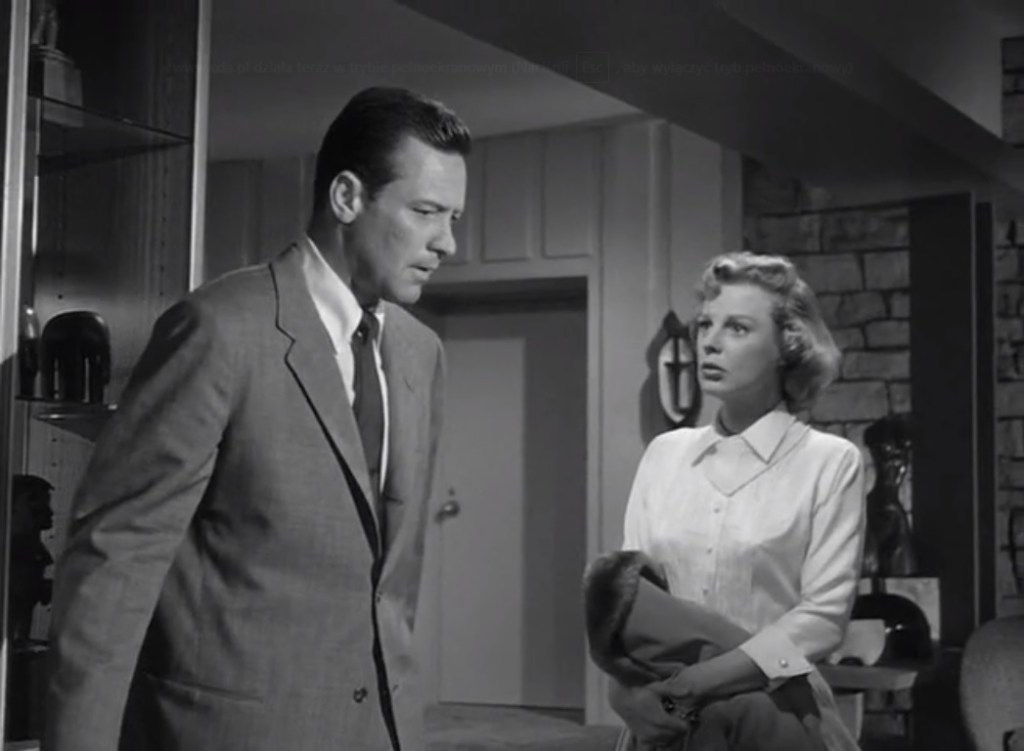
This is an interesting film stylistically (POV shots, black and white cinematography, no music at all) but also, this is a very stylish film – we are talking business topics and business attire. Barbara Stanywck is in this film and she looks phenomenal. So does William Holden who plays the lead.
And here we have to talk about June Allyson… June Allyson plays William Holden’s wife in what is essentially playing the character trope of „wife on an extraordinary (-ish) man”. I am not happy with that being the kind of role I watched her in on her Summer Under the Stars day. And I know I could have picked a different film, but Jo is far from that trope and that did not work either… I’ll leave it at that.
What’s the point of these introductions anyway? We don’t need them. Let’s get straight to the point.
Biography of a Bachelor Girl (1935)
Well, let’s kind of get to the point. When I checked which Walter Brennan films I had on my to-watch list, the first position was a little-known 1935 film Biography of a Bachelor Girl in which Brennan plays an… uncredited reporter. I’m coming clean – I watched the film and completely missed our star. So I’m including this film for transparency’s sake but let’s not dwell here, I did not like it that much anyway.
A Stolen Life (1946)
Ugh, this isn’t the best 1940s Bette Davis melodrama. Honestly, this isn’t even the best Bette Davis-playing-twins film.
One of two Bettes is sweet and kind and in love with Glenn Ford. The other Bette is nasty and, um, sexually active, and she is the one married to Glenn Ford. But one day the sisters go sailing together and the shady one dies in a storm. The good one takes her identity as a mean to achieve happiness with the man she loves but this proves hard when her sister’s reputation is taken into consideration.
I admit that I am really bothered by the slutshaming (I am tired of this term but whatever) of the „bad Bette” and I think it’s kind of messed up how her death is not even presented as that big of a deal anyway because she was such a skank. Sign of the times, I know, but this film presents a true tragedy as simply a stepping stone in „the good one’s” road to eternal happiness – she only gets the man because her TWIN SISTER DIES IN A HORRIFIC ACCIDENT. And that’s a good thing apparently!
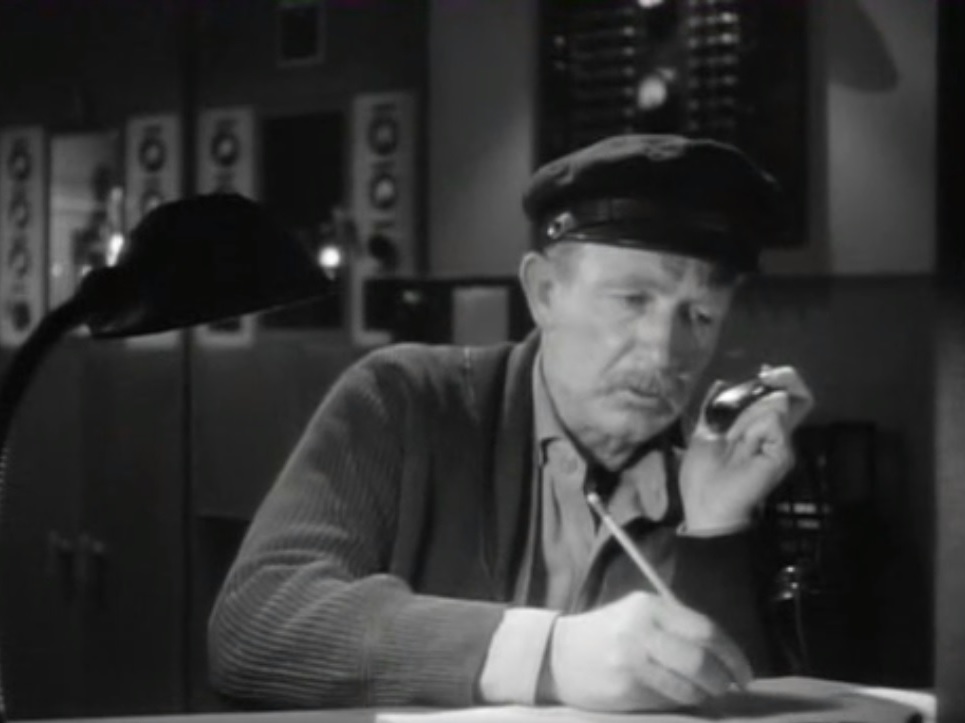
On a lighter note, Walter Brennan plays a lighthouse keeper and I thought it was kind of sweet.
Curtain Call at Cactus Creek (1950)
Dear Lord, this day is testing me. Curtain Call at Cactus Creek is a truly bizarre creation and not necessarily in a good way.
A group of actors are supposed to do a show but it does not go smoothly when a group os bandits get involved (it IS a western).
It seems strange that this film seems to be so little-known (only 77 user votes on IMDb?) considering how insane the cast is: we have Donald O’Connor as the goofy stage hand who dreams of a stage career, we have my queen Eve Arden KILLING IT, and we have Vincent freakin’ Price as the flamboyant, megalomaniac artist.
Oh, and of course our reason to be here today, Walter Brennan. He plays a bandit called… Rimrock…
But whatever charm and star power the film might have, it loses greatly with a very meh intrigue and not the strongest musical numbers – including one of the worst examples of blackface (maybe not something that should be ranked but WOW) I have ever seen in the finale.
Bad Day at Black Rock (1955)
That’s more like it. Bad Day at Black Rock is a very good film. I would be suspicious of a mix of western and film noir but now I’ve seen it and it works so well.
Our main character is Spencer Tracy (I am too lazy to check it out but I feel like we have seen a lot of him this Summer Under the Stars; Captains Courageous, for one) who arrives in the town of Black Rock (the train stopped there for the first time in four years). The town has a strange aura, the people are very hostile towards Tracy and they do not want to help him – he’s looking for a Japanese man who lived in the place but no one says a word.
Walter Brennan plays a man who is both a vet and an undertaker and he tells Spencer to get out of the town.
There’s suspense, there’s great acting, and there’s a very interesting take on racism which I did not expect. I am so glad I watched it.
How the West Was Won (1962)
And we end up with a western as well. And Spencer Tracy is in it as well although this time he’s just a narrator. As for Walter Brennan, he plays the chief of RIVER PIRATES (what’s with this film and Curtain Call at Cactus Creek casting Brennan as a crime person, he seems lovely). And all of this is just a tiny little speck in the epic insanity that is How the West Was Won.
Everybody’s in this film: James Stewart (Summer Under the Stars alumni), Henry Fonda (likewise), Debbie Reynolds (big presence on Shirley MacLaine day and tiny on Red Skelton day), John Wayne, Gregory Peck, Harry Dean Stanton (!)…
„Epic” is the word to explain this film and even if you’re not into westerns or this particular story is hard not to let yourself get swept up in in. Plus, I fell in love with the songs.

 Swingin' at the Seance