Work has been very intense lately and all signs point towards it getting even worse in the following days so the last third of this year’s Summer Under the Stars might prove to be rather rushed, with few thoughts written by me about the movies. But at least I still have some energy to WATCH the films. Although I do think that Dolores del Rio deserves better – both in blog posts and in movie selections.
The Red Dance (1928), dir. Raoul Walsh
The Red Dance is a love story on the backdrop of Russian Revolution. It actually is a good movie and Dolores plays the main role. There is beauty to the world Walsh created and Dolores’s face has that silent movie gorgeousness. Personally, I could not connect with it in a way I often do when it comes to silent cinema – and I love it when I connect with silent cinema so when it doesn’t happen I’m really disappointed.
Wonder Bar (1934), dir Lloyd Bacon
Wonder Bar I did not connect with AT ALL and Dolores del Rio became sort of a non-character here. This is a musical set in a night club in Paris. Al Jolson plays the main character and at one point his performance is announced by something along the lines of „He’s going to do what he does best” and I thought to myself „Is it gonna be blackface?”. Reader, it was blackface. Plus, Kay Francis spends the entire film being sad and this is not the Kay Francis experience I want. I did not enjoy this one.
I guess it seems very unfortunate that I, someone who spent the past few Summer Under the Stars days, complaining about racism in Old Hollywood films will begin the Maureen O’Hara day with a John Ford western starring John Wayne. Oof.
The story is set among soldiers, Wayne is a Lieutenant, there are many young boys who recently enlisted and need to be trained. Among them, as it turns out, is Wayne’s son he has not seen for fifteen years. Soon the estranged wife (that is the Maureen O’Hara character) shows up too and the whole thing turns into a family reunion accompanied by the sound of a boys’ choir singing western songs.
I LOVE sing-along scenes in film and there are SO MANY of those in Rio Grande, I LOVE the gorgeous black and white cinematography… But I hate the racist caricatures of Native Americans. I hate the Southern nostalgia. I hate the John Wayne as a real American hero trope. I hate that there is one woman in a starring role in this movie and she immediately faints and starts cleaning. I am not going to make excuses for these things.
At Sword’s Point (1952), dir. Lewis Allen
Well, if I did not like the weakness of O’Hara’s character in Rio Grande, I should be happy with what she gets to do here. At Sword’s Point is a musketeer movie and she actually gets to play a musketeer!
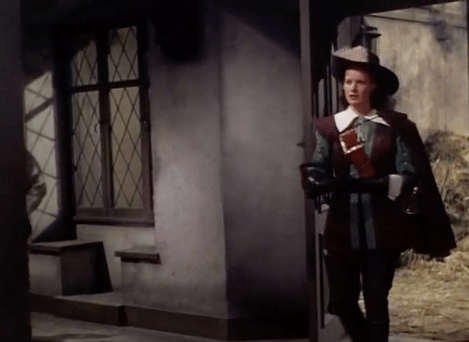
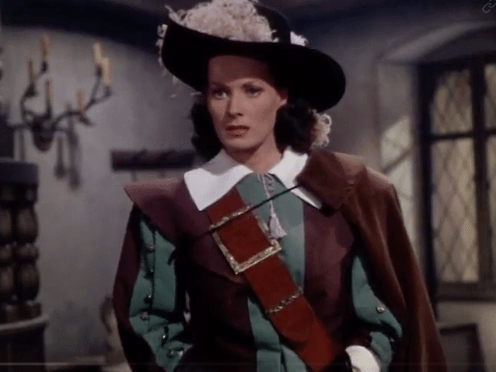
It is kind of weird that she goes from playing a mother of a teenager to someone who is, I presume, almost a teenager herself, but what is even weirder is that she shows up looking like… herself, but in a musketeer outfit and everyone thinks she’s a man. But that was kind of charming and an example of the goofy fun At Sword’s Point is. She pretends to be a man to, as Atos’s daughter, join the sons of other three musketeers and save the princess.
Yes hello, I am a Man.
She is kind of a Strong Woman™ here, great at fencing, wearing pants, but it somehow does feel genuine, even if a bit naive. To be honest, the film reminded me a bit of Mulan 2 (which I guess is pretty embarrassing, for me more than for the film).
Our Man in Havana (1959), dir. Carol Reed
And finally – Our Man in Havana, a British comedy with Alec Guiness, of which I have seen a lot in these past few months. It’s mostly pleasant. It looks good. Maureen looks great. I will have probably forgetten all about it by tomorrow.
Ah, Cary Grant… Recently I re-watched Arsenic and Old Lace and had such a blast – I mean, I always do. The Cary Grant day must be something to be excited for, then, right? Well… I would be lying if I said that the films I watched today got close to Arsenic…
Hot Saturday (1932), dir, William Seiter
Hot Saturday is not a very well- known movie, it is only a bit over 70-minutes long, but it does have some interesting elements to it. It is a story of a small town where everyone knows everything about everybody – if something happens on Saturday, it’s going to be the talk of the town on Sunday. Nancy Carroll plays a bank teller everyone is in love with, Cary Grant plays a local playboy. Soon, rumors about the two spread among the community and cause a lot of harm to Nancy and her true love…
The subject of a woman being shamed and ostracized because of narrow-minded community is an interesting one to explore, and both Carroll and Grant are very charming and charismatic, but this is pretty much all Hot Saturday has to offer. Sadly, I ended up feeling pretty „meh” about it.
In Name Only (1939), dir. John Cromwell
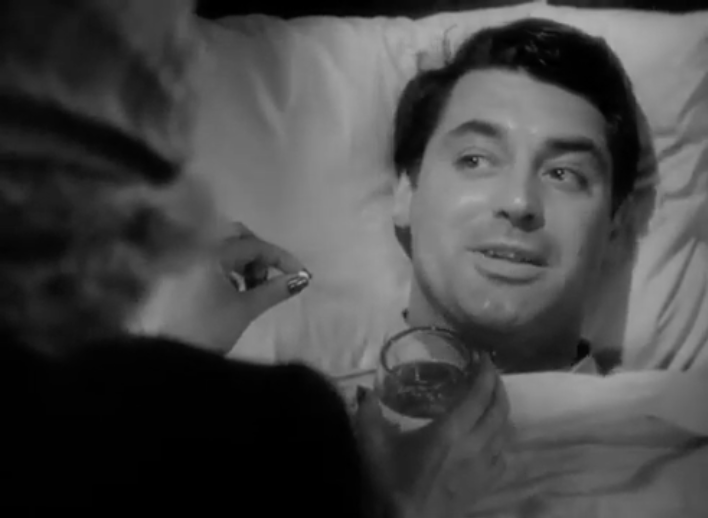
Carole Lombard takes care of poor, sick Cary Grant.
In In Name Only, Cary is paired up with Carole Lombard. Now, that surely means a good time, especially when we first see her on the screen fishing, in full butch mode. But then… it all goes wrong. This is essentially a love triangle story and a not very thrilling one at that – which is unbelievable, impressive in a way, considering the three sides of this triangle are Cary Grant, Carole Lombard, and Kay Francis – how do you mess that up? I think a problem is that the film insists on being melodramatic and pompous, instead of approaching the subject in more comedic, sassy fashion that would make all these stars shine. Carole’s sad energy made me feel a bit uneasy, to be honest. A shame, really.
Gunga Din (1939), dir. George Stevens
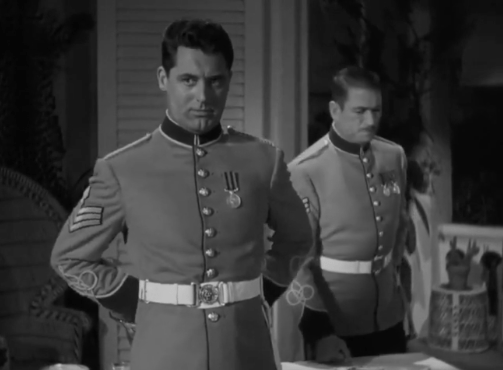
Uniform pic #1
Oh dear. Oh dear. This movie is on the 1001 Movies You Must See List, it is always brought up when discussing 1939 as „Cinema’s Greatest Year”, it influenced like every blockbuster ever… and yet I did not really enjoy it at all.
I am just going to say it right away, I cannot look past the racism (there is SO MUCH brownface in Gunga Din, and Indians are basically portrayed as savages) and the very obvious glorification of imperialism. I know, I’m a snowflake and I am ruining the world because racism used to be okay (yikes!) – so be it. But also the film is simply too long and the jokes are not funny enough to not bet tiring.
But Cary is charismatic and handsome, and the acting and the relationship between the main actors is actually very good. Plus, several action sequences, camera work are quite stunning. I wish I could enjoy it all fully.
The Pride and the Passion (1957), dir. Stanley Kramer
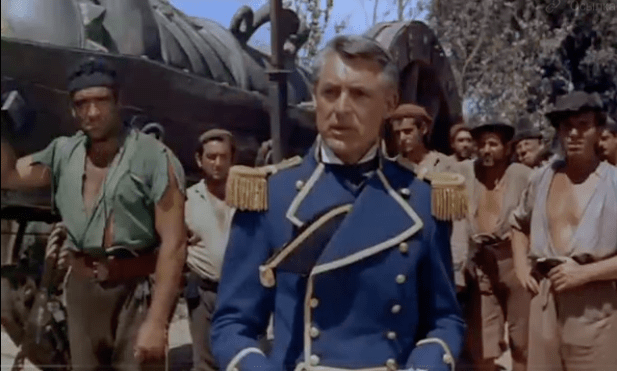
Uniform pic #2
Unfortunately, the last film I watched did not make up for the previous and I knew it wouldn’t as soon as I heard Frank Sinatra’s Spanish accent. Oof. I think it’s be best if I just not say anything else about The Pride and the Passion, another hard-to-get-through-and-for-some-reason-two-hours-long Cary Grant vehicle.
I can’t believe the „meh” Hot Saturday ended up being my favourite of today.
Work has been pretty intense these last two weeks. Yesterday I actually did manage to watch two films for the John Barrymore day (Sherlock Holmes, 1922 and True Confession, 1937), but I had no time to write anything about them. Maybe more thoughtful posts will return, but for now, here is a brief look at what I watched today.
Somebody Up There Likes Me (1956), dir. Robert Wise
The first movie is definitely not much of a Steve McQueen vehicle – it is a Paul Newman picture. McQueen is uncredited, if I understand correctly, this was only his second picture. So it makes little sense to dwell on this one, but I did enjoy it. Newman plays a boxer named Rocky – but not that one, apparently (even though I was confused for a moment). Newman’s performance is a bit ridiculous (the accent, oh my…), but he still managed to charm me.
The Magnificent Seven (1960), dir. John Sturges
Now, this is a Steve McQueen classic! Maybe it is embarrassing to admit I have not seen it before today (but maybe nothing matters after I cam clean about not seeing The Great Dictator).
It is not only a classic Steve McQueen, cool guy performance, it is also, in many ways, a quintessential western and, in my opinion, one of the most fun ones. McQueen is a fantastic leading man, which I found interesting because I realized recently that, even though one might not think it to be so instinctively, leading men, GOOD leading men are hard to find (pay closer attention to leading men in movies you watch in the next weeks – you might notice they tend to be rather bland).
Also, that theme is very iconic and amazing, but the more often it played, the more it started to sound to me like Sims music.
Junior Bonner (1972), dir. Sam Peckinpah
Another one I enjoyed! This one is not a western, but it does have a country theme as it is all about the rodeo. But it is more introspective than flashy, a portrait of a small town and the people in it, the melancholy of their seemingly simple lives, and the real tragedies and hardships that actually go on in such „simple” lives. That is what I found most interesting about Junior Bonner. And it is a Peckinpah film. Who’d have thought.
Also, it was really nice to see Ida Lupino, I feel like we do not talk enough about her career post 1940s/1950s directorial efforts.
The Getaway (1972), dir. Sam Peckinpah
Another score for Steve McQueen! And Sam Peckinpah! Honestly, I was not expecting much from today, I though the movies might all be fine, but they turned out to be actually good and I enjoyed that all.
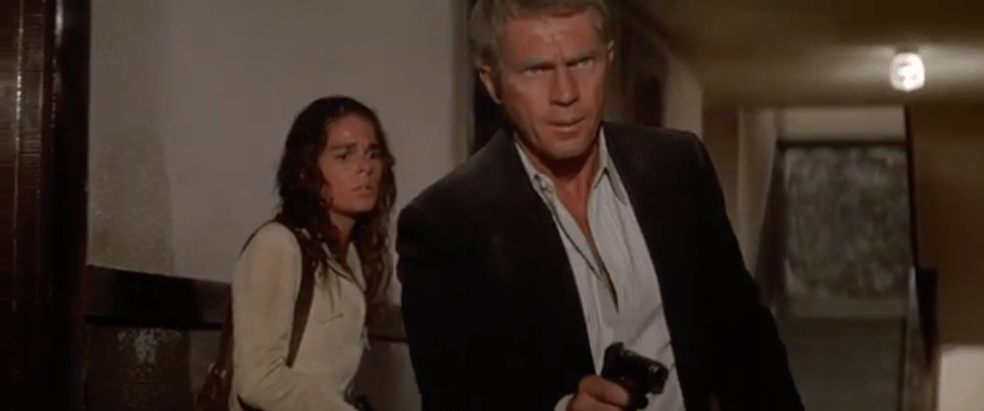
The Getaway is a heist movie in which McQueen is paired up with Ali McGraw whom he later married (I have no opinion on the relationship based just on what I saw on the screen today). And it is pretty entertaining, but also showcases quite a few interesting sequences and narrative choices which was fantastic to see. My biggest complaint is probably that the music was made by Quincy Jones, but you barely hear it! When I saw his name in the credits I was very excited but then it took ages to play and when it did it was only for what felt like few seconds at a time.
The Towering Inferno (1974), dir. John Guillermin
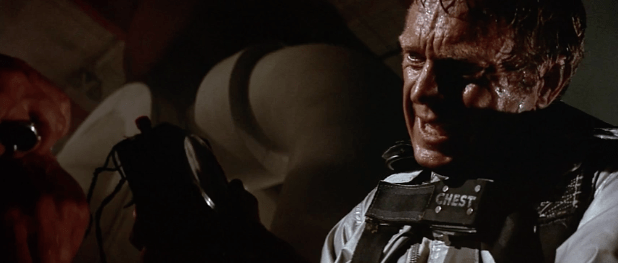
Wow, what a finish. I admit, I have been intimidated by The Towering Inferno for years, I cannot even guess how long it had been on my watchlist. But I… loved it? It feels gross to say but this might be my Titanic? I am speechless. I did not even care about the three-hour runtime.
And the cast (Faye Dunaway! William Holden! Jennifer Jones! Fred Astaire?! And… yeah.. O.J. Simpson…)! The film reunites Steve McQueen and Paul Newman, but this time both of them are main characters and get their due which felt like a very satisfying end to the day. I hope the rest of the month goes just as well.
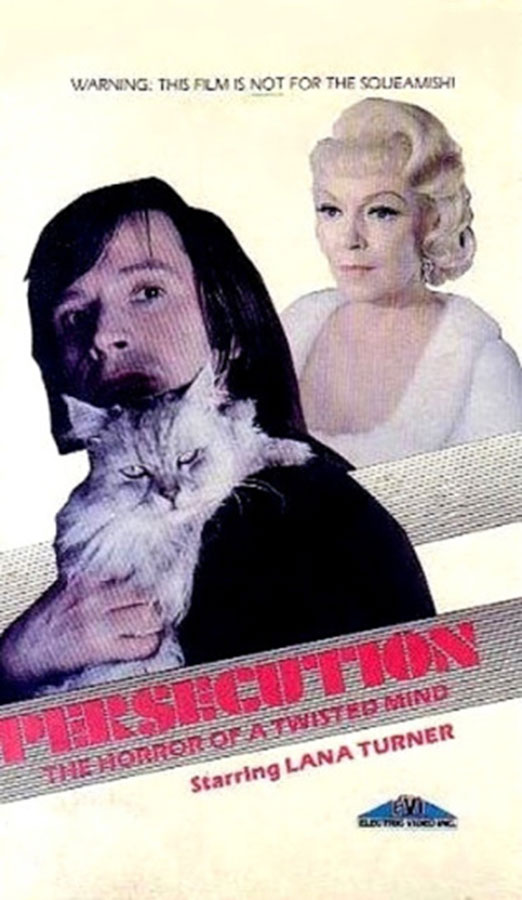
Persecution [AKA The Graveyard AKA Sheba AKA The Terror of Sheba AKA I Hate You, Cat] (1974), dir. Don Chaffey
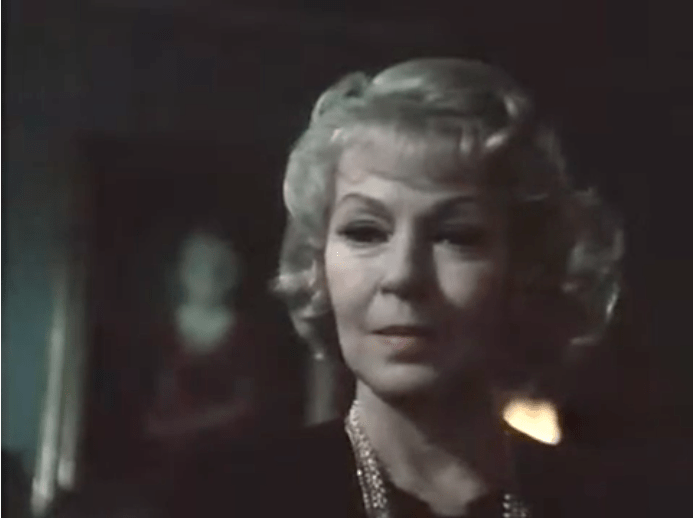
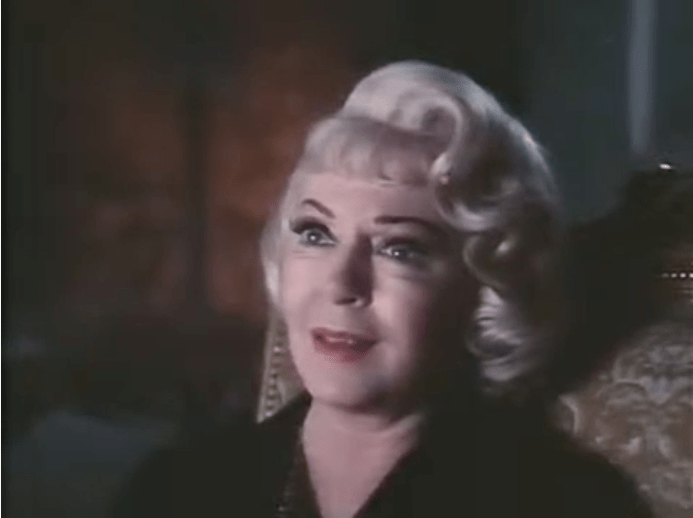
I am not sure if Lana Turner would have been happy about me celebrating her with a movie like Persecution (AKA The Graveyard AKA Sheba AKA The Terror of Sheba AKA I Hate You, Cat). While she might not be remembered as a psycho-biddy icon the way Bette Davis or Joan Crawford are, but this movie is essentially her venture into the „genre”.
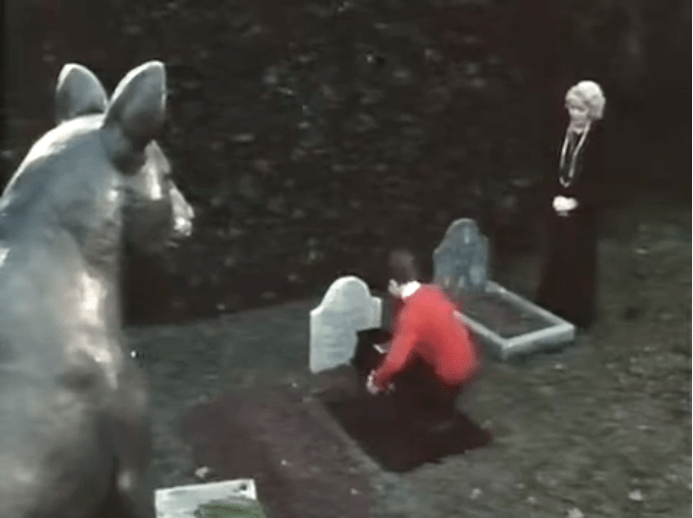
Lana plays a role that is basically a „crazy cat lady” who checks out all the boxes of a hagsploitation icon – she is old and crippled, rich, weirdly obsessed with, and abusive towards, her son… And she loves cats! She spends pretty much the entire movie plotting and scheming and causing harm.
I love psycho-biddy movies and all the adjacent movies, last year during Summer Under the Stars I watched Tam Lin with Ava Gardner and it ended up being one of my favourite films I watched all month. Sadly, Persecution (AKA The Graveyard AKA Sheba AKA The Terror of Sheba AKA I Hate You, Cat) was just not that great. Maybe I was just not in the mood, or maybe I do not enjoy watching Lana Turner in bad movies because I have always thought of her as quite a tragic and wounded figure and it is almost sad. With other actresses, I can usually kind of feel them owning the situation, not with Lana.
I still do not hate it, 70s made-for-TV-like thrillers are always alright in my book. I just wish this was something I could get obsessed with.
Sorry! No time to write today! But I did manage to scribble a few words about one movie at the end of the day. Here’s what I watched:
The Student Prince in Old Heidelberg (1927), dir. John M. Stahl & Ernst Lubitsch
A Lady of Chance (1928), dir. Robert Z. Leonard
(Norma Shearer looks INCREDIBLE in this film).
Let Us Be Gay (1930), dir. Robert Z. Leonard
(me @ the Polish government)
This is the kind of Norma Shearer you might have never seen, at least at the beginning. When the film starts and you see the female character on the screen, you might be wondering if it actually is Norma, this unglamorous, frumpy housewife. It is kind of odd to see her like that – but odd does not mean bad!
Personally, I do not like making a big deal of roles in which actresses do not wear make-up, God forbid – calling them ugly. But I guess there must be an element of worry for every beautiful actress who realizes she is constantly being judged for her looks to expose her bare face, or wear less-than-flattering costumes. And it was probably even scarier to do that in 1930. So I enjoyed seeing that side of Norma Shearer.
I am not sure if apart from the looks the character she plays here is very interesting, though. She starts off as this overly devoted wife, who wants nothing other than make her husband happy. With her jumping around the house to bring him every little thing he might want, she is a caricature. When you see a character like that, it’s pretty obvious that something big has to happen to bring chaos into their world – and the biggest thing here would be the husband cheating. And of course, he does. And of course, she undergoes a transformation into a new woman – basically, into Norma Shearer (so it is no longer something we have never seen from her before). But her new life is going to go upside down as well, because of one particular reunion…
Marie Dressler is in this film and she is always a joy to watch.
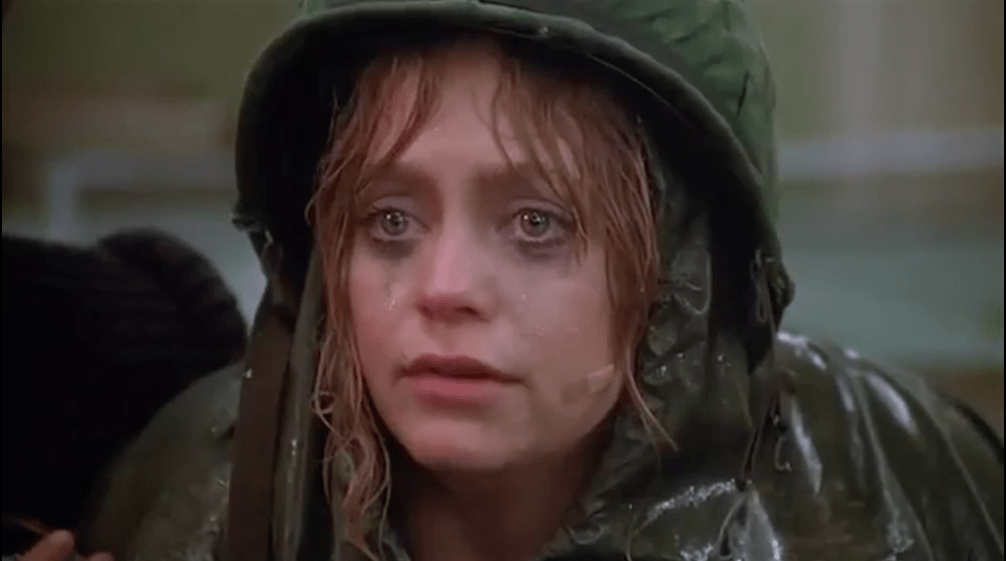
„She always did what she was told…” is one of the first things we hear about Goldie Hawn’s character in Private Benjamin. She also always wanted to be a wife, so it seems like a good thing that we meet her on her wedding day. Too bad that during wedding nice, the new husband suddenly dies. Naturally, Goldie joins the army. What we get is a „fish out of water” comedy, Goldie just does not fit in the army regimen. Until she does…
(It’s very Mulan).
As soon as I saw Goldie Hawn’s wonderfully expressive face I knew I would enjoy watching Private Benjamin. And I wasn’t entirely wrong! There are some funny moments and some enjoyable moments of female camaraderie. The first half of the movie is a very solid. But then my problems with the movie begin.
I really don’t like that the stories that introduce women to „traditionally male” (ugh) settings always have to eventually start focusing on sex. But fine, I could let it go – but I’m having a hard time with the [SPOILER] sexual assault situation from the film. „Benjamin” is almost raped by a superior which is awful but, sadly, all too common. But the way the film frames this plot line is almost as if the assault ended up being good for her because it allows her to make the army transfer her to France so that she can be with her boyfriend. I was disappointed.
But it’s also entirely possible I’m just overreacting and biased because… I don’t know, I guess I’m just not that into army being shown as an ultimately mostly fun thing. But hey! [SPOILER] At least in the end she seems to be liberated and in charge of herself!
TheFirst Wives’ Club (1996), dir. Hugh Wilson
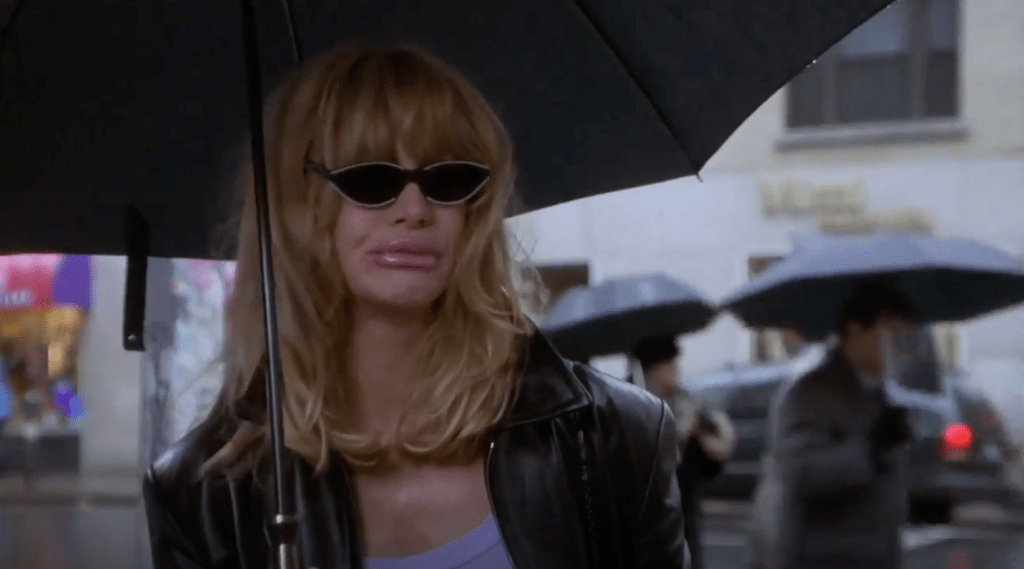
Maybe Private Benjamin ended up being a disappointment for me, but at least I have TheFirst Wives’ Club. How could a movie with Diane Keaton, Goldie Hawn, and Bette Midler not be the best? It’s as if it was tailor-made to all my interests. Plus, Goldie’s character and performance is insane. I loved it.
Side-note: I’m really dumb and for years I thought the movie was about First Wives, as in First Ladies. So weird.*
*It’s actually about three college friends, thirty years later, whose husbands left them and when their fourth friend commits suicide, right after her husband marries a younger woman, they decide to get back together and get revenge on their exes. But I guess you knew that because I’m the last person in the world to see this movie.
A Woman of Paris: A Drama of Fate (1923), dir. Charlie Chaplin
My opinion on this film might be surprising to some, because it seems like the film is generally not well-known, but those that have seen it consider it „good” – not great, not groundbreaking, but overall good. Well, I think it is mostly „meh”.
Apparently, Chaplin based A Woman of Paris on a true story, but I would have never been able to tell. I think that especially in the silent cinema this trope of a good girl arriving in the big city where she gets swept up in the nightlife and becomes a femme fatale of sorts is a common one and one I no longer find interesting.
I did not know anything about the main character by the end of the film. I did not connect with anything in it. It is just that – „meh”.
The Great Dictator (1940), dir. Charlie Chaplin
Yes, the rumors are true – I have not seen The Great Dictator before today. I’m not exactly sure why, probably I was just always distracted by everything else. But maybe there was a worry in me, an anxiety about seeing Chaplin make gags about Hitler at the same time as Hitler was murdering people across Europe. I have heard the famous speech from the film’s finale many times, though, and every time it made me cry – maybe I did not want my feelings about it spoiled.
It didn’t. The Great Dictator is an amazing film. The acting is wonderful (I think I am one of the few people who genuinely enjoys, and can think of Chaplin as „just a great actor” and not necessarily always a comedian-actor-director combo), the technical side of things seriously impressive. The most mind-blowing part of it all is, of course, the fact that it WAS made in 1940. THIS kind of look at Hitler. I cannot stress enough how important of a historical document this movie is.
But I have to say that I really appreciate Chaplin later saying he would never have made this film if he realized the true horror of Hitler’s atrocities. A director thinking making nazis into not much more than silly goofs was maybe not the greatest idea – what a concept. I wish we had that today (*cough*).
I struggle with calling The Great Dictator a masterpiece because I am honestly not completely sure if I truly consider it an overall amazing movie, or if I am just enchanted by The Speech. But that’s okay, I don’t think many things could top it.
More than machinery, we need humanity; more than cleverness, we need kindness and gentleness. Without these qualities, life will be violent and all will be lost.
Monsieur Verdoux (1947), dir. Charlie Chaplin
Well, in Monsieur Verdoux, Chaplin is less of a lovable barber, and more of serial killer, but he still gives speeches of sorts. This time they are much more direct, maybe even bitter – the message „love one another” has been replaced with „what does one individual’s crime matter if there is an entire industry built on mass killing?”. It is less uplifting, for sure, but can we blame him? The Great Dictator was made soon after WWII began, Monsieur Verdoux comes with the experience of the entire war. I can understand it was particularly difficult to believe in the goodness of mankind then.
It is a dark comedy based on the true crime of a man who married multiple women and killed them for their money, and it is a commentary on a system in which the pursuit of wealth leads to violence. From a more technical point of view, I would say Verdoux lacks in certain aspects, but it is still a solid piece of work. Just keep in mind it will most likely depress you.
It’s very late, I had a much busier day than I anticipated, I’m tired, but I managed to watch one Sylvia Sidney film today. And boy, am I glad that I did.
You and Me (1938), dir. Fritz Lang
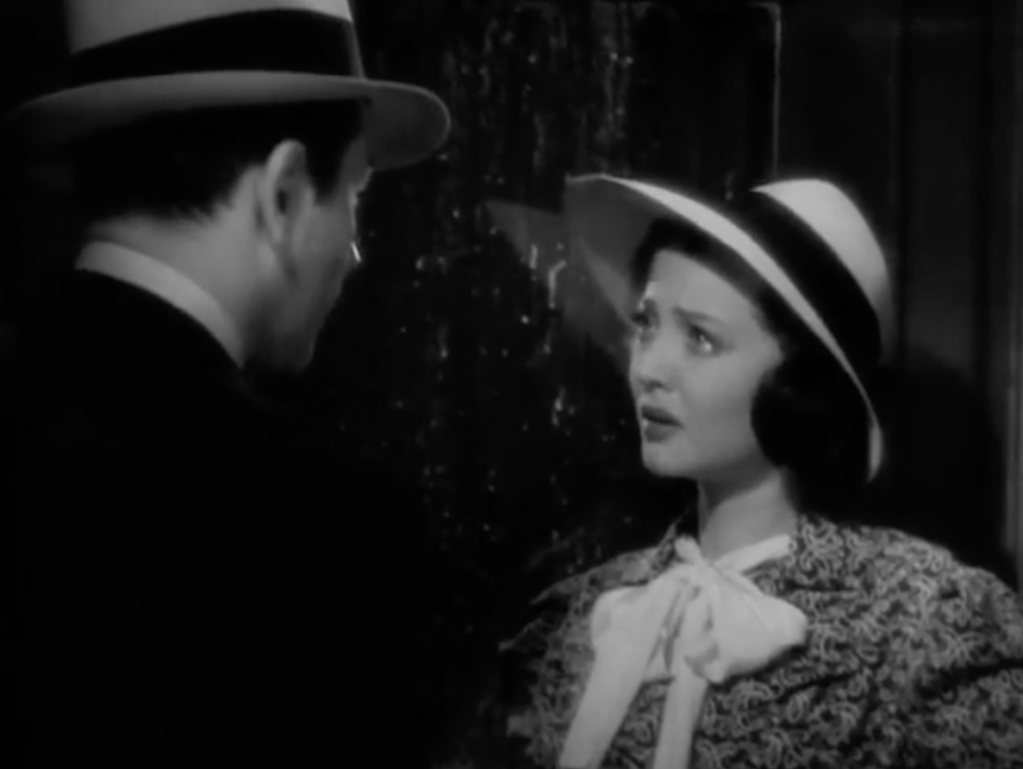
What we have here is a story of criminals in love. But if your mind is immediately going to the likes of Bonnie and Clyde or Natural Born Killers (both of which I love, by the way), this is something else. On the surface, You and Me seems like your classic slice of life melodrama, about people overcoming hardships of life. And in the centre of it all is a sweet, sweet girl Sylvia Sidney, a shopgirl. But she is a criminal! In fact, tons of employees in her department store are criminals, on parole. The owner of the store wants to help so he gives them jobs. The catch is, they do not know about each other. Mostly. George Raft is one of them. He likes Sylvia so much he wants to leave town to not „have bad influence” on her. But as he is about to leave, she proclaims she wants to marry him. And they do. But there is trouble to come.
❤
I. LOVE. THIS. MOVIE. I cannot even put into words how much of a surprise this was. Why is it not considered one of the classics? Sylvia Sidney is just adorable and SO beautiful. In fact, I noticed she has a very modern look – with a different haircut, you could claim she was an Instagram model and it would be believable. Even George Raft, who is often a sinister presence in his film somehow seems cute here (even in scenes when he probably shouldn’t).
This movie has two WILD musical numbers, with elaborate „illustrations”. In fact, it begins with some sort of an… anti-capitalist song (that was my initial thought, as the time went on I realized it might have been something else but never mind all that). And whenever something happened that made me think that maybe a part of the film won’t work, it proved me wrong. For example, there is a part near the end that ventures towards didacticism, but the use of humour is so clever, it does not bother the viewer at all.
And it is a Fritz Lang movie after all: the camera work at certain parts literally made my jaw drop, the play with shadows is amazing. At first I thought the film-noir label was kind of a miss but I can definitely see parts of it. But it is not a straightforward crime film, I would call it a „sincere crime romance”. I loved it. I don’t care how naive people may call it, how sentimental. I am so happy to have received such a wonderful gift the evening.
I managed to watch SEVEN movies today, which is great news for me because my watchlist is infinite and every little bit helps, but that means I did not really have time to write. And so, here is a very quick post about many Burt Lancaster flicks.
Vera Cruz (1954), dir. Robert Aldrich
The plot to Vera Cruz is: Gary Cooper and Burt Lancaster team up to escort a rich lady transporting gold to Vera Cruz. Troubles ensue, characters clash, the historical „Mexican war” setting looms over…
My favourite part was the Cooper-Lancaster, older-younger relationship but even that could have been developed better. It is a fine movie but not my favourite Burt Lancaster western I watched today.
Run Silent Run Deep (1958), dir. Robert Wise
In this one Lancaster teams up with Clark Gable! What else is there to say, I do like a sea-themed movie in August.
Il Gattopardo (1963), dir. Luchino Visconti
This movie is three hours long – but it does not feel like it. And it is beautiful. But! I honestly like the book more and I did not LOVE the book. What does it mean?
The Professionals (1966), dir. Richard Brooks
Burt Lancaster’s western #2 and he teams up to save a rich man’s wife. I admit, it was a pretty engaging adventure, but if I had to pick the best Burt western I watched today, it would be…
Ulzana’s Raid (1972), dir. Robert Aldrich
I am surprised I ended up thinking highly of this film, as at the start it made me cringe A LOT with the racist attitudes towards Native Americans the characters have (westerns, am I right?) – until it got SO over the top, one had to assume it was all very self-aware. It is a heavy movie, an allegory for the times closer to the early 1970s than the Old West. Something tells me I am going to be thinking about this one for some time.
Atlantic City (1980), dir. Louis Malle
People love this movie, which is understandable – it’s wonderful! And it definitely has Burt Lancaster in the best role I saw him in today (but it still does not come close to my absolute favourite of his, Elmer Gantry).
Local Hero (1983), dir. Bill Forsyth
What a fun treat to end the day with Burt Lancaster in a British comedy with Peter Capaldi. Huh. Isn’t culture great.
 Swingin' at the Seance