Happy Jane Fonda Day! The greatest day, truly. And I decided to kick it off with a movie I have been excited for for a very long time, I cannot even tell you how many years it’s been on my watchlist. Walk on the Wild Side is a lesser known Fonda flick, but it also features Barbara Stanwyck, which actually made me almost watch it during Summer Under the Stars a few times but it never happened — until now!
So, with that much waiting, so much excitement — the movie better be amazing, right?
Well.
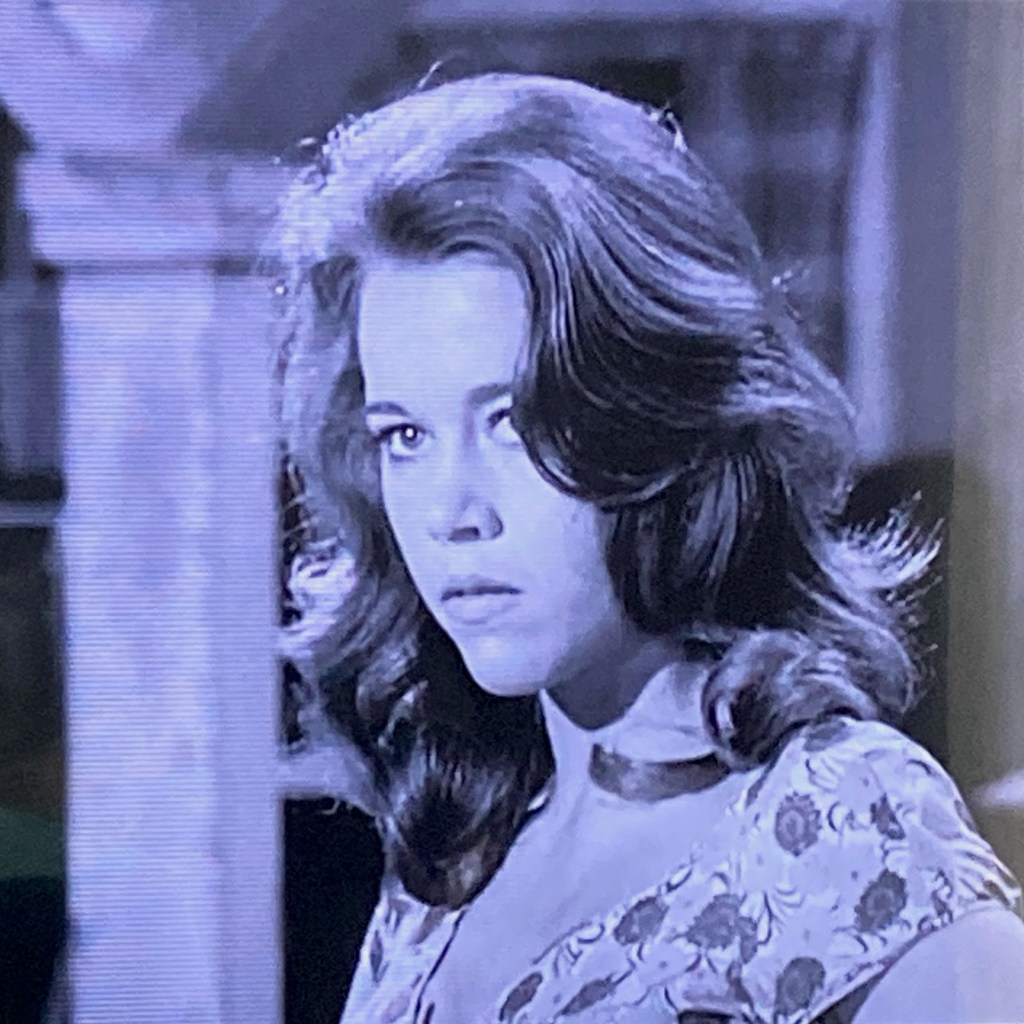
It starts out so promising, Laurence Harvey and Jane Fonda are making their way down the South, hopping trains, very much 60s rebellion, she’s amazing, they’re heading for New Orleans, one of the best places to set a story…
And then it turns into a fairly bland romance between Harvey and Capucine (look, I’m not gonna get mad at getting the opportunity to stare at Capucine for 90 minutes, but that’s, shockingly, not enough). Even the brothel-running lesbian Barbara Stanwyck doesn’t help. To be honest, the film’s biggest problem is probably Jane Fonda — she is just the best part of it, and when she’s not on screen (which is most of its runtime) Walk on the Wild Side ends up being disappointing.
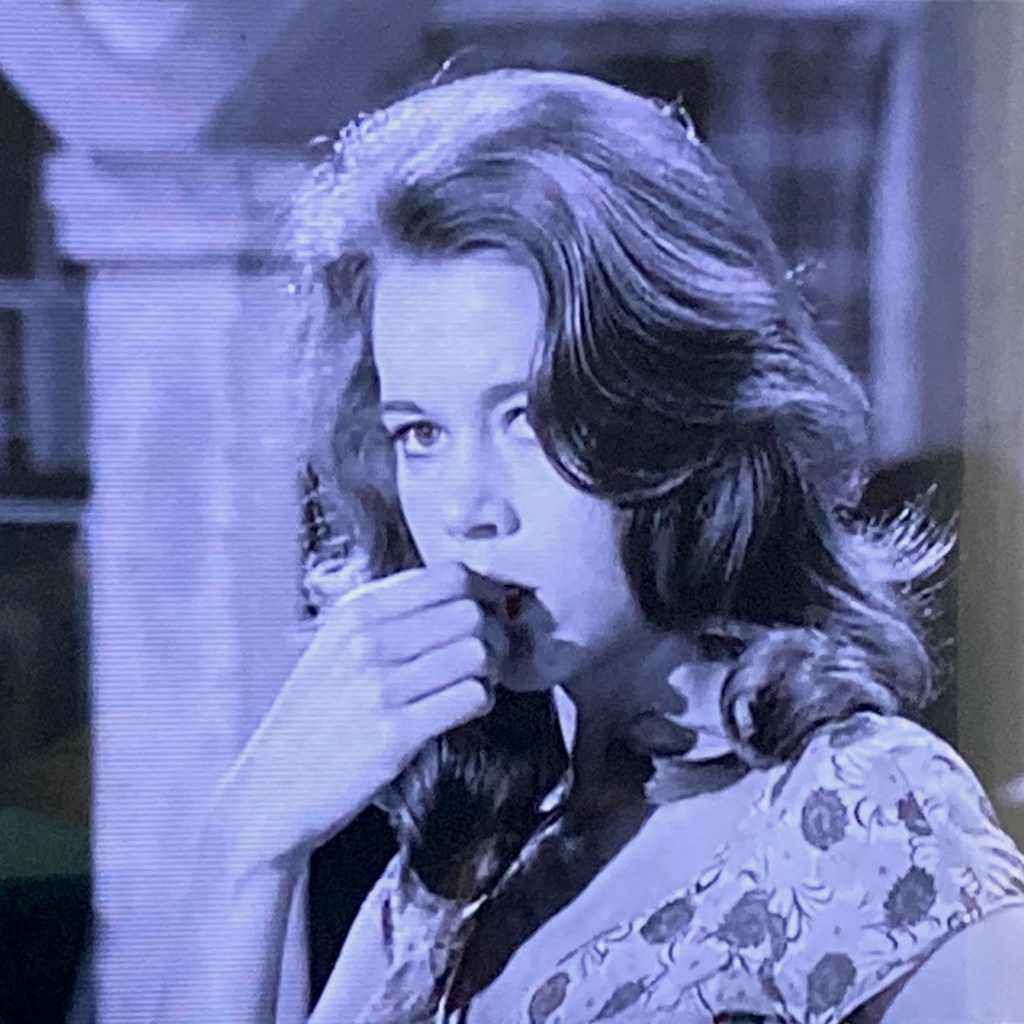
Enjoy the pictures of my TV
But to the movie’s credit, it does feature what is now one of my favourite quotes of all time: “You’re crazy! Always getting hungry like you was a millionaire!”
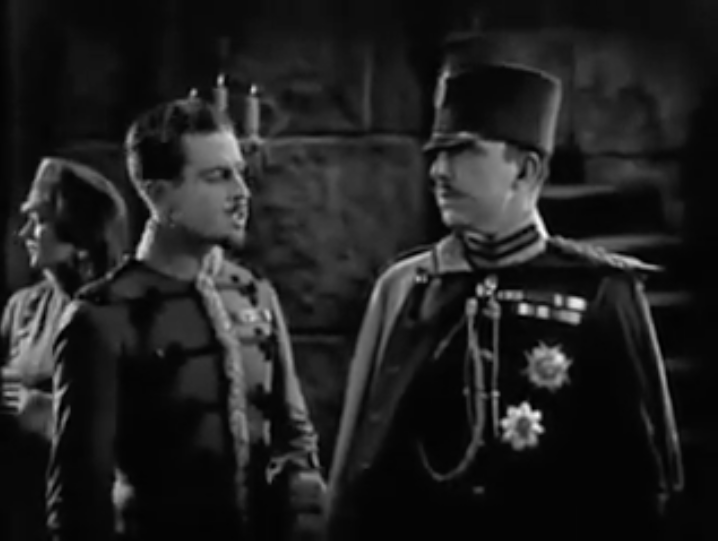
The Prisoner of Zenda is a dramatic adventure tale of intrigue among the royalty… I guess… There is a king and a duke who is up to no good. The day before coronation the (future) king drinks drugged wine which knocks him off, and if he misses the event, the duke would get the throne. Luckily, the king’s cousin who looks exactly like him is in town and so they engage in ye olde switcheroo.
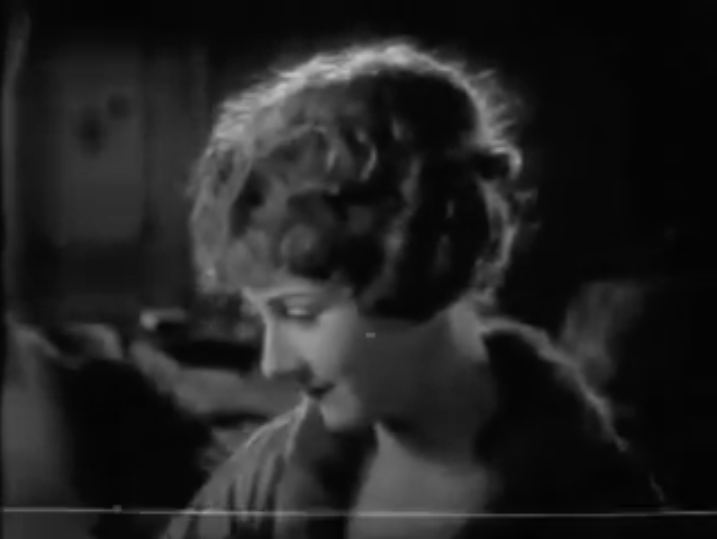
Flavia, the purest soul in the kingdom
Somehow, in 1922, this is the THIRD film adaptation of this story. Okay.
I watched the film for Ramon Navarro who is not really the main character (he plays the guy who brings the wine) and is among people who have a similar aesthetic to him which means he does not completely stand out. But — one can definitely see the charisma and good looks he had going for him.
This is it.
If it wasn’t obvious, I was not terribly impressed with The Prisoner of Zenda. It is not that riveting of a story and it is not as beautiful as silent movies can be. Still, it has its moments.
The part of the film that grabbed my attention the most is Barbara La Marr. I have been meaning to get acquainted with her filmography (honestly, mostly because we share birthday) and now I want to more than ever because she is beautiful and a fascinating presence on the screen.
I also happened to watch a lesser-known Marilyn Monroe vehicle, Don’t Bother to Knock, today and I feel like I might have had something more substantial and interesting to say about that one (most because the film itself is more interesting). Alas! I am committed to sticking to the Summer Under the Stars schedule.
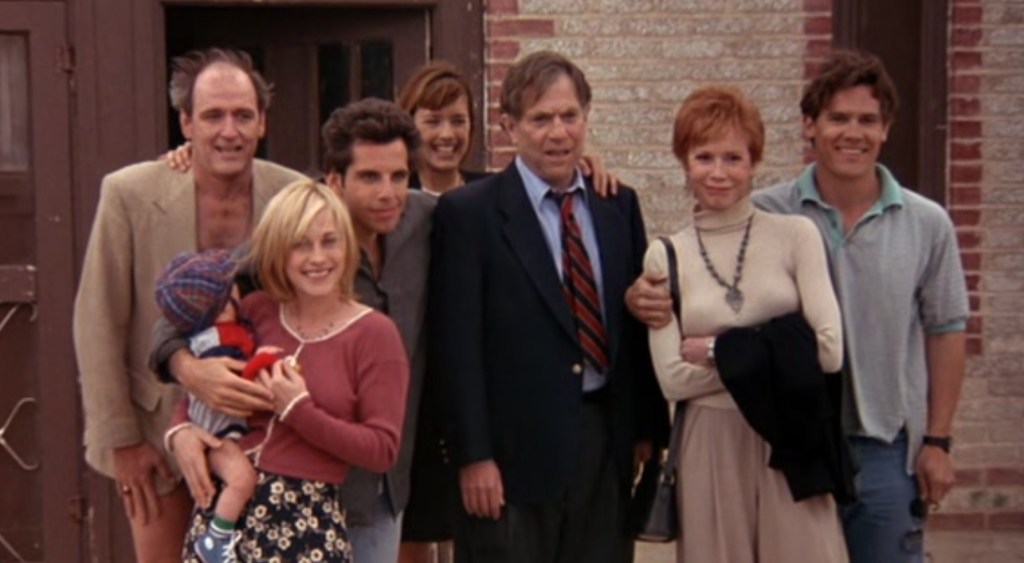
This is possibly a bit of a shameful thing to admit, but until today, I did not know George Segal passed away earlier this year. I suspect that in March, when it happened, I was in the midst of one of my news rehabs, that are supposed to help to save whatever mental health I have left. But, admittedly, I also cannot say I am the biggest expert on the life and career of George Segal. I have seen King Rat and Who’s Afraid of Virginia Woolf, but other than that, mostly the later movies in which his role was pretty much cameos.
Having said all that, it seems even sillier that the movie I watched, in a way to honor him, was Flirting with Disaster, in which Segal has… pretty much a cameo.
Another problem with the film is that it was made by David O. Russell, someone I do not trust, to put it bluntly — his personal life aside, I have trouble connecting to the stories he tells and the way he chooses to tell them. It makes me worried my bias might have negatively impacted the experience of watching Flirting with Disaster, because to be honest, it seems on paper like something I might enjoy. The story is cute (ON PAPER) and the cast is amazing.
source: IMDb.com
George Segal plays alongside Mary Tyler Moore and this turned out to be problem number three — she does overshadow him a bit. Well, I will try to show more respect to George Segal because I feel like I did him wrong.
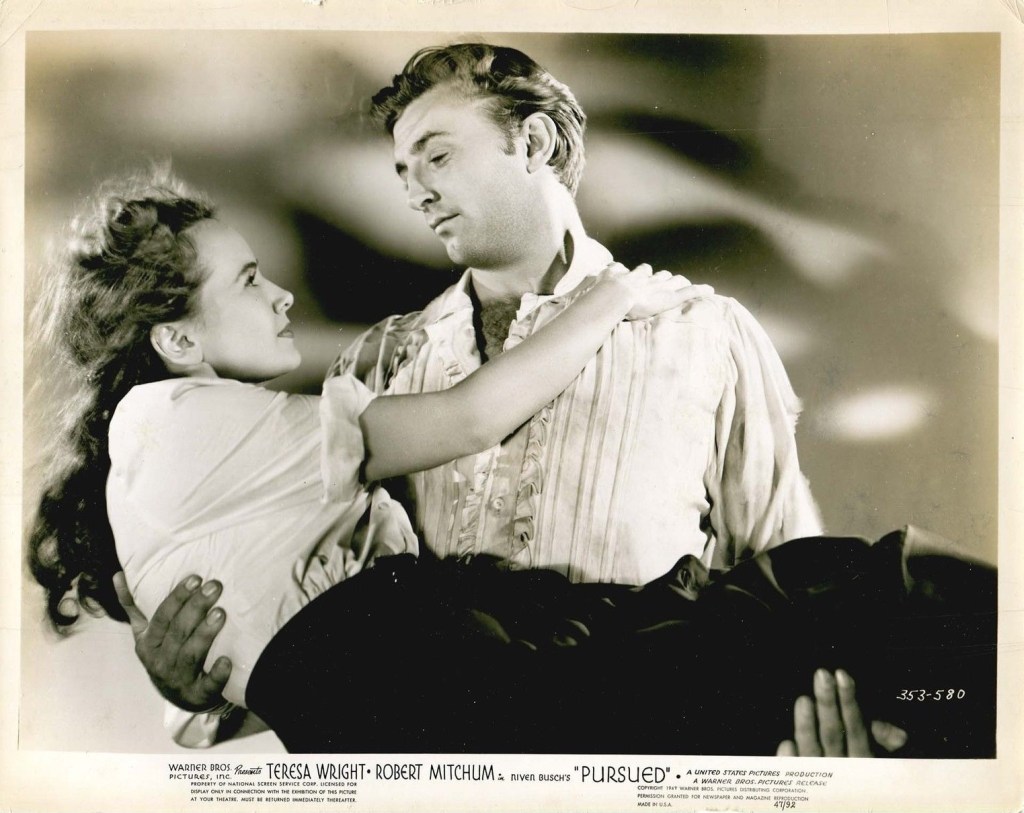
Pursued is a “western melodrama film noir” starring Robert Mitchum and Teresa Wright. And while the genre description might sound ridiculous, maybe even headache-inducing, it is actually on point.
The film begins with Teresa Wright arriving at a desolate hut where she meets Robert Mitchum (in a very elegant shirt). It becomes clear immediately that Mitchum is in hiding. The two talk about escaping together. Next, Mitchum starts sharing his life story with her, which is all great, not that unusual for a movie to consist of flashbacks — but what is a bit odd about Pursued is that Teresa Wright’s character was actually a participant in all the events told because she and Mitchum’s character grew up as siblings. The story is long and twisted and includes a plot of what could easily be a hundred episodes of a soap opera — if not more.
A very elegant shirt (source: IMDb)
And yes, this is one of those stories in which two people are raised together, in the same house, from childhood but end up falling in love which is okay because they’re not blood-related. Oh boy.
Pursued is all drama, traumatic memories repressed, killers pursuing (hey!) children, silver spurs, brothers fighting, war, New Mexico deserts, secrets… In other words, the part of the description most prominent in the movie itself is the “melodrama” section. And that is not a problem in itself, I enjoy a juicy story and Pursued is never boring. It can be a bit exhausting, though. You need to be in a very particular mood to appreciate what is going on.
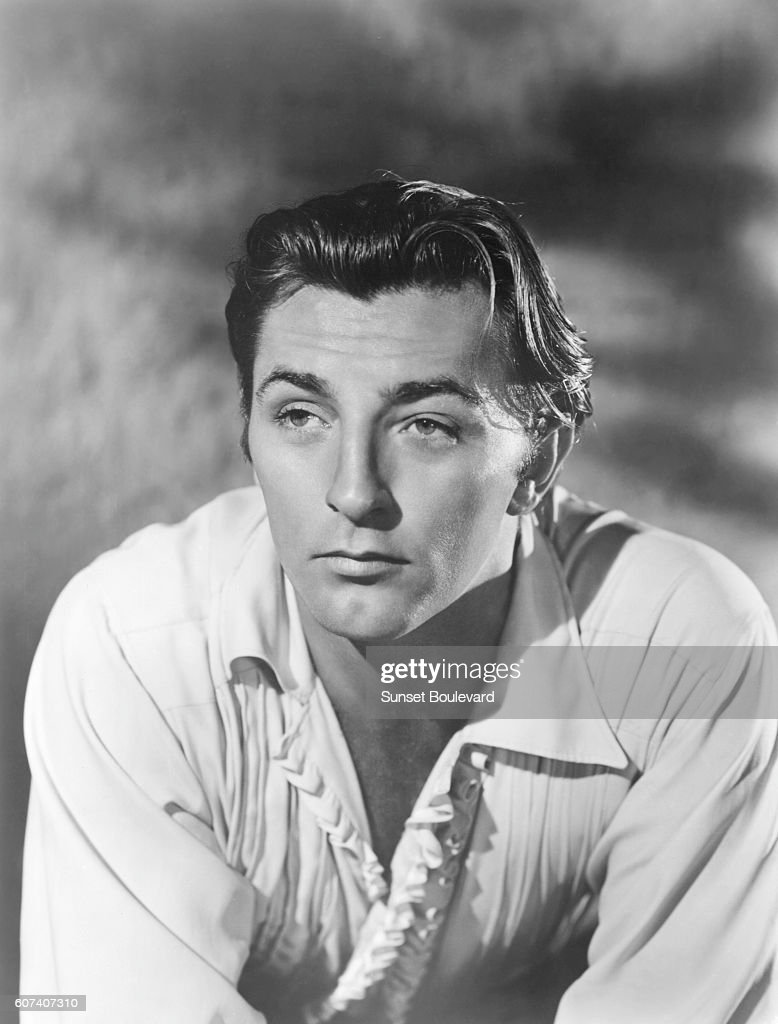
If you’re not, at least Robert Mitchum is very hot in this film.
American actor Robert Mitchum on the set of Pursued, directed by Raoul Walsh. (Photo by Republic Pictures/Sunset Boulevard/Corbis via Getty Images)
Passport to Pimlico is a good old Ealing Studios comedy, something that to me always signifies at the very least a PLEASANT time. And it IS a pleasant film!
The movie begins during an English heat wave (bittersweet to watch, during an unexpected coldness where I am these past few days) with a literal explosion, as a bomb detonates in Pimlico in London. What becomes unearthed is a treasure from the fifteenth century, including a document that has never been revoked, declaring Pimlico a part of the kingdom of Burgundy. What that means is that Pimlico is independent of Britain.
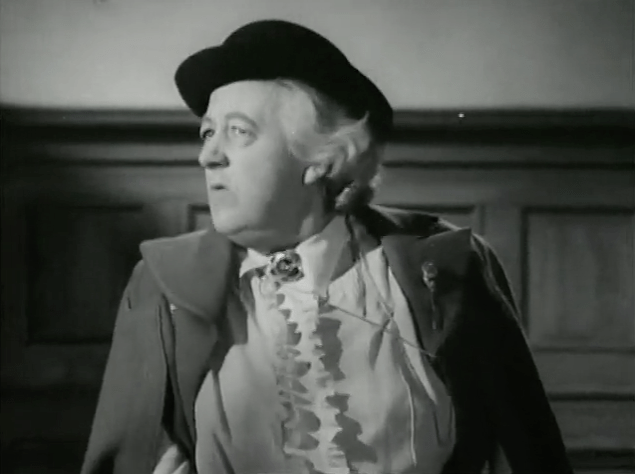
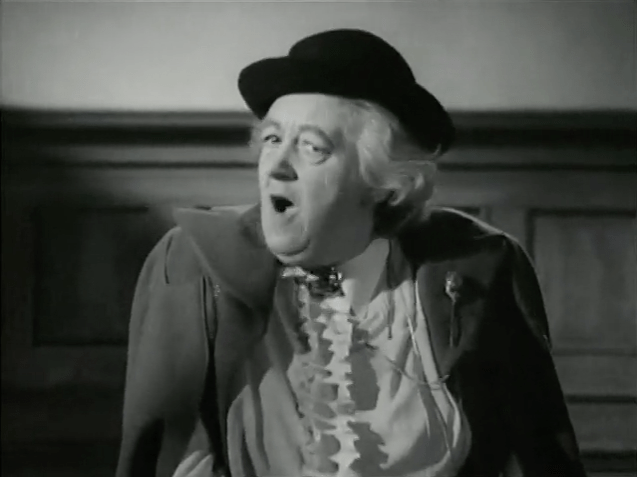
The film is definitely wacky and goofy, a true to form comedy. I oftentimes struggle to write anything resembling deep analysis when a film’s main purpose is to be funny. I guess there could be something to say, though, about what it really means to be a nation, I’m not sure what. I watched mainly it for Margaret Rutherford, who is featured actor today on the 2021 TCM’s Summer Under the Stars, and while her role is significant, she is the professor who tells us what the found documents mean, it does not get that much screen time. I guess that’s not surprising, seeing as there seem to be 8000 characters in this 80-minute movie.
I have to say, I did really love the cinematography. The film looks like it could have been made in Hollywood like a decade earlier, but let’s be fair here, the Europeans had a pretty good excuse not to improve their film production for several years. Still, the camera work, the light and shadow makes certain scenes truly beautiful.
The film reminded me of one of my favourite Polish comedies, Treasure, which was released just a year before. It’s not just because of the treasure being a significant part of the plot, but also because both movies were filmed pretty much right after World War II, in cities that endures incredible destruction. It is more obvious in Treasure, where the characters literally make their way through the ruins of Warsaw, but the London of Passport to Pimlico also carries the unmistakable trauma of bombings, not only because of the actual bomb site, but also because it seems strangely… empty. There is undeniable tragic side to the comedy set in these particular places, in this particular time, but also a lot of heart and a lot of hope. I wonder how we’re going to approach humour after our current crisis, if we ever get out of it.
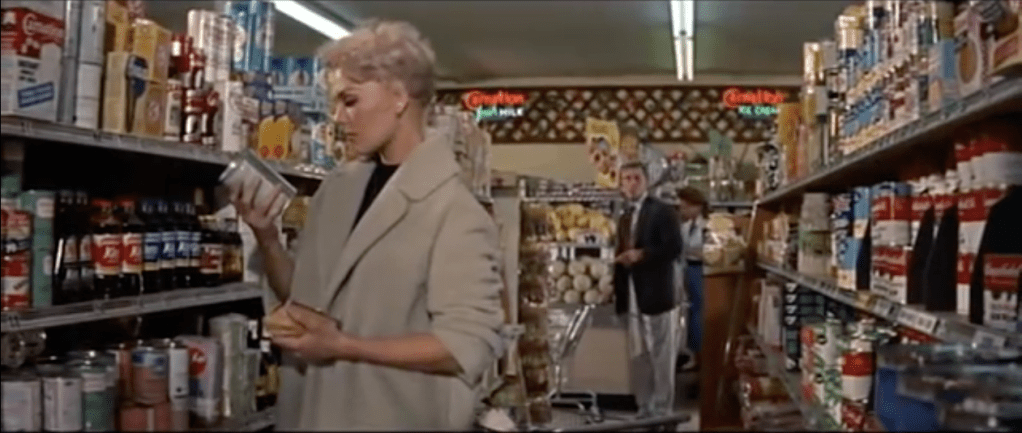
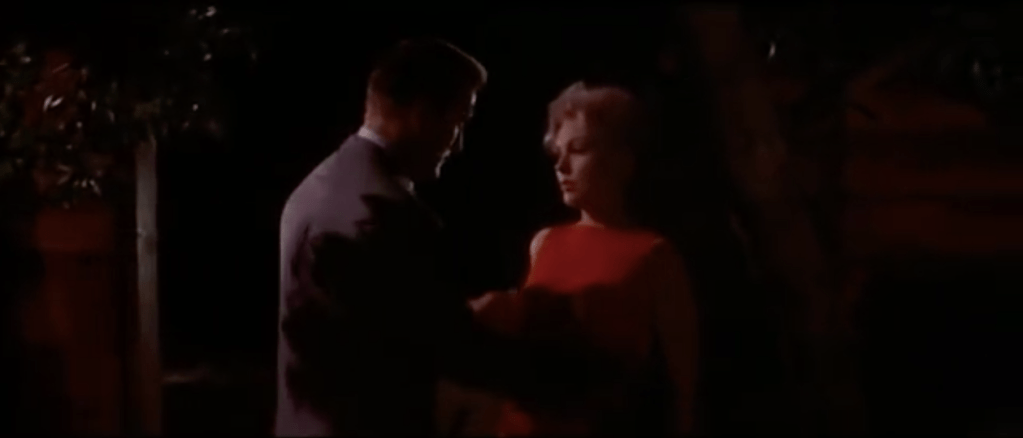
I realized some time ago that I am a big fan of Kim Novak, I have known for a long time that I am not at all a fan of Kirk Douglas. But I sat down to watch Strangers When We Meet with an open mind, especially since it became clear pretty quick that the film was a bit of a Sirkian melodrama (other people have pointed it out too) and I love Sirkian melodramas.
I also love 60s Los Angeles and that is the time and place the story is set in. Douglas plays an architect who is about to start a big and interesting project for a famed writer. Kim Novak plays his neighbour, mother of his son’s friend. The two are unhappy in their marriages, for different reasons, and soon begin the affair. But apart from them both being married, Kim deals with some darkness in her past that makes the love harder.
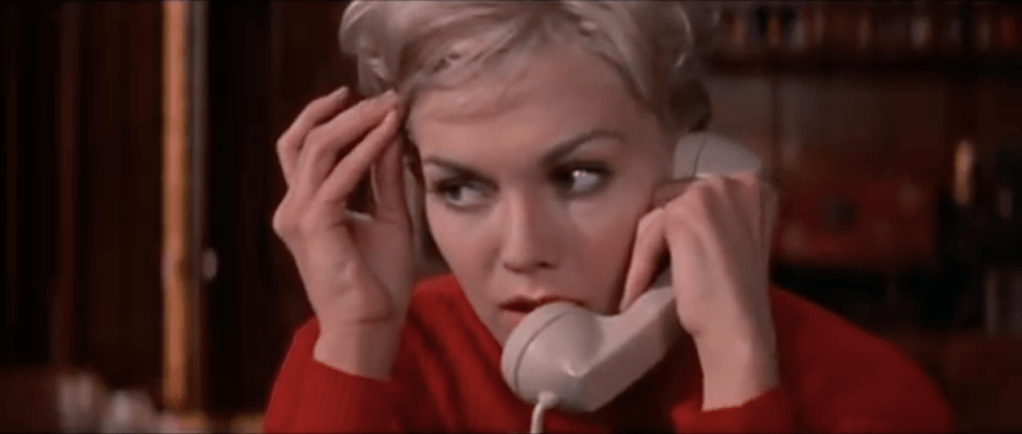
This might be my bias, but Kim Novak is the best part of the film. She is mesmerizing: sad, beautiful, and somehow otherworldly and so normal at the same time. She is given some difficult material to work with in the film. Fairly early in the film we find out that she has a stalker who calls her. Her husband doesn’t want to sleep with her (an interesting and unexplored part of the screenplay, I wonder if there could be a gay reading of the character to be made), which obviously hurts her a lot. She harbours a terrible secret. She seems to long for love.
And here we come to the most important part of the premise, which is, of course, the love story between the two leads. At first, when they are strangers who do meet, it works really well (again, in large part because Novak is so good). Despite my less than warm feelings towards Douglas, I did feel something when he took her to show her a house he was working on.
But then the romance starts to disappoint: while Kim Novak’s home situation makes it understandable why she would want to seek passion, it is difficult to me to excuse Douglas’s actions: his wife seems, frankly, really nice. I felt bad about her being mistreated by her husband, when her one crime seems to be not being exciting enough. Then again, maybe that’s a good thing? At the beginning of the film I said to myself: “They just don’t make adultery dramas like they used to!” And that could be it — one of my film pet peeves is when a romance blossoms between characters who are already in relationships and their partners are shown as the worst people on earth just to justify the new affair (WHY were you together in the first place?!). It is nice to be presented with complex and, yes, problematic characters.
But I also think that these days it is harder to excuse adultery. Of course, cheating was always a horrible betrayal of trust and an unbelievably hurtful thing to do to someone you are supposed to love, but let’s be real — there were TONS of reasons why you would have to stay in an unhappy marriage, even if all the love was gone. There are still people who have to stay for different reasons, sadly, but those Sirkian housewives would at least be able to open a bank account today.
Still, there are other things I was disappointed with in Strangers When We Meet. There is one incredibly difficult scene in which Kim Novak’s character shares a painful memory with Douglas and is met with nothing but victim-blaming. It is awful, but also, sadly, very real — and that is something that can be seen as a good thing, like an uncomfortable truth about how men view women. But it also makes it a bit harder to get invested in the love story. At the end of the movie (I don’t think it’s necessarily a spoiler, you know a melodrama won’t have a happy ending), my heart aches for the sad, tragic Kim but doesn’t care about the affair. Is it a failure of the screenplay, or is it an understandable way of looking at these characters? Regardless of my previous criticisms, I choose to see the latter.
But come on, Walter Matthau was a terrible choice for a villain.
If there is anything that a person can still depend on in this messed up world of ours, it is my love for all things camp — especially when Old Hollywood royalty is involved and especially when not everyone agrees with me that things are actually camp (the new film Old is actually camp and it’s so terrible I’m starting to think it’s actually a masterpiece). Oh, how wonderful it was of the acting royalty of the 60s and 70s to go to Europe to make things that baffled critics and audiences alike and decades later made ME so very happy.
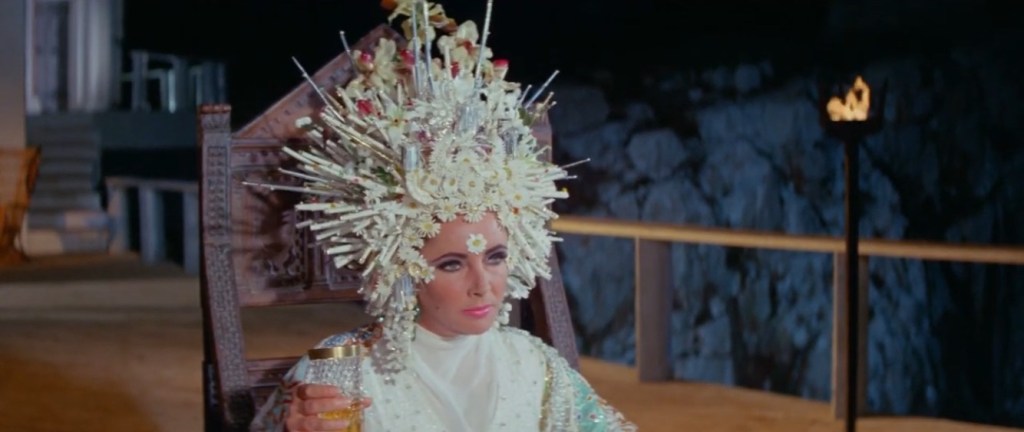
I don’t remember when or where I heard about Boom! for the first time, but I think it might have been one of those trashy books on the Taylor/Burton romance, as an example of one of their ill-conceived ideas that to the naysayers just proved how embarrassing the couple was — of course I had to check it out for myself.
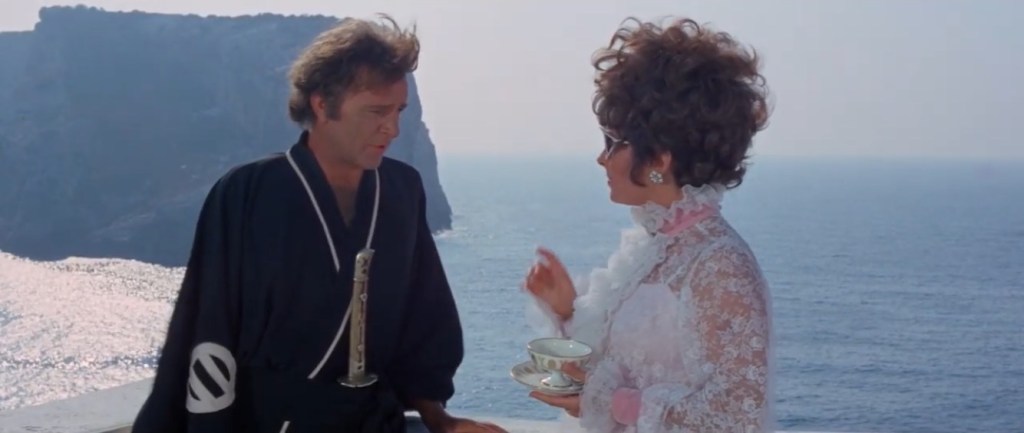
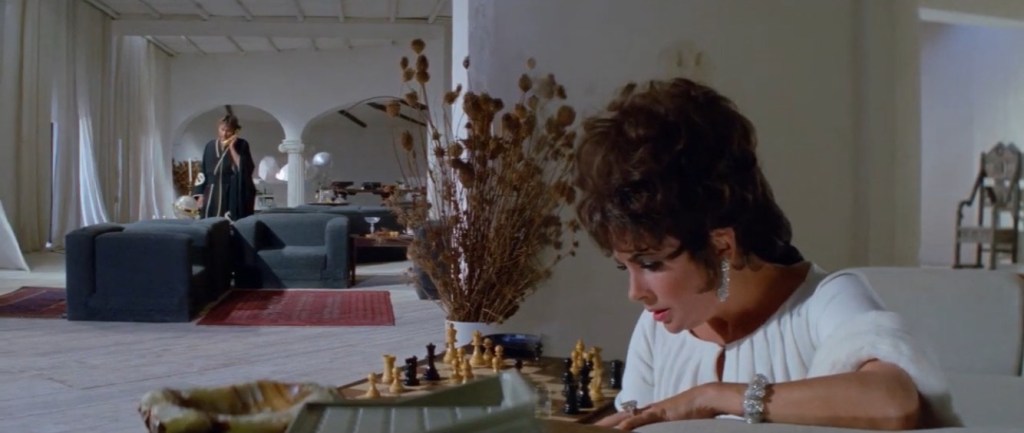
Boom! is essentially Mamma Mia! — a wonderful time on a gorgeous island. It is exactly the kind of thing I long for in the summer. The set design and the costumes are lush and rich and everyone wears flowing robes and caftans. Say what you will about the film, the look is immaculate.
But the facts are these: the plot of the film, the dialogues, the acting choices… all these things are pretty weird, even I can admit that. And Richard Burton gets to recite quite a lot of poetry just because— as I mentioned, I read a book on those two and I don’t doubt for a second he was REALLY into that idea. It is confusing as to what exactly is happening and what the film is trying to say. My best guess is that the producers were trying, hoping to do Who’s Afraid of Virginia Woolf? again (this was based on/written by Tennessee Williams instead of Edward Albee, but I think the sentiments remain). The film, I guess, for many ended up being “Virginia Woolf we have at home”, but I’m not sure if that’s fair. Boom! to me manages to be bold and interesting and I enjoyed watching it and experiencing the characters’ weird psychological journey.
I wonder if I liked the film so much because it reminded me of one of my absolute favourites, Secret Ceremony, which is also a team effort of Joseph Losey and Elizabeth Taylor, who there is also losing her mind (my preferred type of a character). I think you might just say I have a type.
It also got me thinking of the way 60s function among the older folks, not the hippie kids, but those who were mature adults in the world of counterculture and drugs — definitely a subject worth exploring.
We all know the song at this point: the year was weird, the year was traumatic, it is hard to care about cinema, even harder when NOTHING is coming out. I went to the cinema a grand total of four times in 2020 (I did get to take part in some online festivals, but this is another story). Here are all the films I got to see: The Grudge remake, Bad Boys for Life, Birds of Prey (And the Fantabulous Emancipation of One Harley Quinn) — say whatever you want, I love this title, and Sonic the Hedgehog. And yes, it does weigh on me that Sonic the Hedgehog might end up being the last film I ever watch in a cinema. It pains me but also feels very on brand somehow.
It was not all horrible, though, when it comes to film in 2020. What seemed to thrive in this odd movie environment we ended up in is the documentary genre. To be perfectly fair to the quality of filmmaking I got to experience this year, probably almost all the films on the list should be documentaries. There is nothing wrong with that, I am not one of those people who believes we should separate docs and narratives. But it would also be pretty boring and there are things I truly liked that would get left out because a documentary was technically better. And I actually dislike the discourse I hear here and there around the internet that there was NOTHING that came out (I wrote that at the beginning of this post, I know, but that was for comedy. Ugh) because that is not true. In fact, I thought maybe one good thing could come out of 2020 and we could have ourselves an actually exciting Awards season — it seems like a lot of the films that ended up being critically acclaimed were made by female filmmakers, starred exciting newcomers, told stories we would not normally see. But then the Oscars were moved to spring and (bad) Mank came out (with a terrible Gary Oldman performance that will still at least get him a bunch of nominations because Hollywood biopic) and I could already feel my eyes beginning to twitch, ready to roll. I might make my own (deserving) nominations post sometime at the beginning of 2021 if I remember and it will be great.
But for now, let’s take one last look back at 2020. I decided to begin my countdown with some honorable mentions.
HONORABLE MENTIONS (ordered alphabetically to avoid any accusation of just using them to make the list longer than the agreed-upon twenty movies)
Babyteeth, dir. Shannon Murphy
Babyteeth is a film that I like more and more as time goes by, the feeling, look, and emotions of the film stayed with me. It is a heartbreaking but sweet drama and definitely the most interesting entry into the “Teenagers with Terminal Diseases Falling in Love” canon.
Beastie Boys Story, dir. Spike Jonze
Now, this is a filmed live performance of the Beastie Boys themselves sharing the story of their band, it feels weird putting it in-between a drama and an action flick. But few things this year gave me as much joy as watching these guys recall times that just seemed so fucking cool. The one thing that ruins it is the mention of the (alleged) sexual predator producer but I guess he was a part of the story.
Birds of Prey (and the Fantabulous Emancipation of One Harley Quinn), dir. Cathy Yan
Yes. I did like Birds of Prey. In fact, I think it’s great. To me this is one of the best superhero movies.
Bloody Nose, Empty Pockets, dir. Turner Ross & Bill Ross IV
As I said — tons of great docs came out this year and this is one of them. Such a bittersweet tale of the extraordinary ordinary.
Every new beginning comes from some other beginning’s end…
The Devil All the Time, dir. Antonio Campos
I had zero expectations for The Devil All the Time after I read the novel before it was released and did not like it one bit. But when I finally sat down to watch it, I was pleasantly surprised (as much as the word “pleasant” really does not seem like it should be used anywhere near this movie). It is messed up and gritty and depressing but it works.
Dick Johnson Is Dead, dir. Kirsten Johnson
One of the most heartbreaking movies of the year and a truly unusual sort of a documentary. I feel like we all got to experience grief in one way or another this year, it hit some harder than others, of course. Maybe we need different ways of looking at the whole concept to move on and try to heal.
Ema, dir. Pablo Larraín
Beautiful and strange and fascinating. Not my favourite Larraín but very likely the most interesting.
Emma., dir. Autumn de Wilde
Now that I think about it, maybe Emma. should be higher on the list, like, in the actual top 20. It is gorgeous and feels fresh somehow. I am really not much of a Jane Austen fan and this joins the 2005 Pride and Prejudice in the “Austen stuff I genuinely love” canon.
Feels Good Man, dir. Arthur Jones
Feels Good Man is the kind of documentary that would be completely incomprehensible at the beginning of the century. But today it feels essential.
Horse Girl, dir. Jeff Baena
This is my unpopular opinion of the year of a movie. I have seen exactly zero positive reviews of Horse Girl after it was released at the beginning of the year. And I did not even see any specific criticisms about particular things in the film, it was as if everyone just agreed it was fundamentally bad and there was no need to explain why. But I… loved it and I could not get it out of my head for WEEKS afterwards. And sadly it was probably for the most part because of how much I can relate to the main character. Ouch.
The King of Staten Island, dir. Judd Apatow
And this is my biggest surprise of the year. I am not an expert on the career and craft of Pete Davidson, but from my limited exposure to him, I was not a fan. And I never “got” Judd Apatow films, not even those people tend to love. And then I saw The King of Staten Island was two hours long… Needless to say, I was not excited to watch it. And maybe that was what did the trick — lowering my expectations extremely. And I kind of loved the film. It does feel very honest and very real to my, and Pete’s, generation — all the way to Kid Cudi’s “Pursuit of Happiness”.
Mangrove, dir. Steve McQueen
The TV event of the year for film lovers was Steve McQueen’s Small Axe anthology. I only saw two installments but they were both very good. And very different! Mangrove is the courtroom drama of the two, with some fantastic performances.
Summerland, dir. Jessica Swale
A sweet and gentle story set in a beautiful landscape — sometimes that is all you want.
Time, dir. Garrett Bradley
As I said, this was the year of the documentary and for many people, Time was the greatest of them all. Such a tender portrayal of the work that goes into longing.
Vitalina Varela, dir. Pedro Costa
A difficult, haunting cinema, the darkness of it feeling interesting and terrifying. One to revisit for sure.
THE ACTUAL LIST
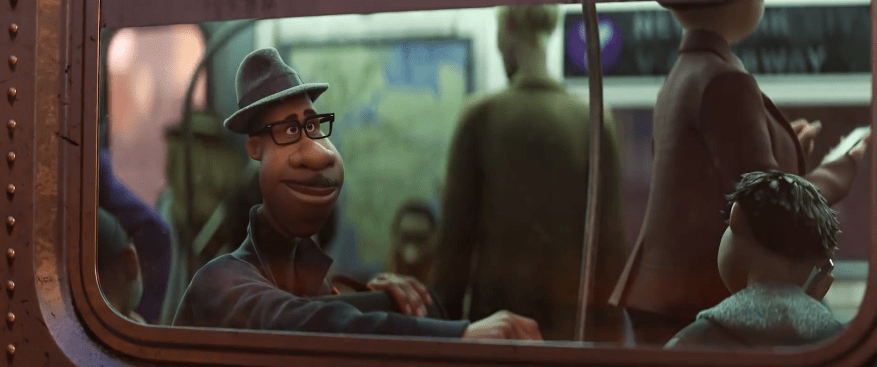
20. Soul, dir. Pete Docter
At the end of this year, perhaps all I wanted was a Pixar movie. And I got one. Interestingly enough, I was ready to dislike the movie but at the end, I was bawling my eyes out. Ah, Pixar, I just can’t quit you.
19. Lovers Rock, dir. Steve McQueen
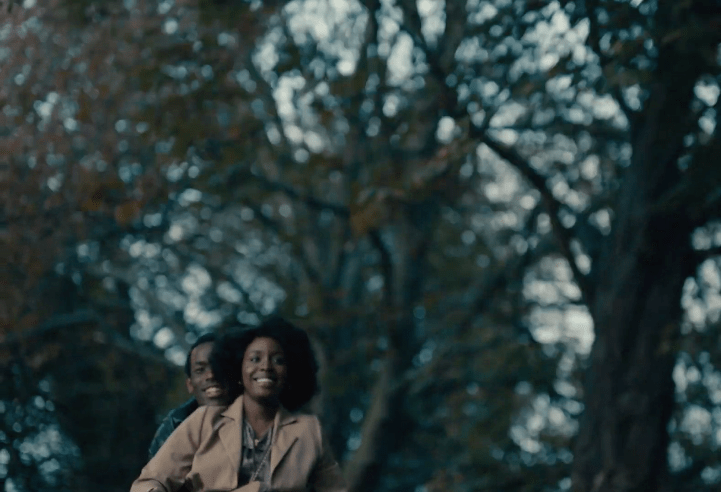
I mentioned Little Axe before, but it is Lovers Rock that truly stole my heart. At only about sixty minutes, this romance managed to charm me completely. We are so lucky to experience Steve McQueen’s films.
18. Host, dir. Rob Savage
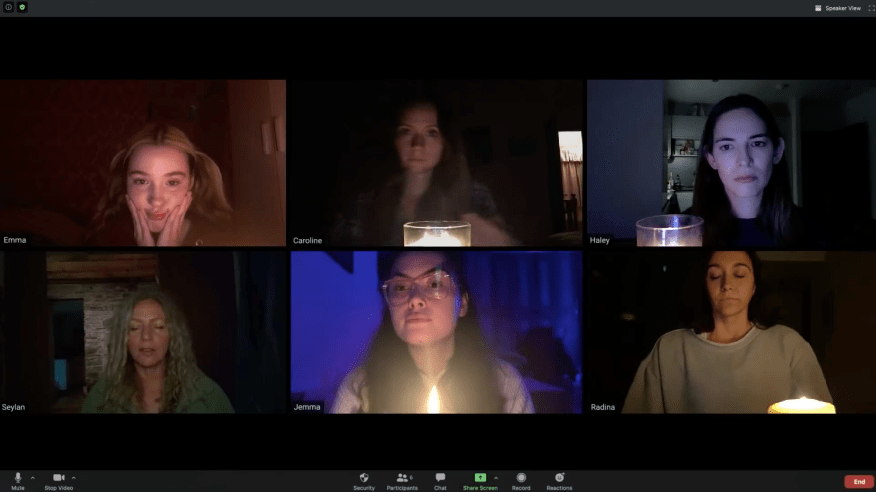
Originally I wasn’t planning on including this film on the list but then I thought whatever: the honest truth is that Host was one of the most thrilling cinematic experiences I had this year and one of the very few that might have actually been made better by the fact that I watched this film on my laptop. Scary, creative (although my only complaints are about a scene in which they got TOO creative) — this is a perfect example of filmmakers doing what they can with a difficult situation and succeeding.
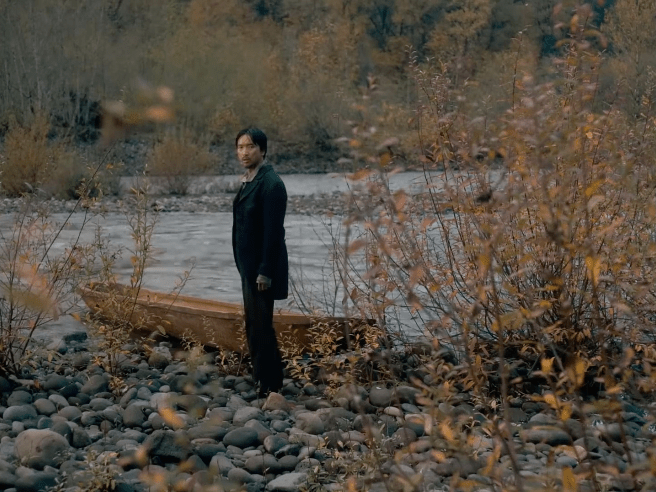
17. Gunda, dir. Viktor Kossakovsky
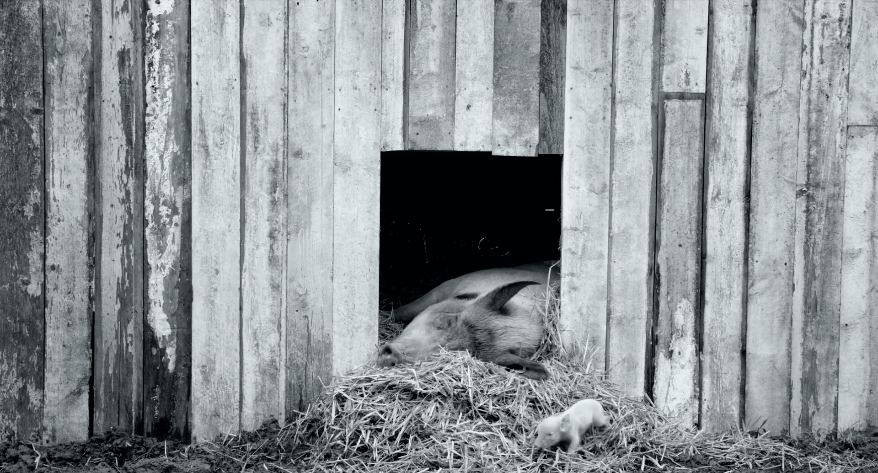
Gunda is the cutest, most intense and most heartbreaking film of the year. It is also an unbelievable achievement as far as recording nature goes. All the criticisms about it being “preachy” are pointless. This is the truth. This is the world we created.
16. David Byrne’s American Utopia, dir. Spike Lee
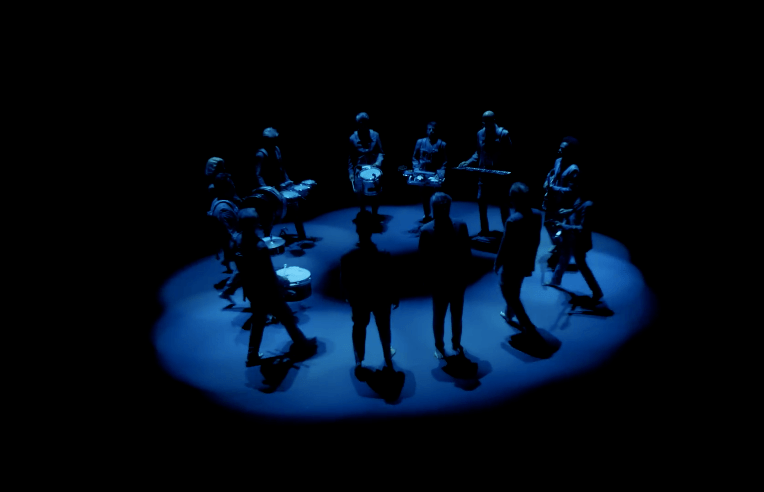
I always feel kind of unsure about including recorded performances on lists of best films, so Beastie Boys ended up outside of the list. But I think it’s allowed with American Utopia? If you watched it, you probably had this wonderful cathartic experience that would make it impossible to leave out as well.
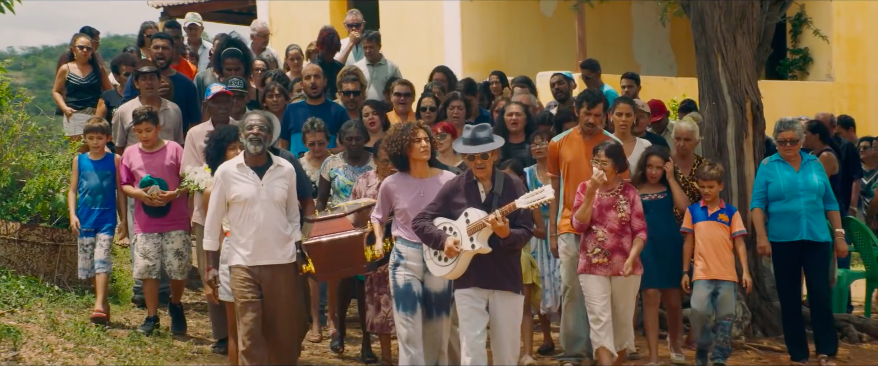
15. Bacurau, dir. Kleber Mendonça Filho & Juliano Dornelles
Wild psychedelic western, one of the early entries on my best of list (as in, it’s been a while since I watched it) and the craziness would probably fit better with later parts of the year. Still, what a great experience.
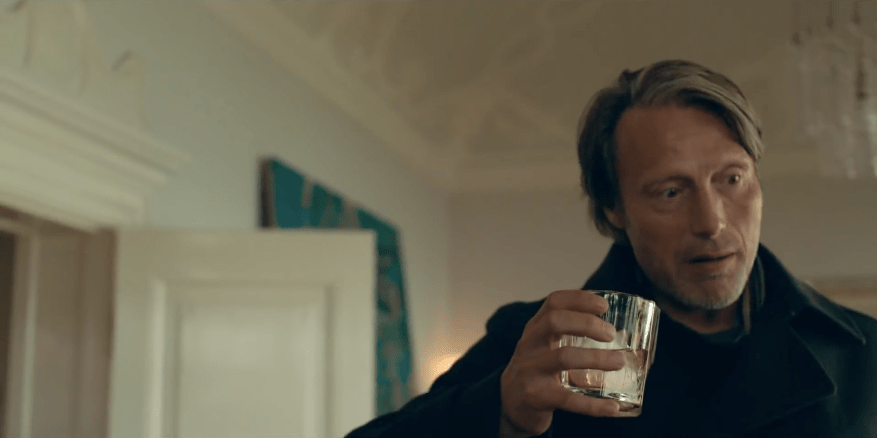
14. Druk, dir. Thomas Vinterberg
I am going to be completely honest here: the main reason why Vinterberg’s Another Round is on the list — and it is on the list THAT high is because of the man, the myth, the legend himself — Mads Mikkelsen. Mads Mikkelsen gives one of my favourite performances of the year and if there’s any justice in the world (*doubt*), the Awards Season will reflect it.
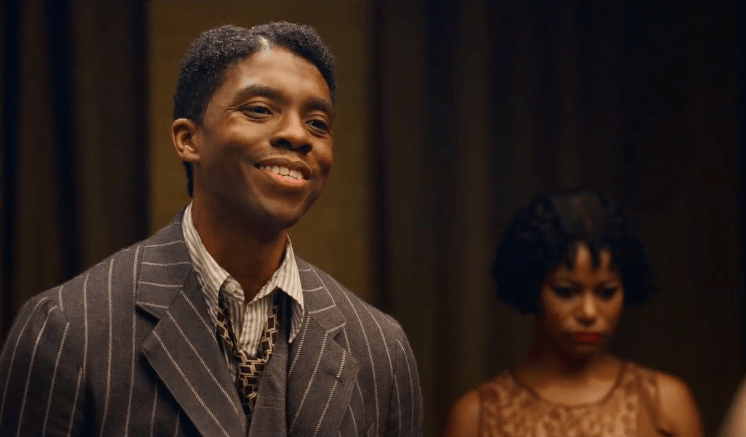
13. Ma Rainey’s Black Bottom, dir. George C. Wolfe
One of the final additions to the list, I only watched Ma Rainey’s Black Bottom over Christmas. When you look at the film as a finished product, I think your enjoyment would rely in a large part on how okay you are with films that are very obviously filmed plays. But one thing is undeniably for everyone — Chadwick Boseman’s performance is absolutely extraordinary. For the longest time I thought Mads Mikkelsen would be my pick for Best Actor but after seeing Boseman’s work here… He is just unbelievable. It was absolutely heartbreaking to watch this film knowing he is gone. I already dread the reaction of People Who Have Know Idea What They’re Talking About after the Oscar nominations are announced, trying to undermine his achievement. But it should be impossible for anyone who actually watched the film.
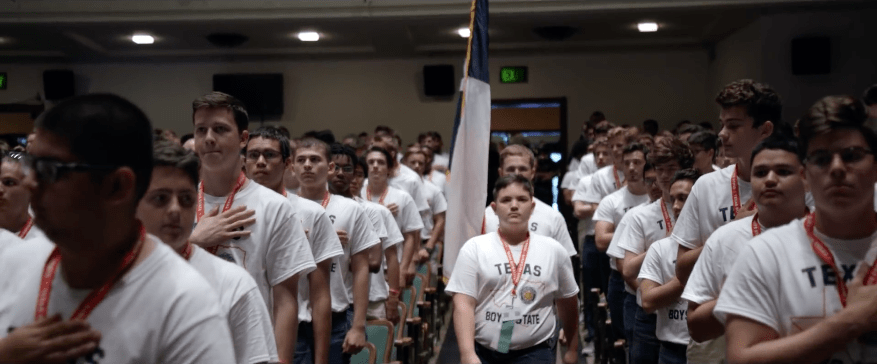
12. Boys State, dir. Jesse Moss & Amanda McBaine
As I mentioned, this has been in many ways a year of the documentary and my pick for THEE documentary of the year is Boys State (and the competition has been tough!). Is Boys State not the most clever presentation of how various shades of political opinions function in today’s society? René for president for real.
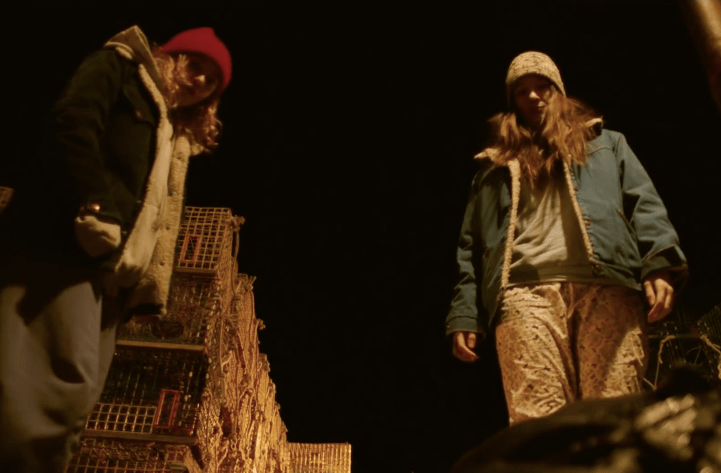
11. Blow the Man Down, dir. Danielle Krudy & Bridget Savage Cole
Blow the Man Down is an odd little movie that I heard NOTHING about from anybody this year — no buzz! But it’s SO charming, well, as charming as a crime film can be and it’s quirky and set in a world I just want more of. But maybe it’s just me being obsessed with seaside aesthetics.
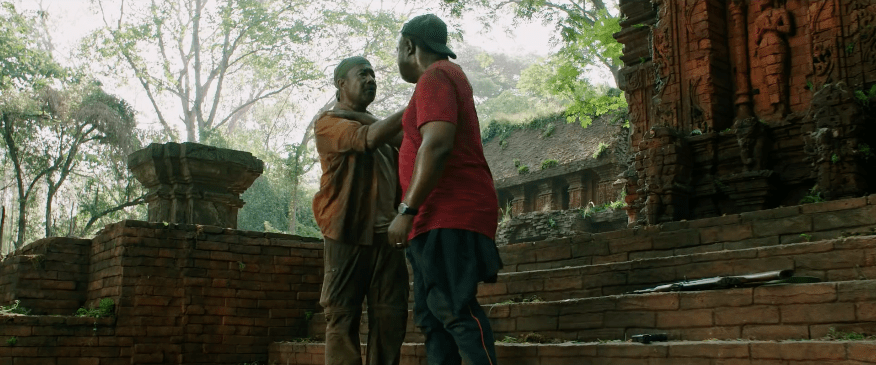
10. Da 5 Bloods, dir. Spike Lee
Spike Lee’s Da 5 Bloods is a heavy, difficult film made even more poignant and devastating by the tragic passing of Chadwick Boseman, whose character in the film also dies young, way before his peers. But it is also an incredible achievement, especially when it comes to acing. Some of the scenes and monologues in the film are unlike anything I have ever seen.
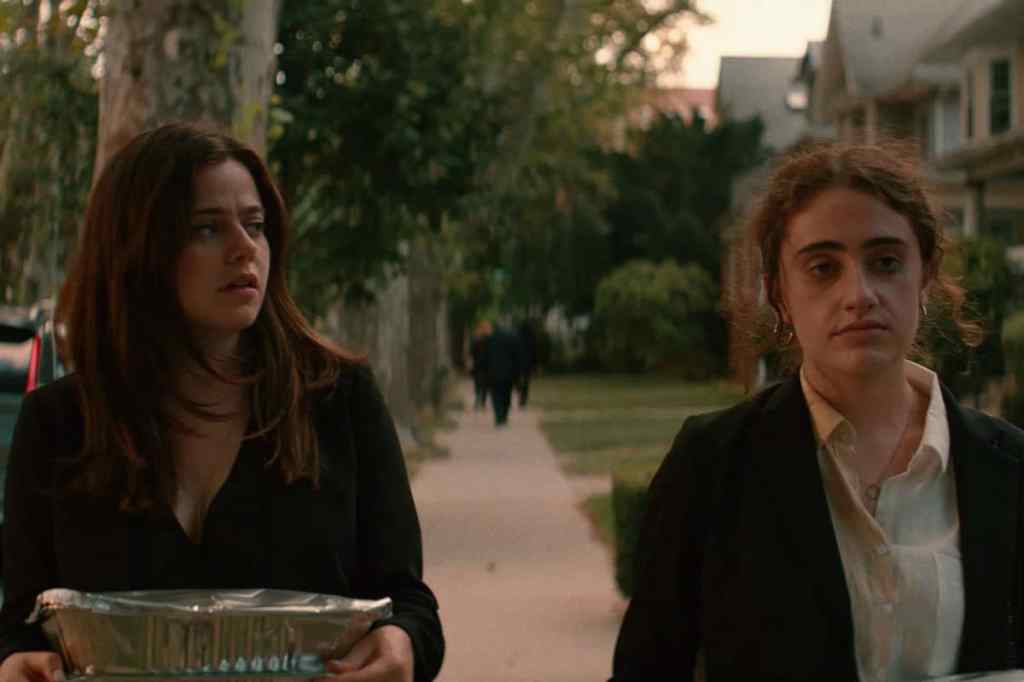
9. Shiva Baby, dir. Emma Seligman
One of the films I was lucky enough to catch on a festival circuit (Nowe Horyzonty), I think for many this is going to be a 2021 release. I saw Shiva Baby compared to Uncut Gems and I guess I can kind of see that but let’s not act like the Safdies invented tension. Very excited to see Molly Gordon in future projects.
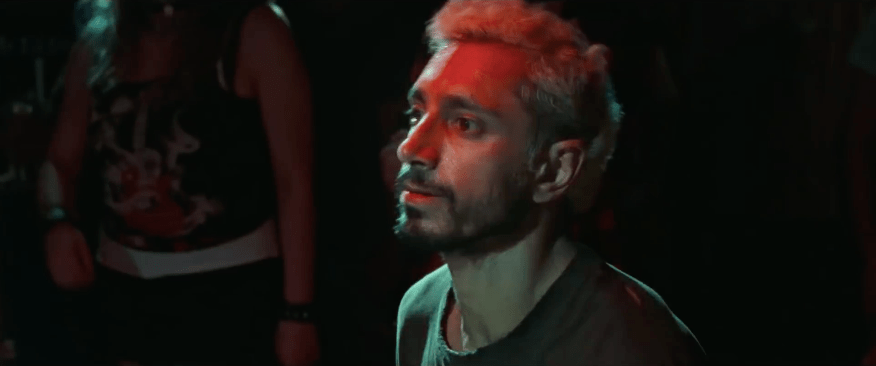
8. Sound of Metal, dir. Darius Marder
Riz Ahmed joins the ranks of the best actors of the year with this unforgettable performance. Sound of Metal is, honestly, very upsetting, also because of my own medical issues but it is also very touching. It is less about reinvention of yourself and more about resignation. And I think that’s okay. Bad things happen to us sometimes and we just have to accept that.
7. First Cow, dir. Kelly Reichardt
First Cow is for many the best film of the year and I hope this momentum lasts and Kelly Reichardt finally gets the recognition she deserves from the mainstream awards committees. What a lovely, lovely film. What a wonderful world. I am just so grateful.
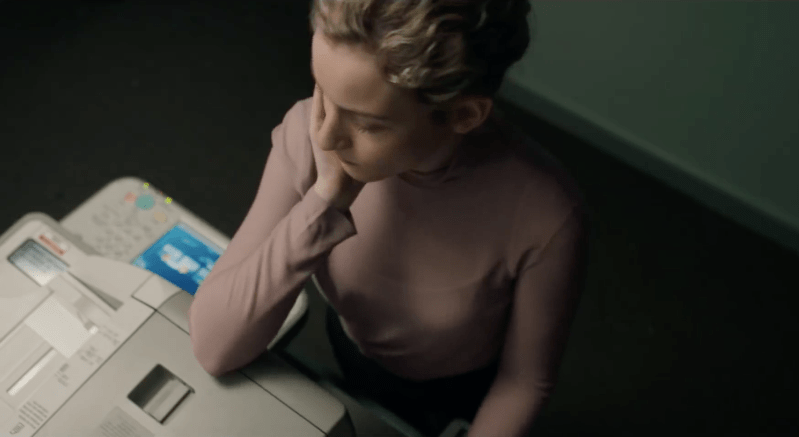
6. The Assistant, dir. Kitty Green
Maybe the scariest experience I had “at the movies” this year, despite there being a literal horror movie earlier on the list. The Assistant presents the kind of workplace abuse that creeps up, sneaks in, is largely ignored by other because certain power dynamics are expected. I have, thankfully, never been through things as serious as some of those in Kitty Green’s (who, by the way, I am very excited about, her previous film, the documentary Casting JonBenet was equally fascinating like this narrative) film, but it still managed to trigger some mild form of PTSD in me. Essential viewing for anyone functioning in society.
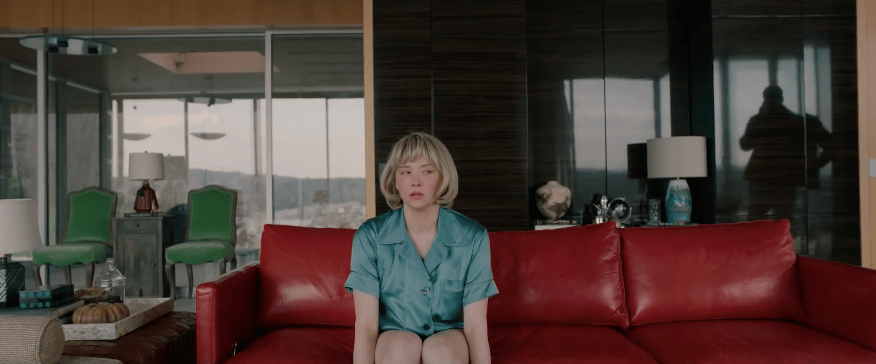
5. Swallow, dir. Carlo Mirabella-Davis
It is very strange to me how much I could relate to this film which seemingly has nothing to do with me whatsoever. The premise might sound odd but I believe for many people it will be like looking at a kindred spirit. And it is heartbreaking and difficult but also… you kind of feel understood. This is not a film for everybody but for some it might mean everything.
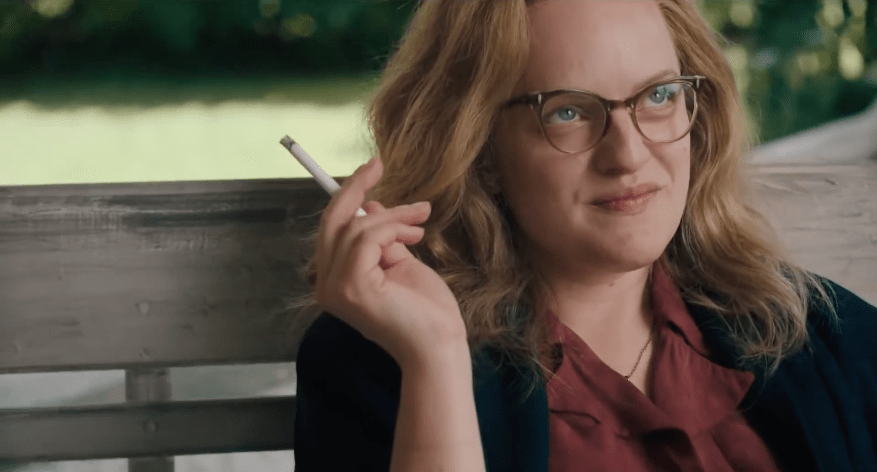
4. Shirley, dir. Josephine Decker
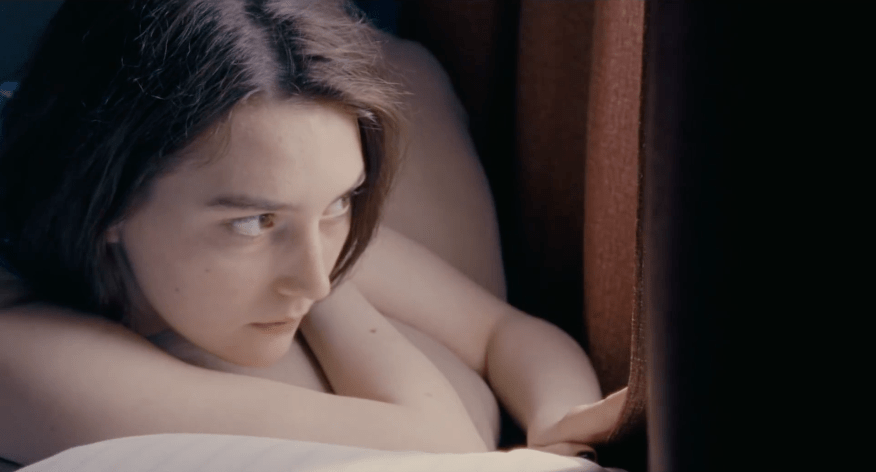
I worry I might not be capable of expressing how Shirley made me feel. It goes beyond biopic, it goes beyond a psychological portrait, unless the portrait is of women (humans?) as a whole.
Between this and Taylor Swift’s “mad woman”, this has truly been the year that made me feel seen. That’s probably… not good…
3. Never Rarely Sometimes Always, dir. Eliza Hittman
This year Poland, where I live, has gone through a truly tumultuous time. The Constitutional Tribunaldecided to accept the pro-life activists’ motion to consider the abortion deformed and damaged fetuses, which is one of the VERY FEW instances in which abortion in Poland is legal, unconstitutional. That means it might soon be outlawed. Massive protests took place throughout the country. Who knows what 2021 will bring the women of Poland. Seeing the young girl in Never Rarely Sometimes Always (played in a truly heartbreaking way by Sidney Flanigan) travels to a different state to have an abortion, made me think about all the Polish women who have to make this journey to Germany or Slovakia… And those are the “lucky” ones, the one who can afford it. The lead performance and the incredible screenplay make the film a near-masterpiece. And it hits extra hard when it’s so close to home.
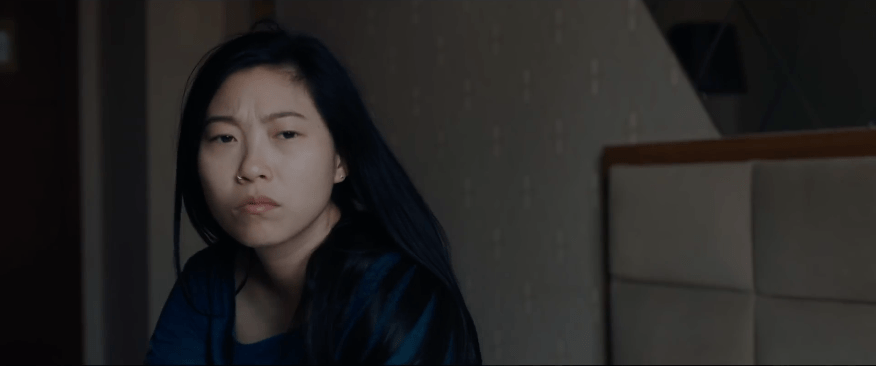
2. The Farewell, dir. Lulu Wang
I know what you must be thinking: what is a 2019 release doing on this list? Well, I am using my European privilege. The Farewell only premiered in Poland this year and since I love it with my entire heart, it had to be included. But you know all about it already so I won’t say more.
1. Little Women, dir. Greta Gerwig
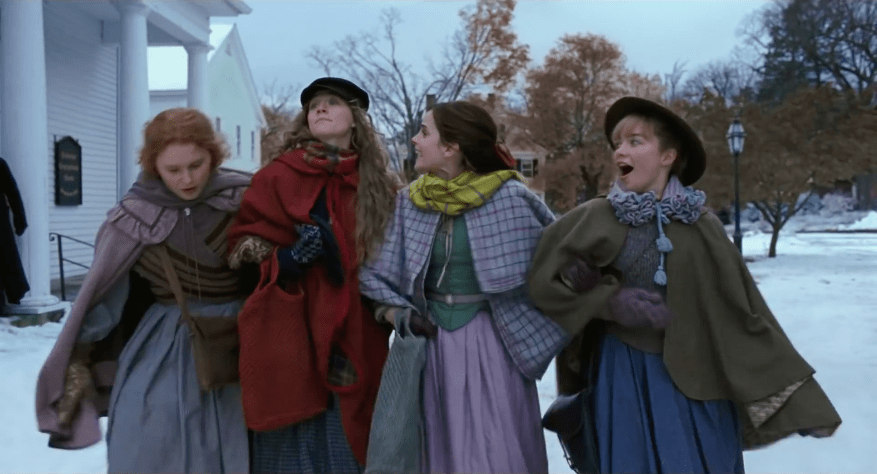
Call it Central European privilege again! Little Women ALSO only premiered in Poland in 2020, so it is eligible for this list and it is obviously the best film of the year. Obviously. Nothing has brought me as much joy in who knows how long. Florence Pugh should have gotten a double Oscar for this and Midsommar. Re-watched it during Christmas and cried all the way through but in a mostly happy way. A cathartic experience I needed.
It’s the Most Wonderful Time of the Year After October! Happy Holidays, everyone — may they at least be as happy as they can be in this strangest of all years. We’re all going to assume that a change is coming, right? I mean, at this point, what else is there to do?
I think 2020 will have made you either very very excited for the Winter Festivities and cause you to cling to any sort of magic and joy you can, or at this point you’d have zero interest in feigning interest in anything and any mention of what the season used to (?) be all about will just make you angry. It is probably a bit depressing of a perspective, but if you find yourself feeling down, and you would actually like to get some of “the spirit” back, here are some recommendations for media (not just movies!) that might help you get into the seasonal mood, at least a little bit. Sure, it feels silly to celebrate anything when the world is falling apart, but we do all deserve a break, be it for a day or two of Christmas, or just ninety minutes it takes to watch a movie.
1. Christmas in Connecticut (1945), dir. Peter Godfrey
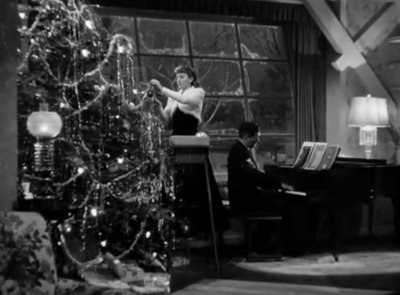
Christmas in Connecticut is probably my all-time favourite Christmas movie and it is great that at least one item on the list is Old Hollywood-related (because, I guess, this blog is supposed to be Old Hollywood-related), and to ease you into what is about to happen next, I’m putting it right at the top. I do watch Home Alone, Love, Actually, and Elf every year, but Christmas in Connecticut is the one that gets the “favourite” label. It is very funny, as in the jokes are good, and very ridiculous, as in the whole premise is wild, and it features great old-school acting. And I guess the fact that it is still pretty under appreciated and under watched position in the Christmas movie canon doesn’t hurt either, it somehow still feels like something new despite being significantly older than, say, Die Hard (by the way, aren’t you all just SO excited to have a is-Die Hard-a-Christmas-movie debate again? How fun! How. Very. Fun.).
The film stars Barbara Stanwyck as a sort of a Martha Stewart-esque homemaker guru who writes her own column in a magazine, in which she gives tips on how to run your house properly. She’s a perfect homemaker, a wonderful wife, a stellar mother. And quite a skilled liar, considering that, in real life, she is a New York City party girl who spends her nights at the clubs and her days in bed. And there is no Connecticut farmhouse, there is no husband, nor a baby in sight. But! The readers have no idea, they trust her to be this archetypal homemaker, a woman accomplished in what women are allowed to be accomplished in. Among her most devoted fans happens to be a soldier, an American hero coming back home. And what could be a nicer reward to a national hero than the opportunity to spend Christmas with the woman he admires so much? Barbara and her entourage have to quickly create the fantasy they made up and hilarity ensues.
It is a funny and fun film, Barbara is adorable, and I just find New England unbelievably charming. This is the aesthetic, guys. Sure, “some” ideas might be “dated”, sure, the romance might be a bit underdeveloped, but the silliness and Barbara’s comedic timing make up for it. I cannot wait to revisit it, to be honest, I kind of just want to put it on right now.
By the way, I realize there is a 1992 remake starring Dyan Cannon (!) and Kris Kristofferson (!!), directed by ARNOLD SCHWARZENEGGER (!!!) and while it seems like a nightmare, I might actually finally watch it because I’m sure it’s bananas.
2. The Big Fat Quiz of the Year
This one is a Christmas tradition that is surely not unique to me (and my sister, who I share it with), but I wonder if it has already become widespread worldwide. The Big Fat Quiz of the Year is a seasonal British show that airs in… well, Britain, but I imagine more and more people around the world watch it since full episodes can be found on YouTube (shout out to whoever handles those things for them and clearly understands how people view entertainment television and does not rush to delete them).
Basically, every year, on Boxing Day (December 26th) on the UK’s Channel 4, The Big Fat Quiz of the Year is broadcast. It is… well, a quiz about all sorts of things, mostly viral stories, that went on in the last twelve months. The contestants are divided into three teams of twos and they are mostly comedians (or comedians accompanied by a clueless celebrity which can go well or not*), which means getting the question right is often not the objective — making your answer funny is.
There are teams that appear in multiple editions (like the fan favourite, Richard Ayoade and Noel Fielding), there are segments that appear every year (like the news anchor Jon Snow recapping the lyrics of a popular song — I cannot WAIT to hear him describe “WAP” this year — or a group of little children putting on a “play” of the last year’s news story)… It is just so fun. It is one of my favourite new traditions. And I guess what helps is that it technically happens “after” Christmas, so it is something fun to look forward to once the festivities are over. I wonder how it is going to look this year, I imagine there will be less physical comedy and interactions with the audience and the guests. But I can already predict the questions are going to be great.
For a nice little primer, I recommend the 2016 series of three Big Fat Quizzes of Everything they aired in the summer.
*Although I guess I am going to come clear here and admit that I am a sort of a Mel B apologist. She is generally considered the worst contestant to ever appear on the show and someone who ruined her episode with her “bitchiness” but I think this entire booking was a modern art performance and just added to the ridiculousness.
3. Irena Jarocka, Wigilijne życzenia — visual album
This one is probably the most obscure thing on the list and one that would be the most difficult sell. Why would anyone (outside of Poland) be interested in some old Polish Christmas album? And to be honest, it is not that popular in Poland to begin with, my sister and I found it one winter’s day on YouTube by chance. But what a lucky day it was. Now I cannot imagine why anyone WOULDN’T want to get into it. And my life’s mission has become to spread the gospel of it — the Christmas Good News, if you will.
Maybe you are reading this in New England (Connecticut?) or India or the Philippines, and you think to yourself: “Wait, I have plenty of Christmas music already. Why would I check out more? Besides, is there even a point in me listening to this album if I do not understand Polish?”. The answer is yes, there is. And listening might not even be the best part of it. Sure, the songs themselves are nice, but what is really remarkable is how basically this is a visual album. Beyoncé, who? And what a visual treat it is. Imagine Mary Tyler Moore but with no colors and no laughs walking through a construction site. Nothing screams “Christmas” quite like some low-budget, low-effort “music videos” of a very brown and very beige and very dirty Warsaw. Snow? Christmas lights? Decorations? Not here, baby! What you get instead is a 70s woman walking around or taking a public transport to move around a truly shady neighborhood, then going back to her sad Soviet-adjacent apartment to sit by the kitchen table with her plain-looking husband. It is incredible.
Please, do yourself a favor and check out the videos below.
Samotnie kolędować źle: Look at this incredibly cheerful Christmas parade.
Kolęda nowoprojektowana: This is what I’m talking about — a quintessential PRL Christmas experience.
Gwiazda Nocy Wigilijnej: Here we get some actual winter, we have actually not seen one like this in Poland in years, another magical thing this album gives us.
Jeszcze dzisiaj pamiętam: Possibly the wildest track in the whole album. We moved to the Tatra mountains from Warsaw, there is snow and a horse carriage… And a VERY dark song about… Christmas? Sleigh ride? The WAR? We just don’t know! Merry Christmas!
4. A Christmas Prince trilogy
Now, I know what you’re thinking: “No way you’re recommending a white bread mayonnaise unspiced hetero nonsense Original Netflix romantic comedy times three here. I thought this list was going to suck and I was correct”. No. You’re not. A Christmas Prince is not just some white bread mayonnaise unspiced hetero nonsense Christmas movie. It is the crowning jewel (a literal royal jewel) of white bread mayonnaise unspiced hetero nonsense Christmas movies.
A Christmas Prince is an incredible property, as far as Netflix goes. Forget Stranger Things! THIS is what true strangeness looks like. On its surface, A Christmas Prince is your average Hallmark Christmas movie. There is a blonde American woman, Amber, she’s about thirty years old, and she pursues career in journalism in the big city. But something is missing… And so it happens that she is sent to the European country of Aldovia (side note: one of my favourite things about the franchise is that it was clearly supposed to take place in a land similar to some of the small European monarchies, like Monaco or Liechtenstein, but when they show a map in film three, you can see that Aldovia stretches throughout most of Europe! My HOMETOWN, the PLACE WHERE I LIVE is in this country!) to find a scoop about the Playboy Prince. A comedy of errors makes everyone, except for the sassy little princess, in the palace believe she is actually the new governess. Soon, Amber finds herself between her journalistic duty and her heart, as she grows closer to the family and the Prince himself. And this is just one of the problems…
The second movie is called The Royal Wedding and the third, The Royal Baby so you can maybe figure out how things go yourselves. I am not sure if this story was inspired directly by Meghan Markle but it certainly influenced certain plot points.
This is a perfect Christmas cheese. But my favourite movie is the second one, which also serves as some truly bonkers commentary on class. Jenny Nicholson actually made an in-depth video about it and I highly recommend checking it out.
By the way, the only other thing on Netflix that comes close to A Christmas Prince is the series of movies from the Vanessa Hudgens Christmas Cinematic Universe and from what I heard from somewhat reputable sources, the Prince and Amber (and the royal baby whose name I forgot) have a cameo in the sequel to the Princess Switch (called Switched Again — perfection, almost as good as Mamma Mia 2: Here We Go Again). Christmas is saved.
5. Moominland Midwinter, by Tove Jansson
Moomin books are my childhood favourites and, honestly, adulthood favourites. Especially now that my relationship with a certain other kid literature classic has soured because of what the author has been doing (you probably know what I’m talking about; this is an interesting thing to think about by itself. This particular kid literature classic has been an incredibly important part of my life for most of my life — 20 years — and it is perhaps the one piece of ~*problematic*~ media I cannot completely cut out of my life). The Moomins are always there for me. Ideally, I re-visit the seasonal book every year (there is a Summer one and a November one, plus the more generic “Moomin tales” are clearly set in the spring), throughout the year (even more ideally, alongside the relevant anime episodes).
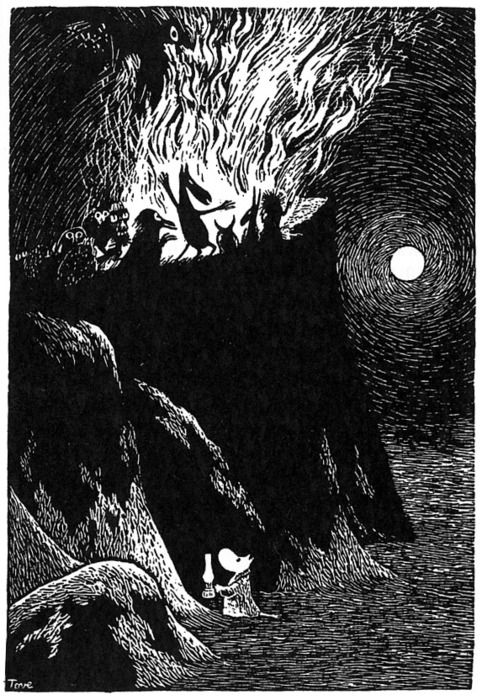
Moominland Midwinter is a perfect happy-sad childhood book (mostly happy, though. It does not come close to the almost complete despair of the November book). Moomins (as a family) hibernate throughout the winter, but one year, Moomin (as in, the main character) wakes up earlier than everybody else and cannot fall asleep again. He experiences winter and snow for the first time. All his friends are either sleeping or away (except for Little My who also wakes up), he meets all sorts of new creatures (including the iconic Too-tiki, modeled after Tove Jansson’s real life partner), has new experiences (skiing! Ice-skating! Observing little creatures burn a big fire and dancing around it in some form of a magical ritual!).
It is cozy and beautiful and nostalgic, perfect to read during the period between Christmas and New Year’s (to be clear, at the very beginning of the first chapter it is mentioned that “New Year” just passed, but I think there is actually some quite Christmas-y imagery and ambiance for it to fit the bill), maybe the nicest part of the year. The biggest tragedy of Spotify is that the soundtrack from the anime is not available because it would be an ideal music for those unreal days.
6. The Royal Tenenbaums (2001), dir. Wes Anderson
Wes Anderson is a joke for many people these days, but I will never stop considering The Royal Tenenbaums a masterpiece and one of my absolutely favourite films. I think I am not the only one who considers it a Christmas classic, or at least a winter classic. I don’t know if this is a film that needs a lot of words to explain it, to me this is absolutely a film to feel rather than overthink. It centers around the family of the Tenenbaums, of which the three children were all prodigies in some field. Now, they are adult and miserable. To add to that, thhe father, the senior Tenenbaum finds out he is dying. He has been estranged for years but now decides to reconnect with the family.
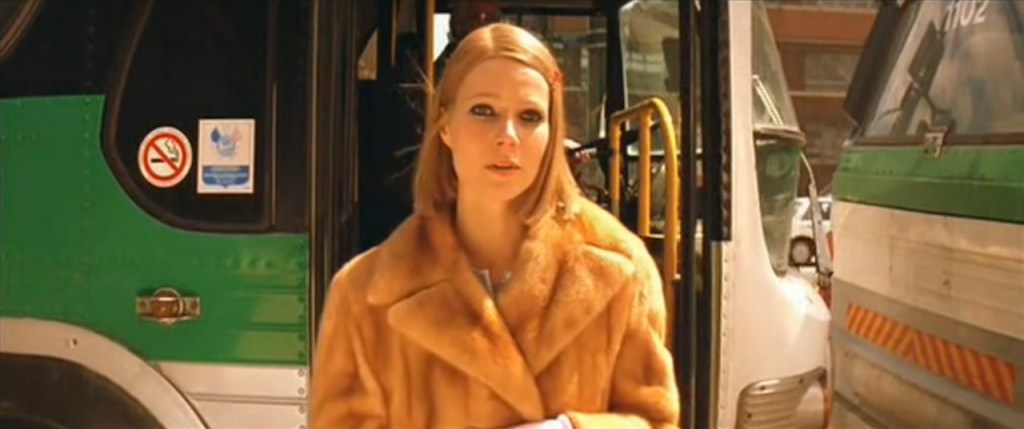
Call it pretentious and shallow, I don’t care, Margot Tenenbaum getting off the bus to the sound of These Days is an all-time magical scene.
Maybe I can relate to Eli, the neighbor’s, Owen Wilson’s character’s “I always wanted to be a Tenenbaum”. I feel like I always wanted to be a Tenenbaum, too, and live in this quirky and wonderful house in New York City and be a depressed genius (as opposed to a depressed idiot in a boring house in Poland). Maybe this is where my problems come from.
As I mentioned, Christmas is a sad period, filled with melancholy, and the atmosphere of this sad, dysfunctional family fits in perfectly. But the coziness of the sets and the costumes and the soundtrack matters too. I don’t think I’ll ever stop loving this film, regardless of how uncool Wes Anderson becomes.
Not the most specific recommendation, I realize. This is basically a cozy aesthetic scavenger hunt. The Internet Archive is an incredible tool and I live in fear that one day we are going to lose it. There are classics galore on the site, there is the history of the Internet, there are magazines, and books, and movies. Books are what is of interest to me. I always get excited when I see a title like Pictures of Christmas or Pictures of Winter and it was published c. 1900. Those convey the exact aesthetic I enjoy at Christmas (as distant as it may seem from Irena Jarocka). Of course the books get extra points if there are ghosts involved — my favourite underrated/forgotten Christmas tradition is that of telling ghost stories (there’ll be scary ghost stories and tales of the glories… plus, you know, A Christmas Carol). Here are a few books to flip through when you feel like you need some vintage inspiration for your festive decor, or maybe if you have kids you could read aloud too (or adults you could read aloud too! I don’t know your life).
Maybe a crime/psychological drama about a bunch of miserable French women is not necessarily something you would choose to play to get into the festive mood, but hey — we already did miserable families, so we might as well keep going. And to be perfectly honest, I do think 8 femmes might actually be fairly common among movie fan to revisit around Christmas, but maybe it’s because I actually used to study French at university so I may have encountered people of… all sorts of different tastes.
Anyway, 8 femmes is great. The acting is great, the costumes are great, and I love nothing more than a story of a small group of people trapped in a single location, ESPECIALLY during the winter. Just some people who know each other or not who cannot leave the location they are currently in, even though something troubling has happened.
And something troubling does happen: a family gets together for Christmas… The oldest daughter arrives back home… But before they can celebrate, tragedy strikes. The father is dead! He was killed! And the only person who could have killed him would have been one of the 8 femmes currently in the house… Was it his wife, definitely unhappy in marriage? Was it the Grandma?! Her weak disposition could be just an act! Could it be the spinster sister-in-law, clearly angry at what her life turned out to be? What about the gorgeous young maid? The older, Black housekeeper? Who knows what kind of motive someone possibly mistreated by the boss could have… The youngest daughter seems like a sweet kid but you never know… Maybe the freshly-arrived older daughter found a way..? And who’s that other woman who appears out of nowhere? There are twists and turns galore! There is tension, there is passion, there is passion for fashion.
Oh, and it’s a jukebox musical. Starring every* iconic French actress.
*Not the racist BB, though.
9. The Season’s Greetings meme
Self-explanatory, I think. No need to go in-depth for this one.
Truly iconic.
10. Hogfather, by Terry Pratchett
And now we have reached the finale of the list, and I am going to close it off with another book. If you read any of the fifty-ish Discworld novels, possibly one of them was Hogfather, which seems to be among the more popular ones. But I do not care if it is an obvious choice, it is still one of my favourites. And it is very clearly a Christmas book, more than Moominland Midwinter, I guess. The plot is rich in various different characters and situations, but I guess the biggest one is that Death himself has to step in the role of the Hogfather (who is basically Discworld’s Santa Claus) and all sorts of shenanigans go down. All Discworld novels are humorous and there are plenty of funny moments in this one as well, but there is also heart, a lot of love and tenderness. And maybe it’s a cliche at this point to post this quote from the book but I still like to revisit it when time gets hard and the world seems bleak.
All right,” said Susan. “I’m not stupid. You’re saying humans need… fantasies to make life bearable.”
REALLY? AS IF IT WAS SOME KIND OF PINK PILL? NO. HUMANS NEED FANTASY TO BE HUMAN. TO BE THE PLACE WHERE THE FALLING ANGEL MEETS THE RISING APE.
“Tooth fairies? Hogfathers? Little—”
YES. AS PRACTICE. YOU HAVE TO START OUT LEARNING TO BELIEVE THE LITTLE LIES.
“So we can believe the big ones?”
YES. JUSTICE. MERCY. DUTY. THAT SORT OF THING.
“They’re not the same at all!”
YOU THINK SO? THEN TAKE THE UNIVERSE AND GRIND IT DOWN TO THE FINEST POWDER AND SIEVE IT THROUGH THE FINEST SIEVE AND THEN SHOW ME ONE ATOM OF JUSTICE, ONE MOLECULE OF MERCY. AND YET—Death waved a hand. AND YET YOU ACT AS IF THERE IS SOME IDEAL ORDER IN THE WORLD, AS IF THERE IS SOME…SOME RIGHTNESS IN THE UNIVERSE BY WHICH IT MAY BE JUDGED.
“Yes, but people have got to believe that, or what’s the point—”
MY POINT EXACTLY. THERE IS A PLACE WHERE TWO GALAXIES HAVE BEEN COLLIDING FOR A MILLION YEARS. DON’T TRY TO TELL ME THAT’S RIGHT.
“Yes, but people don’t think about that.” Said Susan. “Somewhere there was a bed…”
CORRECT. STARS EXPLODE, WORLDS COLLIDE, THERE’S HARDLY ANYWHERE IN THE UNIVERSE WHERE HUMANS CAN LIVE WITHOUT BEING FROZEN OR FRIED, AND YET YOU BELIEVE THAT A . . . A BED IS A NORMAL THING. IT IS THE MOST AMAZING TALENT.
“Talent?”
OH, YES. A VERY SPECIAL KIND OF STUPIDITY. YOU THINK THE WHOLE UNIVERSE IS INSIDE YOUR HEADS.
“You make us sound mad.” said Susan. A nice, warm bed…
NO. YOU NEED TO BELIEVE IN THINGS THAT AREN’T TRUE. HOW ELSE CAN THEY BECOME?
***
So, here are a few of my favourite things (I am actually writing these words as A Christmas Prince 2: a Royal Wedding is playing in the background). Maybe you’ll feel inspired to check some of them out, maybe one or two will bring a smile to your face. That’s be nice, wouldn’t it? I realize that you probably feel scared and lonely right now, maybe you’re missing something, or someone. To me, again, Christmas is a pretty melancholy-filled time anyway, even in the best of years, so this one is going to be especially difficult. But I guess finding joy in little things might be what helps us get through it. That is what we do these days, right?
This is something I wrote last year, based on Deborah Spungen’s book And I Don’t Want to Live This Life. Not exactly Hollywood related, but I included a little something about the movie Sid and Nancy so I hope that makes it okay to post here.
Nancy Spungen was born in 1958 into a Jewish family from Philadelphia, the oldest of three children, sister to David and Suzy. Her parents were young, her mother, Deborah, only twenty years old when she had Nancy. The baby had a rough start in life. She was born with the umbilical chord wrapped around her neck which cause her brain to be depraved of oxygen. The doctors took care of her and told the parents that everything was fine with their baby. There seemed to be a number of medical problems with her, though, which in the end the doctors were not able to actually diagnose. She spent the first few days of her life undergoing medical procedures including having her blood drawn with a needle multiple times — she was a newborn with needle marks. She was four days old when her mother was finally allowed to hold her.
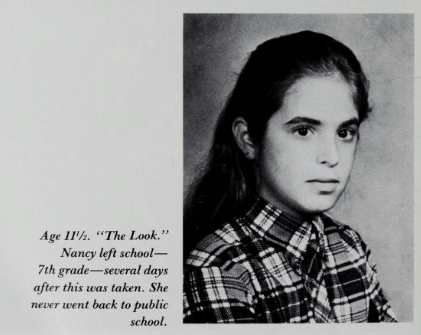
When reminiscing on Nancy’s time as a toddler, her parents talk about her screaming. She would just not stop screaming. This is something she never really grew out of. And this is why she started getting prescribed drugs, tranquilizers, at just three months old. That was something she never grew out of either. While it might seem common and normal for a child to get medicine or injections, there is a chilling image forming here when one thinks about Nancy’s future and they way her life unraveled before her tragic death. But the biggest problem with Nancy in the following years was her violent, aggressive behaviour. There was something her family noticed in her whenever she would start one of her tantrums, something they called The Look. Her face would change and they new something bad was going to happen.
Raising Nancy proved to be difficult, her tantrums were growing bigger and more intense. From her early age her parents seeked medical assistance, including psychotherapy. The doctors’ and psychologists’ verdicts were consistent — Nancy had some trouble developing her motor skills but she had an above average intelligence. This meant she was doing great in school, in fact, she skipped grades and was in courses from higher grades as a child (the only subject that was causing her problems was maths). This also meant she was not able to enroll in a school equipped to deal with children with her kind of behavioral issues — these schools were only accepting students with intellectual disabilities. And this is why for the longest time the doctors assured the Spungens that there was nothing wrong with their child, that she was just acting out and all that would pass.
However a time has come when Nancy had to start seeing a therapist regularly because dealing with her proved to be next to impossible. And her parents wanted someone to help them, sure, but also hoped that somehow they can make Nancy’s life a bit less hard for her. The therapy did not really help in a significant way, seeing as her behavior did not improve. It did not improve after she was enrolled in a boarding school specializing in „difficult” kids either. There were moments when she seemed to be getting better but never did they last. She was barely a teen when she started smoking pot and claimed to have tried acid, and not long after she introduced marijuana to her siblings (her brother was a stoner at just twelve years old but managed to stop, as to not become like Nancy). She would be nice for a moment but turn into a screaming “monster” as soon as things stopped going her way. At least in the boarding school she was seeing psychologists multiple times a week. But then there came a time when the school administration has changed and nothing was the same. She was transferred to a school where one teacher “took care” of a group of teenagers by herself. Her parents recall driving their daughter to that place and seeing a group of hippie teenagers roaming around in a haze, with no adults in sight. Nancy would not see a therapist there for months. She could access drugs easily, though. She also met her first boyfriends. And the way she handled these relationships would continue on in her future affairs. One thing she seemed to do was take on personality traits and quirks her boyfriends had. She would model herself on whoever was giving her attention a the time.
At fourteen Nancy was harming herself and attempted suicide. In fact, suicide attempts would happen multiple times in the following years. Deborah found an alternative medicine specialist who seemed to “get” what was wrong with Nancy and was ready to help. While “alternative medicine” is something one might be skeptical of, we are never going to find out whether this therapy would be of help because Nancy’s school would not allow her to take a few weeks off to go to the clinic. And the Spungens did not want to jeopardize Nancy’s education. And, weirdly enough, despite all her problems, her school, the place which was supposed to help her and where people knew how to deal with people with issues similar to hers, decided it was time to let Nancy go. She was just sixteen when the school arranged for her to taker her SATs (without informing the family). She was advanced in all subjects except for maths so they decided it was time for her to graduate. Her parents did not find out until after she was accepted into a university in Colorado. And they let her go — they knew their protests would prove futile, Nancy would always have her way.
The university life seemed to be good for Nancy for a while but, like everything good and constant in her life, it did not last. During her first months at school she was arrested and subsequently expelled. So she came back home. And while Deborah Spungen seems to have loved her daughter and truly wished to have helped her, she also admitted that life was much better when Nancy was away. And back in Philadelphia Nancy made everything worse again: she was self-harming, she was trying to get her siblings to do drugs, pressuring her sister to lose her virginity, she was bringing strangers into the house and doing drugs with them, and she was threatening her family’s life. Literally. She could actually take a knife and say she was going to kill them. While she always had a lot of affection for David, even “protecting” him from the rest of the family (when there was not really anything for him to be protected from), she seemed to be really angry and resentful of Suzy. Her sister’s life would be really tough when Nancy was around. In the end, they decided to let her go for good.
Nancy’s parents told her she was going to move to New York. In addition to all the pain she was causing them, she was not able to hold onto a job in Philadelphia, nor did she have any plans to try and get into university again — it was time for her to become independent. They would pay her rent for six months and support her for another six. Nancy was happy about the idea and she quickly found a cheap apartment near Chelsea Hotel (which seems sinister in retrospect, considering she would begin her life in New York right next to where her life would end). When Deborah visited her daughter for the first time she was delighted — Nancy seemed to be thriving. Her apartment was nice and clean, she had a kitten, and she was looking for a job while also devoting time to her passions, like writing about rock music for local magazines. She published reviews in independent Greenwich Village rock magazines and the Spungens were actually impressed with their daughter’s work (unfortunately, I was not able to find any of said reviews, which is a shame because I would have loved to read them).
It made sense for Nancy Spungen to get into (or, try to get into) the music business. Nancy loved music ever since she was a child and listened to her parents’ recording of Hair for the first time. At one trip to New York there was a performance of Hair in the Park. Nancy managed to get away from the family to get close to the music and, which gave them quite a fright. In many violent periods of Nancy’s childhood and adolescence, the one thing that made her happier and calmer was music. She would play her parents’ rock records, and later the ones she bought or received herself, on maximum volume over and over and listen to them, just sitting there, maybe smoking, but overall less aggressive. Her family would hear the extremely loud music throughout the day and night but they didn’t interfere — at least Nancy seemed better. In Philadelphia, Nancy would go to concerts on the weekends and that’s where she started meeting musicians. She once claimed to have met Queen backstage. Apparently she also spent some time with Aerosmith. After her move to New York she would hang out with musicians as much as possible, even, according to her, formed a friendship with Debbie Harry before Blondie got big. Nancy seemingly had a talent for seeing the potential of artists before they got big.
In addiction to seeking out new acts, she also tried to find a boyfriend. And her crushes were intense. At one point, she followed a boy to England. And while it did not work out, in London she met a band no one has heard about in the US yet — a band called the Sex Pistols.
When she talked about the Sex Pistols on the phone with her parents she made them seem like geniuses who were about to change music forever. Deborah seeked out everything she was able to find about the band and was, well, shocked. To her what Sex Pistols did had little to do with music and she thought none of the band members had any talent at all. David and Suzy seemed to agree. Interestingly enough, David thought Sex Pistols were talentless hacks, but knew they would become a big deal — if Nancy said so, so it would be. And he was right — she was right. One evening the Pistols’ performance was broadcasted on American TV. The Spungens sat in their living room to try to see what Nancy saw in them. They did not understand. In fact, they all seemed a bit disgusted. The biggest shock was not the band, though, it was Nancy who they spotted in the crowd. And they did not see their daughter in it, they saw a scary, violent monster. And in her eyes they saw The Look.
Nancy had boyfriends throughout her teenage years and she could be intense in all her relationships with men. But she never before fell as hard as she did for the Sex Pistols’ Sid Vicious. He was a tall, skinny twenty-one year old from England who was not generally considered to be the brightest or the most talented. His mother was a drug dealer who introduced her son to heroin pretty early on in his life. And Nancy thought he was the sweetest and most amazing person on Earth. And he evidently felt strongly about her as well. And so began one of rock’s most iconic love stories, the story of Sid and Nancy. Much has been said and written already about these two, the punk icons who personified the generation’s philosophy. I do not feel like I have anything to contribute here and this article is not supposed to be about Sid. I believe there was love and affection between them but their addiction was much stronger. What is important is that it became easier for Nancy to access drugs when notorious Sid Vicious was by her side and it was easier to be high all the time. The most intense period of her short life was in full swing and the tragic end seemed inevitable. To the people closest to Nancy it was less of a scary sign of the things to come and more of a logical conclusion, something they have predicted would happen for years.
Deborah believed her daughter had neurological damage resulting from her problematic birth. Nancy was examined by many doctors throughout her life. Deborah never learned much from them. When Nancy had her crying outbursts as a baby, the specialists said it was natural and she would grow out of it. When she did not, when it was time for her to go to school and she was causing problems there, they said she did not receive enough warmth and attention from her parents. When she was doing drugs and causing harm to herself and others as a teenager, the system concluded it was time to let Nancy go and let her leave school at sixteen. It wasn’t until after Nancy’s death that Deborah acquired documents from the examinations and doctors’ evaluations that her daughter have been through. While they were not conclusive, there were multiple references made by medical professionals to Nancy possibly being schizophrenic. She also read up on children with behavioural issues similar to that expressed by baby Nancy and found that many of them also had difficult births. She spent years trying to find answers and possibly something that could show her Nancy’s death, Nancy’s life was not her fault.
After Sex Pistols broke up not too long after they became a phenomenon, Sid and Nancy came to New York. Nancy did not forget about her love of music and her desire to become a part of the industry. The logical thing was to try to become a manager – and she had her boyfriend, a punk sensation who needed someone to manage his career. This gig did not work out. There was an iconic „My Way” performance by Sid Vicious solo, there were some concerts but his career was not exactly flourishing. Not only was Sid, objectively speaking, not the most musically gifted person on Earth, he also did copious amounts of drugs every day which made it difficult to try to function. And Nancy was doing the drugs as well. But it did not stop them from making a trip to Philadelphia where Sid would meet his girlfriend’s family for the first time.
Nancy and Sid arrived at the Philadelphia train station and they were a sight to behold. The Spungens were shocked and really quite scared of the way their daughter looked — she showed up with torn up clothes, extremely thin physique, and her chestnut brown hair bleached white. The man who accompanied her was not the monster who scared Deborah when she saw Sex Pistols perform on TV. He was a tall and skinny guy who seemed to her like a kid. He seemed less intimidating and more deserving of pity. The visit was a disaster. Nancy kept babying Sid and expected her mother to do the same. All Sid wanted was to watch TV. They were trying to have a nice time and things went smoothly for a moment but it did end with an eruption. The last thing Nancy said to her sister Suzy was a death threat. During a family dinner at Sid and Nancy’s last evening in Pennsylvania, Nancy thought Suzy looked at her weirdly. So she said she was going to kill her. The family was used to Nancy exploding like that, it was not the first time. But it would be the last. Deborah Spungen recalls how Sid and Nancy’s eventful visit ended:
We drove in silence for a while. Then out of nowhere, Nancy quietly said, „I’m going to die very soon. Before my twenty-first birthday. I won’t live to be twenty-one. I’m never gonna be old. I don’t wanna ever be ugly and old. I’m an old lady now anyhow. I’m eighty. There’s nothing left. I’ve already lived a whole lifetime. I’m going out. In a blaze of glory.”
Then she was quiet.
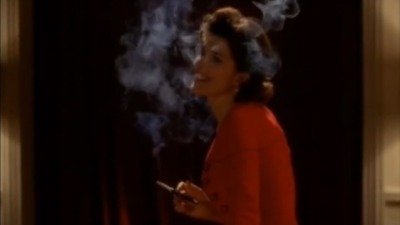
The London and New York eras of Sid and Nancy’s short life together was presented in the 1986 Alex Cox film Sid and Nancy. While, after the break up of Sex Pistols, Nancy enjoyed calling herself Sid’s manager and tried to convince every one that she was going to make him a big star (maybe she even believed that that was going to happen herself), the film presents the reality probably much closer to what actually happened. Who knows if Nancy was serious about being a music manager. I think she would often get really excited about something for a very short while just to completely abandon it as soon as any little thing does not go her way (which is such a relatable trait, but much more dangerous when it comes to someone like Nancy). She did try to score Sid some gigs and his (in)famous performance of My Way happened during that period. But they quickly accessed drugs and stopped caring about anything. I believe that the film scenes showing Sid and Nancy sitting quietly on the bed in their hotel room, surrounded by trash, watching TV all day with vacant stares is a good representation of what their final days probably looked like. In Deborah Spungen’s book she recalls a sad realization she came to one day: Nancy stopped reading. She did not open a book or even a magazine in months. She was always said to be very intelligent and she did enjoy entertaining her brain. Drugs changed that.
I remember seeing Sid and Nancy for the first time when I was a teenager, obsessed with the music scene and attracted to the darker side of life. Sid and Nancy were glorified in a way by „alternative” kids, their photos all over Tumblr and (oh my God) weheartit. I remember being, really quite offended at the fact that Chloe Webb was the actress playing Nancy. I thought she was too old and, unfortunately, and I do feel embarrassed and guilty about it now, too ugly to play Nancy who, at that point, I really did not know that much about but still considered her an icon for myself. I loved Hole back then (still do) and I was angry that Courtney Love, who was in the film, was not the person playing the main character. Interestingly enough, I do not think I had anything against Gary Oldman as Sid Vicious, even though he was almost thirty and with not much of a physical resemblance to Sid. Chloe Webb was almost Nancy’s age and while not a spit image of her, still pretty similar. Funny how that works. I re-watched the film a few days ago, after reading And I Don’t Want to Live This Life, and now, in my 20s and my view of Sid and Nancy as people and Chloe Webb’s performance has definitely changed. Maybe she could have been a bit more aggressive, a bit more feral, but I still think she pretty much nails the lost woman heading towards her own destruction. Her way of talking is also pretty similar to the short snippets of Nancy talking captured on video. I also really appreciate her voice acting, if you will, and the way she plays the frustration. Oldman, on the other hand, plays the confused kid Sid well but completely loses the angry side of him. And while Nancy might have considered Sid a sweet boy, we know from the people who knew both Sid and Nancy that he could get extremely violent. He’s a child, which is appropriate, but not a punk icon.
The film focuses on him much more than it does on Nancy. It is not too surprising or problematic, really, it starts with their meeting and shows their life together — and their life together took place in the punk world, the world that Sid was (is?) considered the biggest icon of. The one scene that is truly “Nancy’s” is the one where she and Sid visit her family. This is the story recalled by Deborah Spungen in her book (and me, earlier in this article) but the one in the film is quite different. They are visiting Nancy’s grandparents, not parents, and meet Nancy’s cousins (I assume) who were not part of And I Don’t Want to Live This Life. Nancy’s parents and siblings are in the scene but only as extras. And Nancy throws a tantrum, something that allegedly actually happened. But the scene does not seem like the one in the book, where Nancy’s outbursts and honestly, her behaviour in general, during the visit reads as scary and sad — it is juxtaposed with the family who is watching their sister and daughter who seems like a monster, not a real person, they realize they lost her and probably are not going to get her back again. The scene in the film shows aggression and shows how uncomfortable the family is but, maybe because we do not know anything about Nancy’s family in the film and cannot exactly read their emotions, there is something borderline comedic about it. Chloe Webb nails the scene in which Nancy calls her mother from London and tries to convince her she and Sid got married and she must send them a wedding gift (money), though.
Nancy Spungen was killed by a single stab wound to the abdomen. She was twenty years old. She was staying at the Chelsea hotel (the place they lived in together) with Sid Vicious who was arrested for her murder but later released on bail. He would be dead before the trial. He claimed to have loved Nancy for the remainder of his short life and called and wrote to Deborah to talk about her daughter. Deborah Spungen believes that while Sid was the person who delivered the fatal blow (a fact questioned by many throughout the years), Nancy manipulated him into killing her. What she thinks happened was that Nancy bought the knife that would be the end of her and swung it before Sid saying that if he really loved her, he would help end her misery and that there could be no bigger proof of eternal love than ending your lover’s life (and then your own, possibly), so that you could be together forever in death. She believes her daughter spent her life wishing she was dead. Several people claim she and Sid had a suicide pact and that his death was somehow a part of it (maybe even aided by Sid’s mother who made it happen).
While writing this article, I watched a 2009 documentary Who Killed Nancy? directed by Alan G. Parker. I have not seen it before. And for a film that has her name in the title, it really does not talk about Nancy all that much. It consists mostly of people’s memories of Sid and only the last fifteen minutes or so is devoted to the titular question (the filmmakers and interviewed people seem to believe Nancy was murdered by a drug dealer they did not even really know and there was no way that drugged out Sid could deliver the fatal stab). Anyway, there are a lot of people from Sid and Nancy’s social circle interviewed in the film and their opinions on Nancy are pretty similar. And they are similar to things shared by Deborah as well. Nancy is being referred to as the worst person, a monster even, a person no one wanted around. Only one friend of Sid, a Sex Pistols super-fan, Hellin Killer said that when she met Nancy for the first time she was shocked because she seemed really sweet. She stayed with them in London and while their lifestyle was sad, Nancy was always nice to her.
Even though I do not think there is a reason to distrust the reports of Nancy’s erratic, violent behaviour and even causing actual harm to others, I still cannot help but feel really sad about the way she seems to have been viewed by others. I wonder if Nancy knew that she was seen by others as a lost cause. I think she must have. And I cannot imagine what must happen for a parent to just give up, to accept that their child was not going to make it and all they can do is to watch it self-destruct. I do believe that Deborah genuinely loved her daughter and I do believe that she did everything she could to help her. It is too tragic that the people and institutions who could most likely actually make a change in Nancy’s life turned out to be incompetent and aided her ultimate demise. I hope Nancy got to experience love and warmth. I do not know if that is what she got from Sid. I know she thought she did and maybe that is all that mattered. One can speculate about these two: would things turn out different if they did not find each other? Or were they the one last shred of hope, the one last bout of happiness for one another? It is probably pointless to wonder about that. All I hope is that history can look at Nancy Spungen and her life with just a little bit of understanding. There is no point in hating her — although, to be fair, among the rock girlfriends she is probably among the ones who provoke the least amount of scrutiny. People see Nancy as a rebel and punk icon and I think she would like that. Let us not forget about the pain she seemed to have felt all her life, though. Sadly, I think we can all relate to that, even just a little bit.
Information, screengrab, and quote from: And I Don’t Want to Live This Life, by Deborah Spungen, published by Corgi Books in 1983.

 Swingin' at the Seance