Irene Dunne did not disappoint and today’s Summer Under the Stars day is short and sweet.
Ann Vickers (1933)
We’re starting with a pre-code and it’s A PRE-CODE! Irene Dunne he’s sex with a soldier she barely knows, so they’re not married, gets pregnant, and then has an abortion! I actually think that the first time I heard about Ann Vickers was in a book about most scandalous Hollywood films.
It’s always refreshing to see an old film „go there”. And Irene Dunne is playing a character that we like. She’s not demonized at all, unless someone has a problem with the fight for women’s’ rights, I guess. Overall, a very short and spicy start of the day.
My Favorite Wife (1940)
I’ve been waiting for a screwball comedy and I got one of the most iconic ones! With one of my favourite things in the world – Cary Grant doing comedy (his performance in Arsenic and Old Lace is probably my absolute favourite comedic performances from a man)!
Cuties!
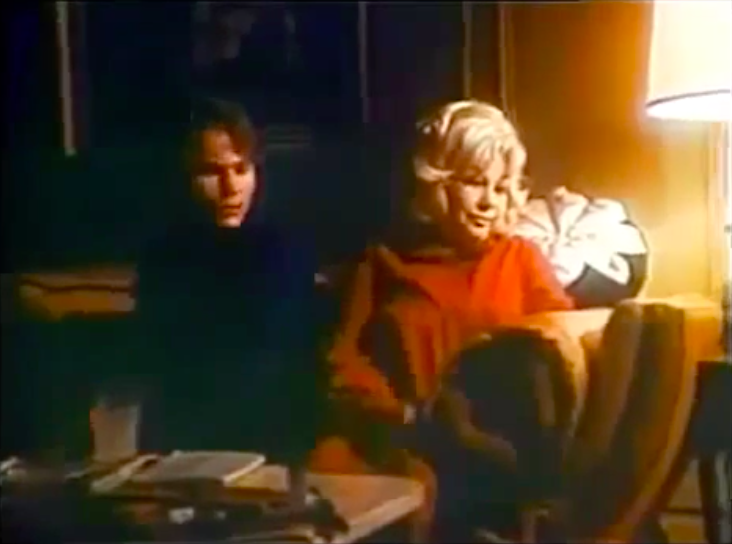
I didn’t realize it earlier but My Favorite Wife is what was later almost remade as Something’s Got to Give with Marilyn Monroe – her last, unfinished project. I have seen the short film that they did release (Dean Martin did not want to finish the picture with anyone else after Marilyn’s death) and it is one of those things that are not sad at all and yet make one sad. Sure, it’s nothing weird if you keep in mind what happened to Marilyn, but it goes deeper than that. I don’t know, I just sense some incredible sadness and longing from Marilyn in her scenes, something incredibly tragic even if she seems radiant.
Anyway, we’re here today to talk about Irene Dunne. She plays Cary Grant’s wife who disappeared during an anthropological (represent!) expedition and is presumed dead. But she reappears on what happens to be the day of Cary getting married to his new girlfriend.
Cary with Gail Patrick – the other (?) woman
I already mentioned Cary’s acting but Irene is a perfect partner for him and while she’s mostly charming and sweet, she’s not afraid to camp it up at times and it’s great. Their chemistry is fantastic and distracts from the fact that the plot and especially the way they choose to handle the situation is pretty weird.
Oh, and the ending has to be one of the cutest things I’ve ever seen.
Life with Father (1947)
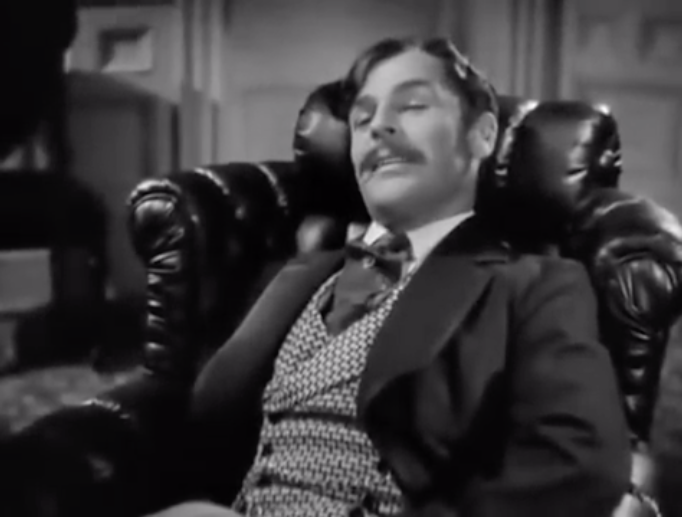
From one great pairing to another: we had Irene Dunne and Cary Grant, and here we have Irene Dunne and William Powell. The dynamics are different but they’re both good.
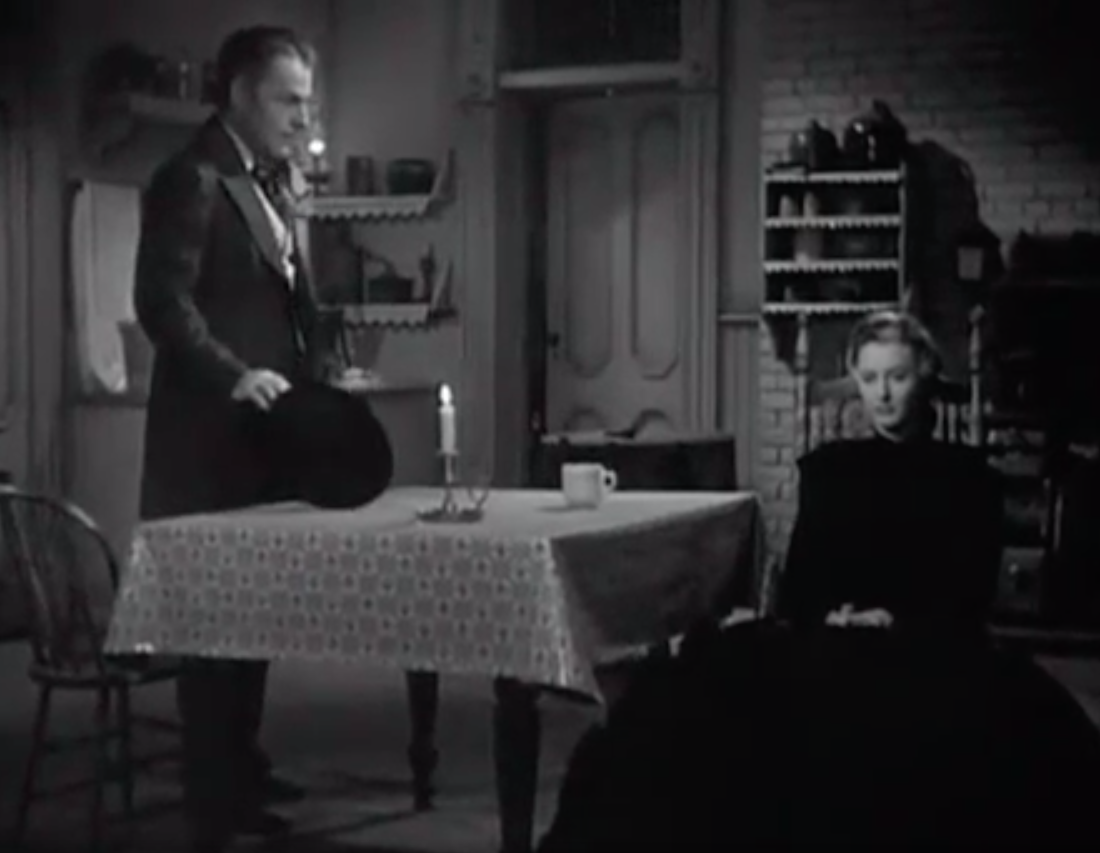
What Life with Father is is essentially a family sitcom – like a decade before they actually became a thing. William Powell is the Father, the „head of the house” but Irene is really the boss (is anyone surprised?). We follow them and their group of children among various shenanigans and misadventures.
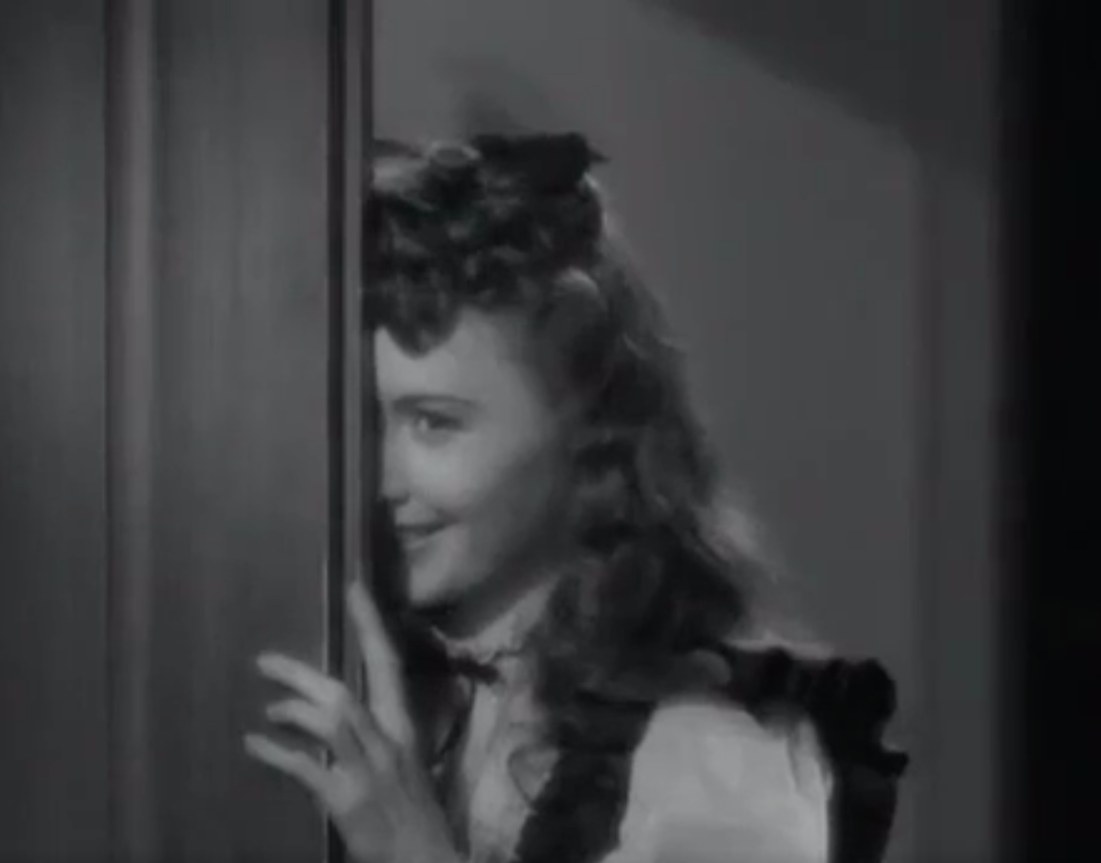
Oh, and a teenage Elizabeth Taylor makes an appearance. A charming experience all around.
I had fun with Irene Dunne today and now I am going to see Once Upon a Time… in Hollywood which FINALLY came out in my country today. I may report back with my thoughts.
After yesterday’s exercise in despair with Liv Ullmann, all I wanted was a bit of silly relaxation but I guess that’s not what fate had in store for me. But it doesn’t matter because The Pawnbroker starring today’s star, Rod Steiger, is a very good film.
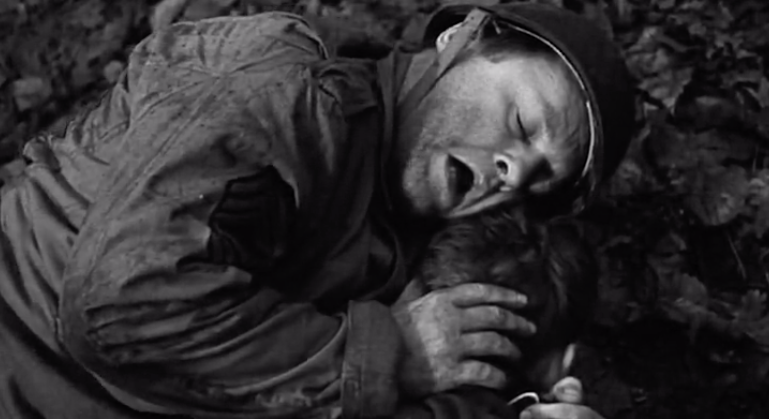
It starts with a dreamlike, almost surreal, lovely scene of a family spending time together in nature. But the bliss is short lived as it soon becomes obvious we are seeing a Jewish family and the time is World War II. The father is taken to a concentration camp but he also witnesses the deaths of his loved ones.
Then we jump ahead a few years when the man is a pawnbroker (THE pawnbroker) in Harlem. He does not trust other people, he is lonely and rejects everyone who might want to reach him, like his assistant or his neighbor who genuinely want to connect with him.
The Pawnbroker is a portrait of a life ruined by trauma, a trauma a person did not work through properly. It’s heartbreaking and shows how, and I don’t care that it sound cheesy, the light is taken from somebody’s soul.
It’s interesting and fantastic, in my opinion, that the characters here are pretty much all minorities – Rod Steiger is a white man but he plays a Jew, a Holocaust survivor. The soundtrack is pretty effective ranging from groovy 60s jazz to some heavy dramatic themes, plus, I enjoyed the establishing shots of New York City.
The Sergeant (1968)
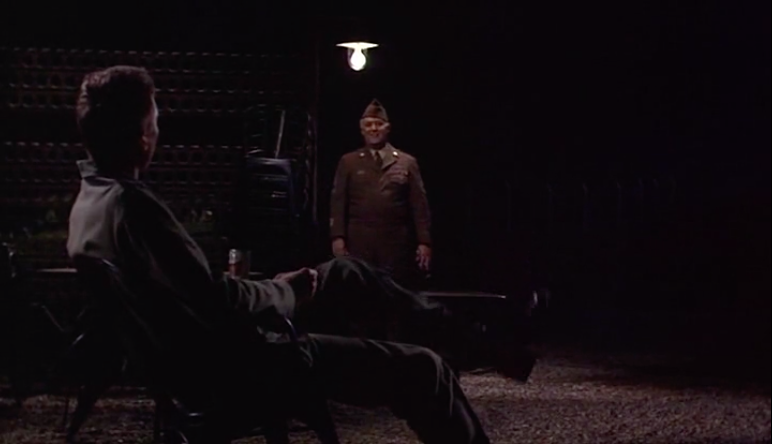
The second film with Rod Steiger I watched today is The Sergeant and much like with The Pawnbroker where he played The Pawnbroker, here he plays The Sergeant. In fact he plays a GAY sergeant and all the conflict stems from this fact (I mean in the plot – I believe that the internal conflict of Steiger’s character also has a lot to do with his war trauma). There is a soldier under his command and he finds it hard to repress his feelings towards the young man.
Apparently (I read that on Wikipedia) Pauline Kael thought Steiger did not make a convincing homosexual at all and Steiger himself agreed with her. I don’t know if I do because I found him compelling and definitely the best part of the film which, while showing psychological torment which is interesting, is pretty dull. There is a LOT of scenes that are supposed to tell us time and time and again that the young man is NOT gay and he has a GIRLFRIEND and they have STRAIGHT SEX. And I am unsure about the gay representation here: Steiger sexually assaults the young man and throughout the film I kept switching back and forth between believing that his mental breakdown is connected to the fact that he has to repress his identity and between thinking we were supposed to think that this is just how gay people are.
Pretty heavy topics once again although today was not as hard as yesterday. Tomorrow is Irene Dunne day so maybe I’ll get to chill a bit with a screwball comedy.
Every Summer Under the Stars (I’m pretty sure) TCM dedicates one day to a foreign star to give more of an, I don’t know, exotic flair to their programming, I guess. To my delight this year’s choice was Liv Ullmann herself! An absolutely incredible artist that I adore. Since I’ve loved her a long time, I have already seen a fair chunk of her filmography. But that gave me an excuse to tackle those films I always avoided for some reason. And that was a choice…
Skammen (1968)
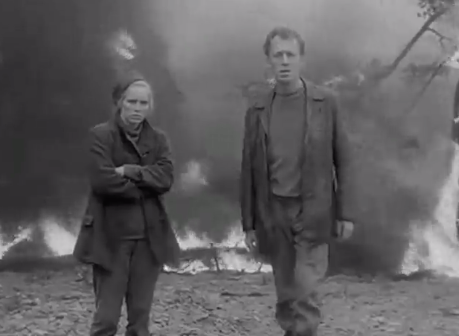
This is our Ingmar Bergman for today. After many days of happy musicals and romantic comedies we venture into the dark night of the soul. It’s quite a striking difference, really, even the war dramas I have been watching lately were more of the tearjerker/inspiring kind rather than the full-of-despair kind. And the first time we see Liv Ullmann – she is topless! We are moving into a new cinematic world!
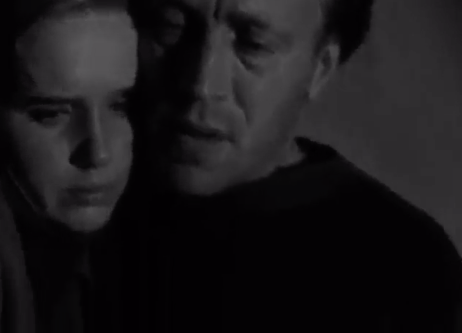
The story is: two musicians, a husband and a wife, live on a remote island where they are safe from the raging war. Their life seems pretty lovely, to be honest, especially when we get a glimpse into „the outside world”. Max von Sydow (the man) doesn’t even want to know much about how the war is going.
But their world changes completely when a pilot crashes on the island and soon the soldiers appear. Soon Liv and Max are imprisoned and tortured in various ways.
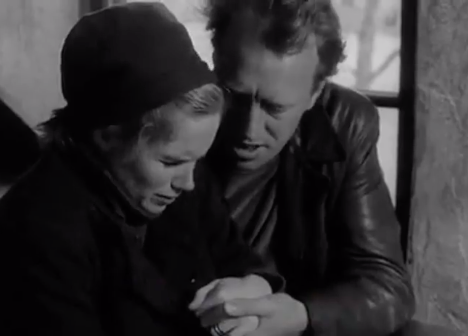
There are things about Skammen that seem to me pretty straightforward for Bergman which makes me think that maybe he did not mean for them to be read like that. But isn’t it kind of showing us that we may ignore problems of the world thinking they do not concern us but at one point they will? Seems very relevant if I’m being honest. And it’s about the effect of politics on personal relationships. There is a heartbreaking moment when Liv, who dreamed about being a mother, says that she doesn’t want to have children anymore.
It’s a film full of terror and anxiety and people being hurt and I can absolutely see all of the things (yes) we see on the screen playing out in the real world now.
Utvandrarna (1971)
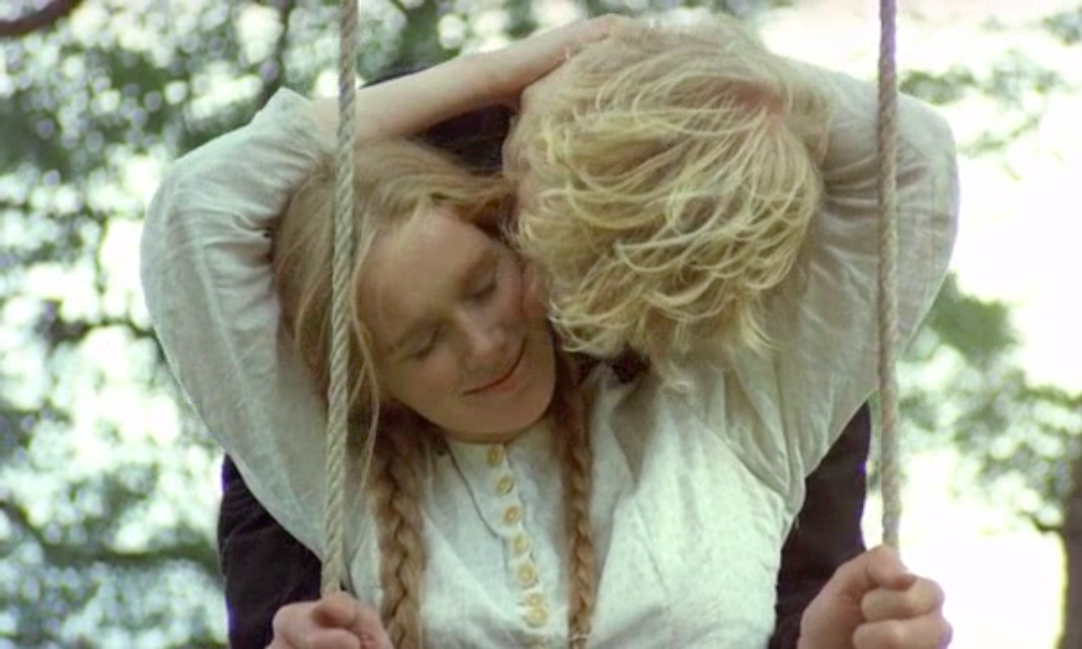
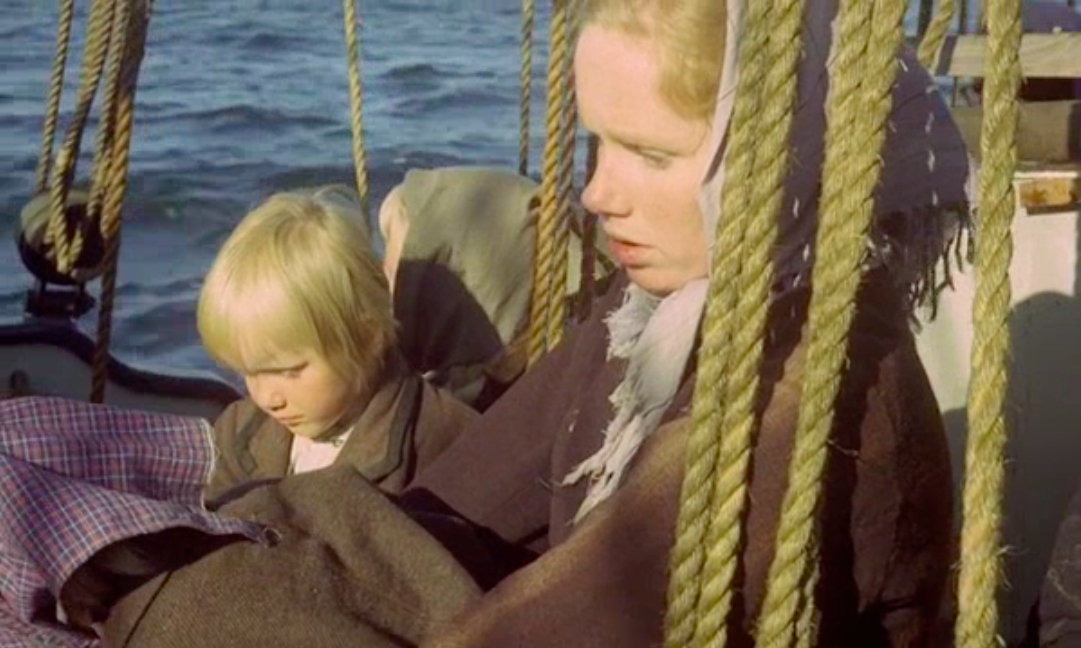
I’ll be honest right off the bat – I was exhausted. This film is over three hours long and I had another one almost as long waiting for me. So I won’t write much about The Emigrants. I don’t think there is a point in me writing a lot about this particular film since it’s so much more than I could ever express in words.
It is a story of immigration, of hardships people put themselves through on a search of a better life, of the promised land. And again I am reminded about the current state of the world and my heart is breaking.
No one should have to suffer for trying to find hope.
A Bridge Too Far (1977)
Liv Ullmann’s Day could not have come at a worst time for me in my personal life because today has been tough and all the films of hers I had on my to-watch-list were way too long. And A Bridge Too Far is not a good film to watch alongside literally anything else. I feel that to actually appreciate this film you need to sit in a dark cinema and watch it fully prepared to immerse oneself into the scary world of war.
The film does feel dragged on too long and also a bit dated – I could see it being made twenty eyars earlier and not being seen as revolutionary. It is impressive at times because it truly is a big spectacle with a cast of almost-thousand and multiple battle sequences. But at one point you want to say – we get it. Not the greatest emotion to feel while watching a war film.
Liv Ullmann as a Dutch woman caught in the middle of this madness with other civilians was, as one might have expected, good.
Trolösa (2000)
This killed me but I guess it was an appropriate finish to this difficult day.
Trolösa is something completely new in our Summer Under the Stars because it does not star our… star but it is directed by her. Yes, Liv Ullmann directed Trolösa which makes it only the second (after I Like It Like That with Rita Moreno) film directed by a woman this month. Also, it’s technically our second Bergman of the day because he wrote the screenplay.
And boy, did he really let himself get dark and raw in this one.
So we have an actress, and a director, and a relationship, and fighting, and violence, and all of that presented as a psychological drama that drains you completely. It’s a fantastically acted and true reflection on human psyche which is Bergman’s forte.
I feel very bad that I did not do Liv Ullmann justice and I did not write insightful things about those amazing films but I am so exhausted after today. Give me an MGM musical.
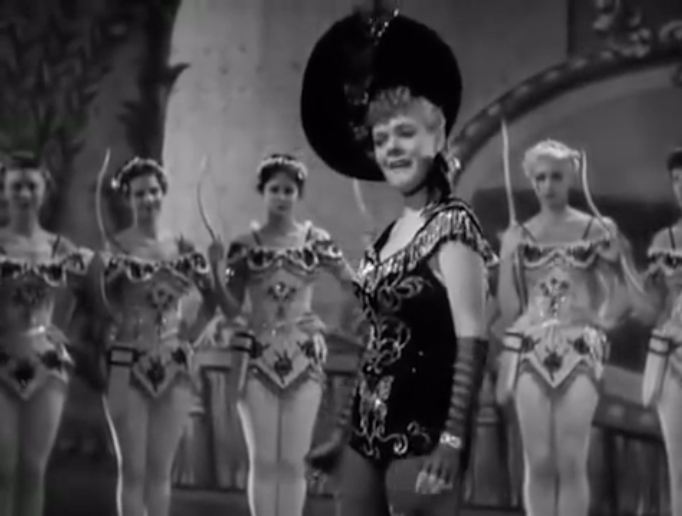
A story of the birth of one of America’s biggest cities told through the history of one family. The O’Learys drive to Chicago when the father, while trying to impress his sons and racing a train, gets dragged by the horses and dies. The mother starts a laundry business and raises her sons to grow up well. Although one of them, Tyrone Power (who looks really handsome here, sorry to objectify but I sometimes wonder why he was considered so hot – now I know) is into some shady stuff. The other, Don Ameche, is smart, successful, and responsible. By the way, the mother is Alice Brady who won an Oscar for this role.
Brian Donlevy plays a local businessman. One day, Alice Brady discovers a drawing he made on a sheet she got in her laundry that the brothers read as a plan to scam the land owners, get their land, and build a tramline (yes – this is how conflict is introduced in this film). Later Donlevy wants to run for mayor so Ameche decides to do that as well.
Sleazy guy
Also, Alice Faye is in the film and she plays a singer-showgirl who allegedly is incredible and the greatest talent in Chicago (I would say it’s debatable). Tyrone Power and her fall in love but at one point he starts treating her terribly.
I don’t think it’s too much of a [SPOILER], since this is what the film was supposed to be about, but it ends with the great Chicago fire in what is quite an impressive sequence. You know – they said it was Mrs. O’Leary’s cow that kicked the lantern and that burned Chicago down. But we all know it was Mame who kissed the buyer from out of town, right?
Apparently the film was made as 20th Century Fox’s response to MGM’s San Francisco from 1936 (Mame’s fault again…) which did not quite work as they hoped. I wouldn’t say In Old Chicago is a great film but I do appreciate the subject matter, the stories of cities are fascinating and not told often enough.
Beau Geste (1939)
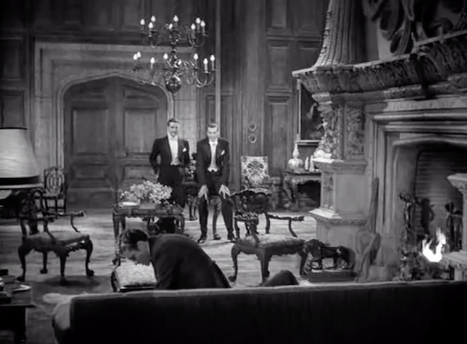
The film starts in a desert where a group of soldiers sees a base where everybody seems to be dead. In a note they find they read about the „great sapphire”. The rest of the story is told in flashbacks. It’s fifteen years earlier and we see a group of children playing (one of those children is a very young Donald O’Connor and he’s adorable). The kids are being raised together as adopted brothers in a big mansion. The lady of the house has a big sapphire that she’s about to sell it. Now, it’s years later, kids are all grown up and they want to see the sapphire. But it’s missing! They all accuse each other for a minute, then separate. Gary Cooper who is among the, now men, then kids, leaves a note that says he took the sapphire (and that „Blue Water and [his] blue eyes go so well together” – I hate to say it but that’s hot). The men then go to the desert with the Foreign Legion.
Guys being dudes
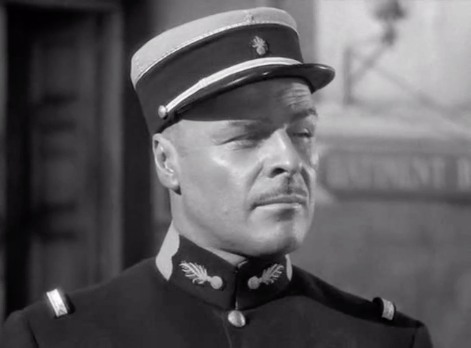
Brian Donlevy is the sergeant and in his first scene he essentially does I’ll Make a Man Out of You as a speech. He later turns out to be a sleaze bag pretty much (again!).
I loved this film. Brian Donlevy was probably the part I cared least about but he still did a good job. I just loved Gary Cooper and Ray Milland. The “cinnamon tography” was beautiful and I got genuinely invested in the story. I know there are other, earlier versions but I haven’t seen them so my experience was unspoiled.
The Great McGinty (1940)
Brian Donlevy is the lead in this one. He plays a bartender in a banana republic who can’t go back home and over the course of the film he explains why. He was a tramp who one day got paid for voting in rigged elections. He continued to be involved in politics in that way until one day he becomes a mayor. To do so, he had to have a wife (because marriage is a sign of a good man) so he marries a secretary but eventually they truly do fall in love. Since she’s not scummy, she actually starts influencing his views and he starts having problems with the corruption he’s a part of.
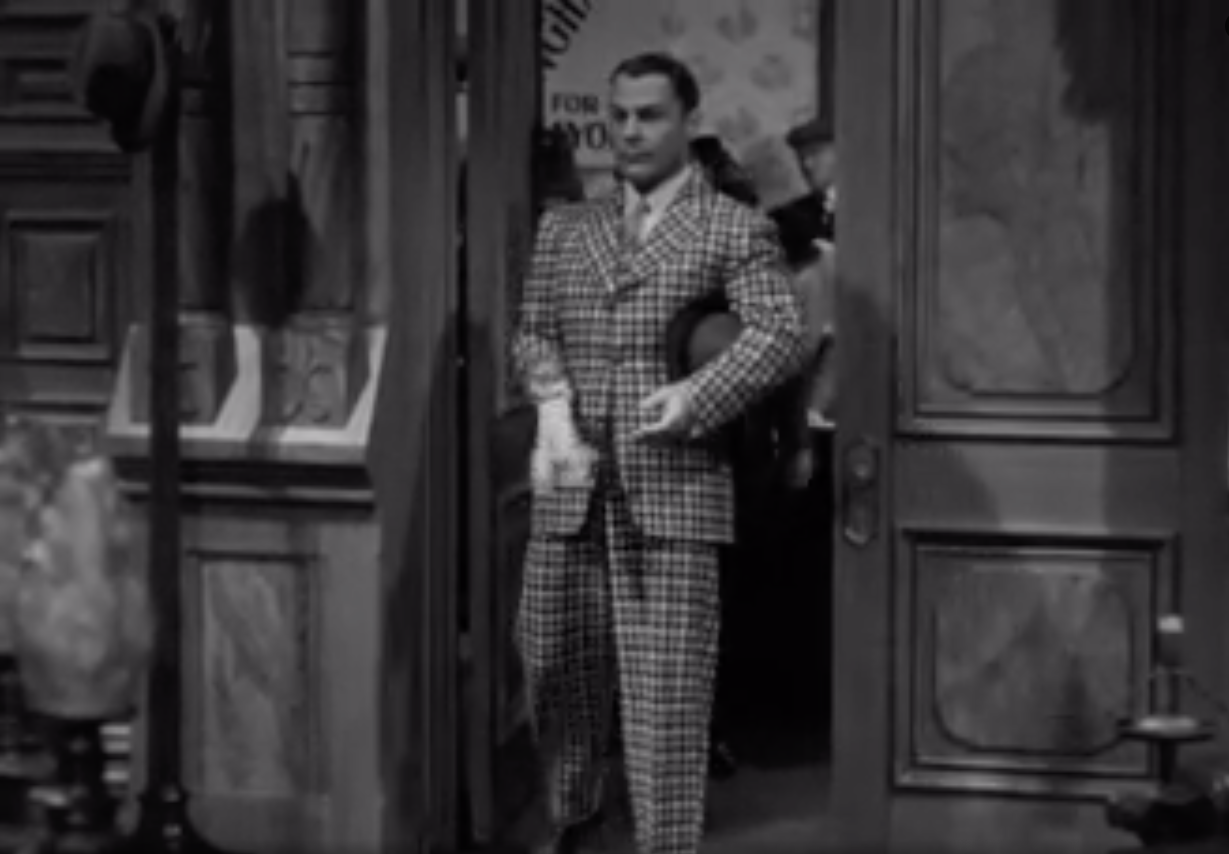
One of the most interesting things about Brian Donlevy in this film is that he wears this suit
It’s always nice to see politics exposed for what they are and the performances and script are fine but after Beau Geste I needed more to be truly impressed.
The Great Man’s Lady (1942)
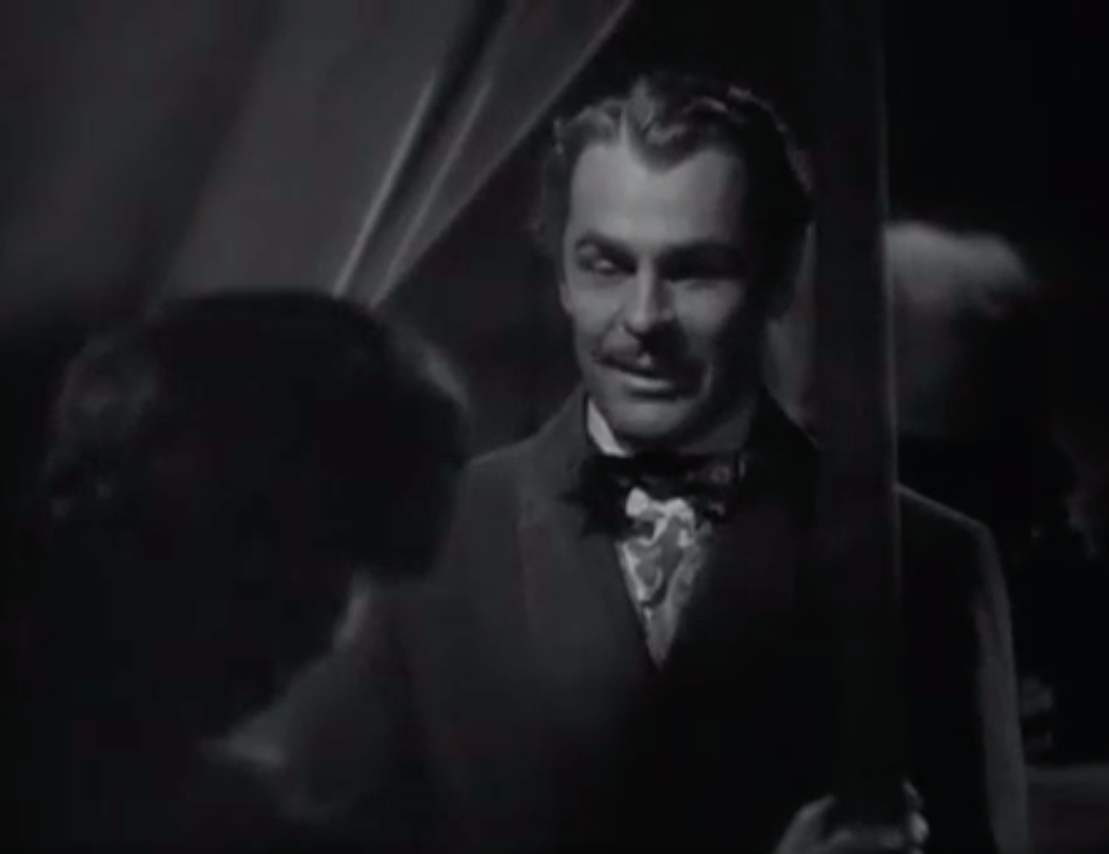
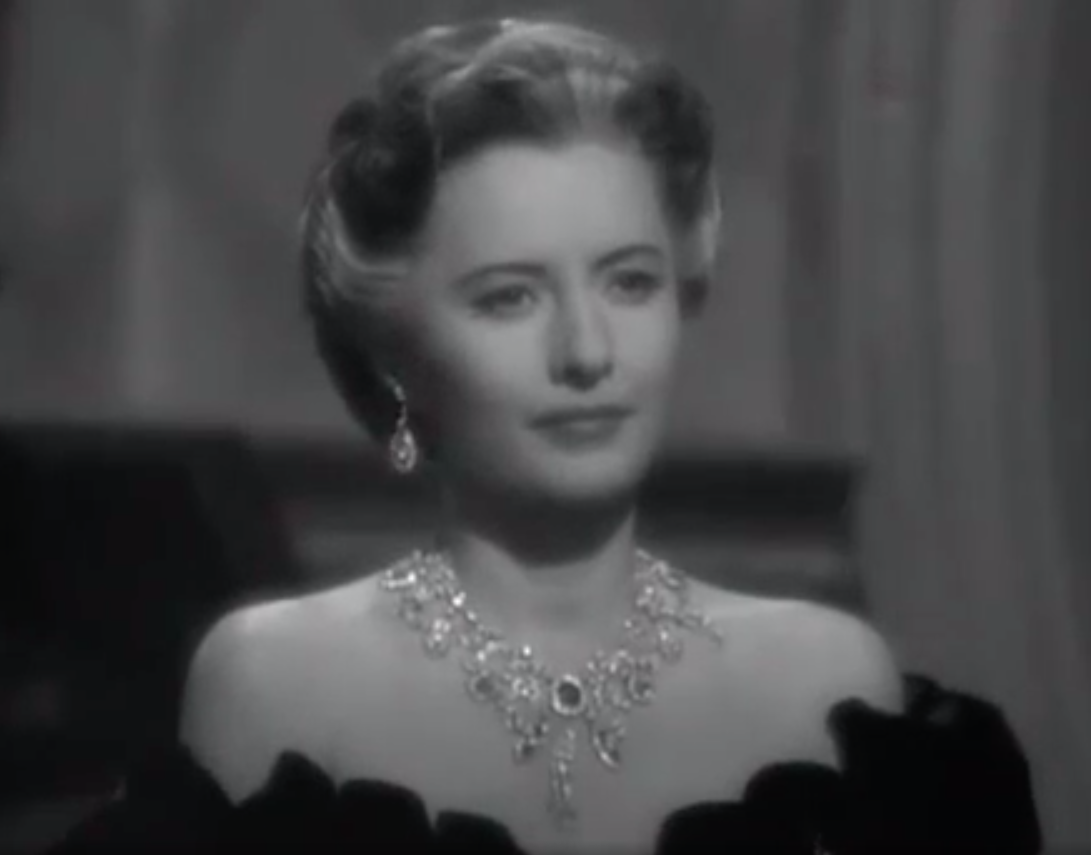
Brian and Barbara Stanwyck
When the film begins with a variation of the „behind every great man is a great woman” cliche… Let’s just say I don’t expect a lot.
But she’s so cute!
The Great Man’s Lady is not that great. But it does involve Barbara Stanwyck in age-defying make-up turning her into a hundred-year-old lady so do with that what you will.
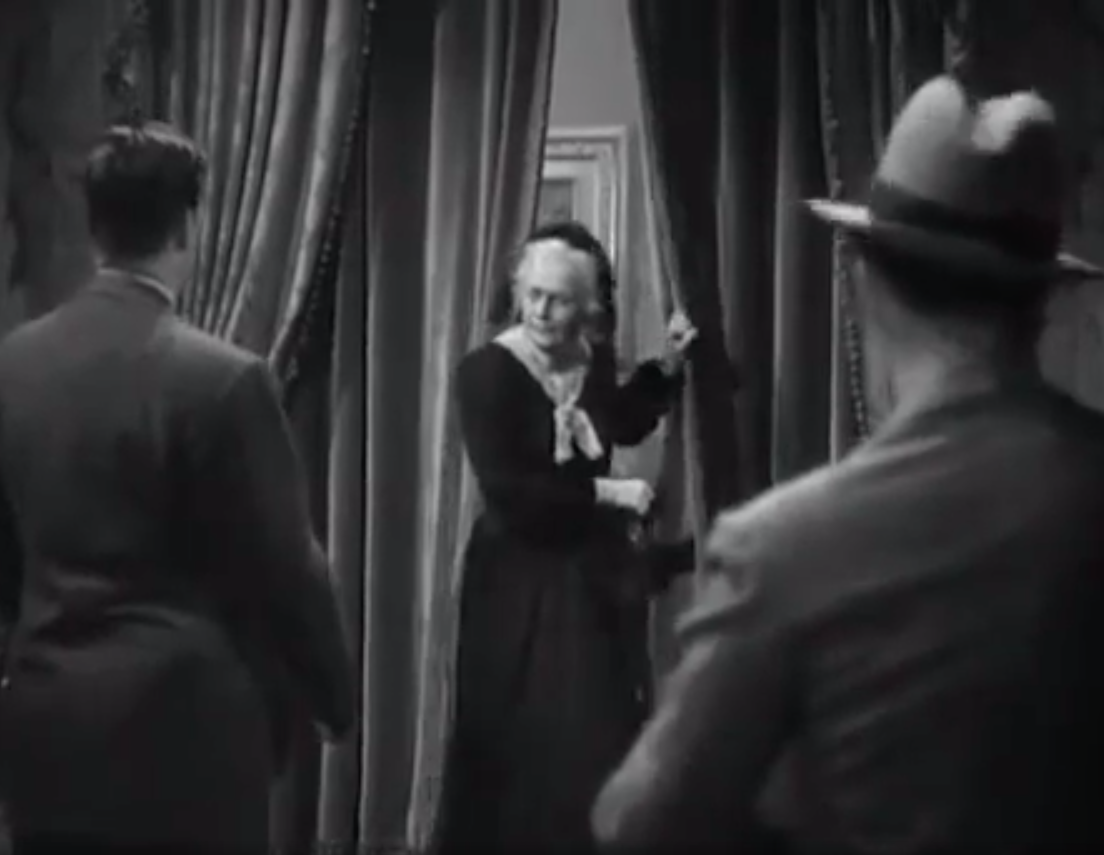
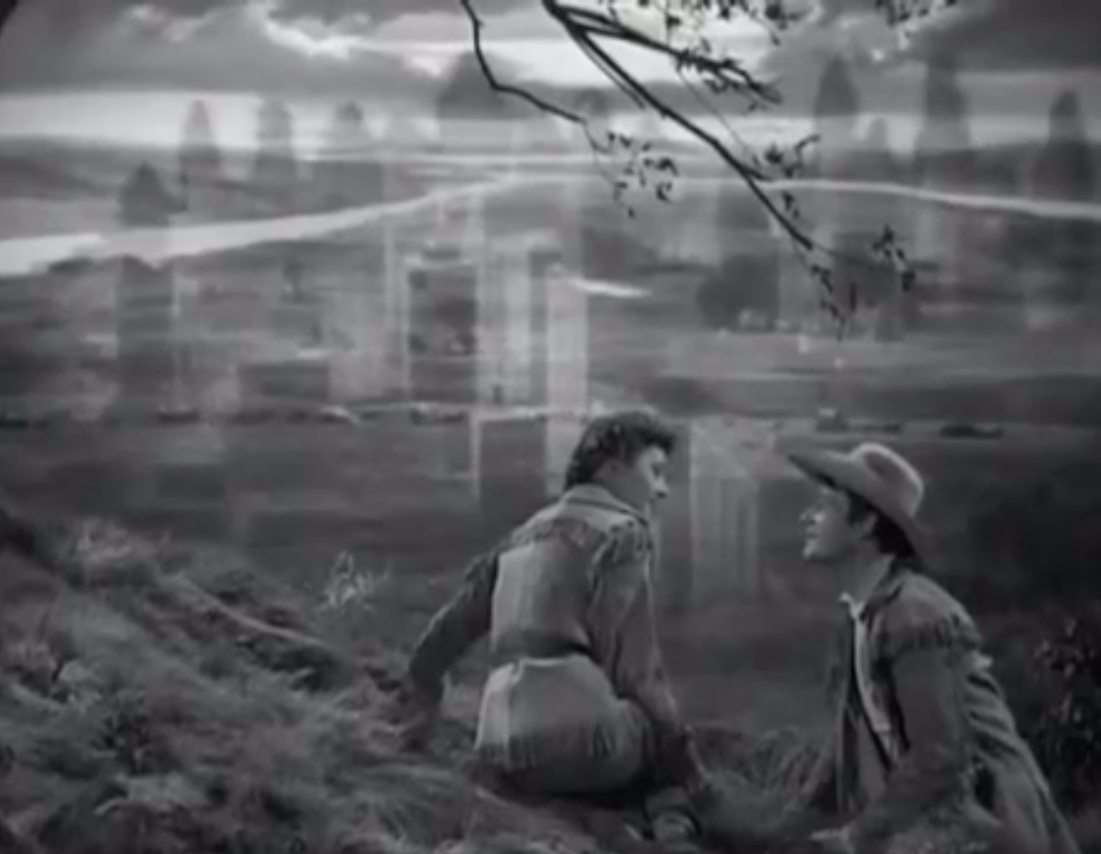
Barbara plays Hannah Hoyt, the widow of the founder of Hoyt City, Ethan Hoyt. In the town there is supposed to be a celebration for Ethan during which his statue is going to be unveiled. People don’t know much about him, though, and a group invades Hannah’s home and ambushes her with questions. One woman, who looks like Maggie from The Nanny, saves the old lady. When they’re alone, it turns out that she too has a hidden agenda, though – she wants to write Ethan Hoyt’s biography. Barbara recounts her life story, from being a daughter of a wealthy man who refused to give Joel McCrea (that’s Ethan) money for his dream of building a new city in the wilderness, through running away with him to make the dream come true, to their separation and what comes next.
Big city dreams
Let’s just say that A LOT happens, and a lot of that is very dramatic and none other than Brian Donlevy is pretty central to the drama. He starts of as a massive creep who wants to gamble with Barbara for a kiss from her (in effect the wins back all the money Joel lost earlier when he was drunk) but then they become friends and Joel actually thinks she’s cheating on him with Brian. The film is very cute before that and very melodramatic after with some real tragedy happening.
The man
In the end K.T. Stevens, the Maggie-look-a-like, gets a little bit feminist as she says that she thinks the wrong person got the statue in the square but Barbara shuts her down when she says how hard it is for men on the road to greatness and how they need their help. Not my thing.
I’m always happy to see Barbara, though!
The Errand Boy (1961)
A Jerry Lewis comedy about Hollywood. Brian Donlevy plays an executive who hires Jerry as a spy of sorts who is going to work for the studio and tell them what exactly is going on there.
I don’t have a lot to say about The Errand Boy because it’s simply a collection of funny episodes and misadventures and I am not familiar with Lewis’s oeuvre to have any insightful commentary here. It’s fun.
Okay. That was five films. I got a bit lazy this last few days so now I’m exhausted. Tomorrow is going to be possibly pretty intense as well so I’m going to end here.
A few days ago, when I watched the Ava Gardner film Tam Lin, I mentioned my affection for the genre known as „psycho-biddy” (or „hagsploitation”). Today I feel like I have to come back to the subject because today’s films are two horror movies from the 70s – which means Ann Sothern was an older actress when she made them. Older actress plus horror film – one can guess where this is going.
The Killing Kind (1973)
The film opens with an upsetting rape scene of a young woman by a group of men. Among them is John Savage, our main character. The other men force him to participate in the rape. Next time we see him it’s two years later and he just left prison. He comes to live with his mother, Ann Sothern, and his return to „the real world” is going to prove very hard (harder even than in Invisible Stripes).
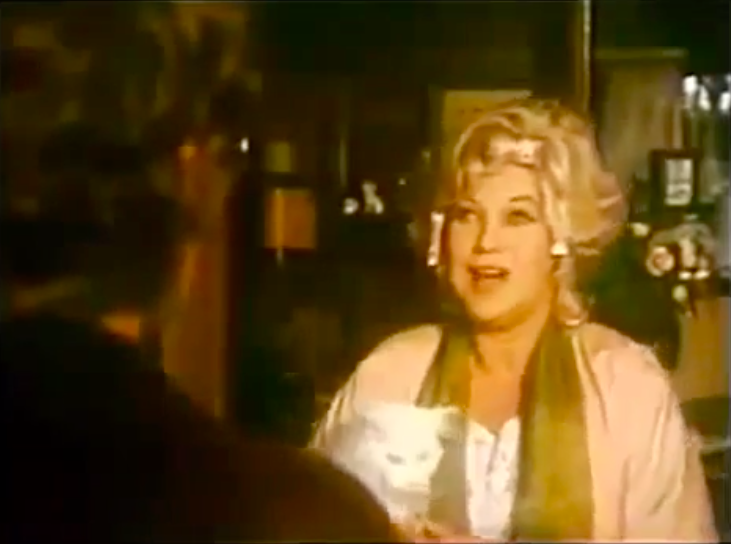
Ann Sothern gives an incredibly campy performance but I really don’t think there was a different possible way to go for her in SUCH a film. She mostly lounges around in big hair and caftans with her cat and doting on her son. The mother-son relation in the film is very Norman Bates, down to literally using several of the same shots (like Savage spying on their new tenant through a peephole). It gets creepier by the minute, at one point she walks into the bathroom as he’s taking a shower and starts taking photos of him.
We need to talk about John Savage
In the film [SPOILER] it’s the son who is the villain. The viewers are supposed to excuse him for the rape, in which he was, as far we know, an unwilling participant, but here are the things he does later in the film: kills his mother’s cat, assaults the new tenant, pushes the rape victim from the beginning off a cliff and kills her, tortures and kills a rat in front of an old lady, murders his former attorney. And all that before an hour of the movie passes. Still, Ann Sothern definitely has the psycho-biddy vibes about her as she is essentially playing an unhinged, weird older lady. But what I appreciated about the film was that she actually got a moment of true vulnerability and even though we’re watching absolutely terrible people, there is something genuinely touching and sad about her performance towards the end of the film.
Like Tam Lin, The Killing Kind is not really mentioned among the psycho-biddy classics but I absolutely think it could. I wouldn’t say the same about…
The Manitou (1978)
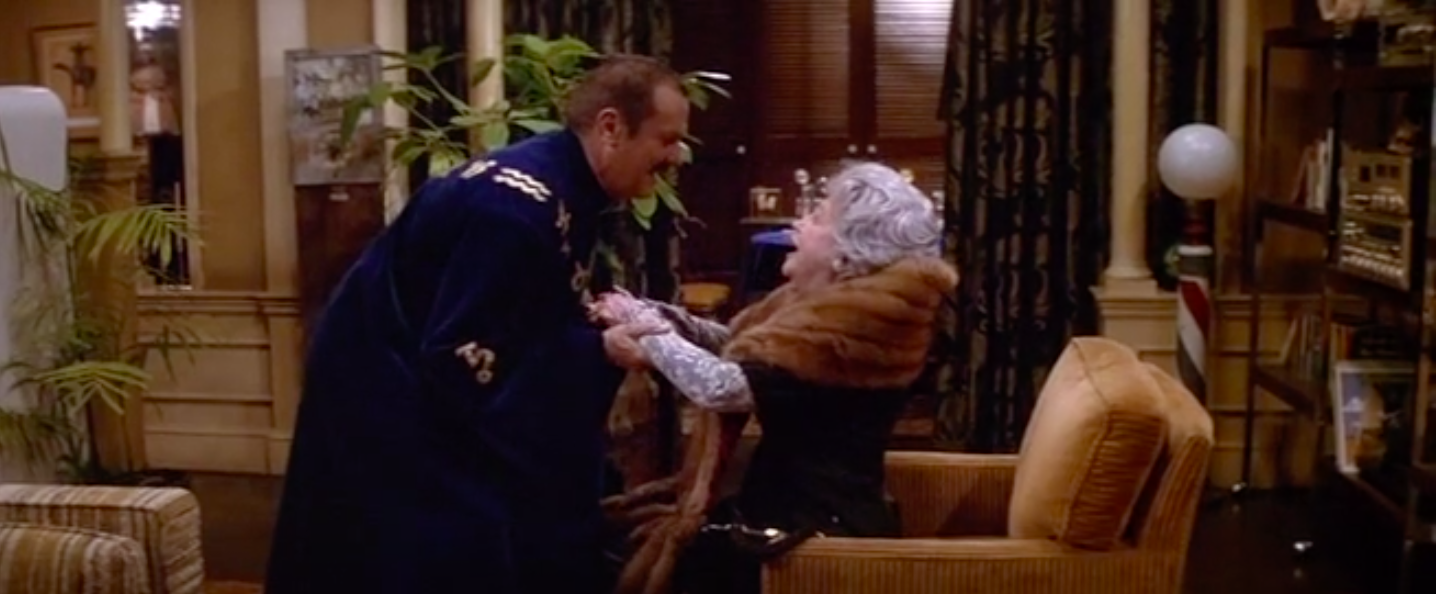
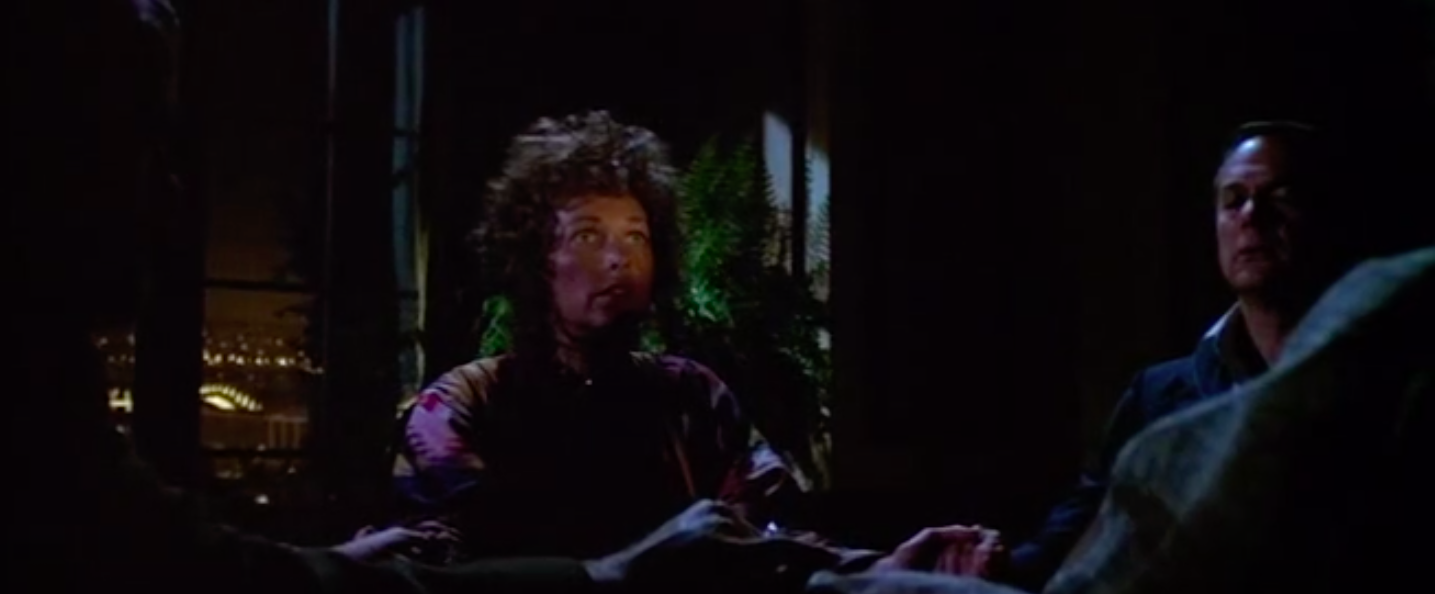
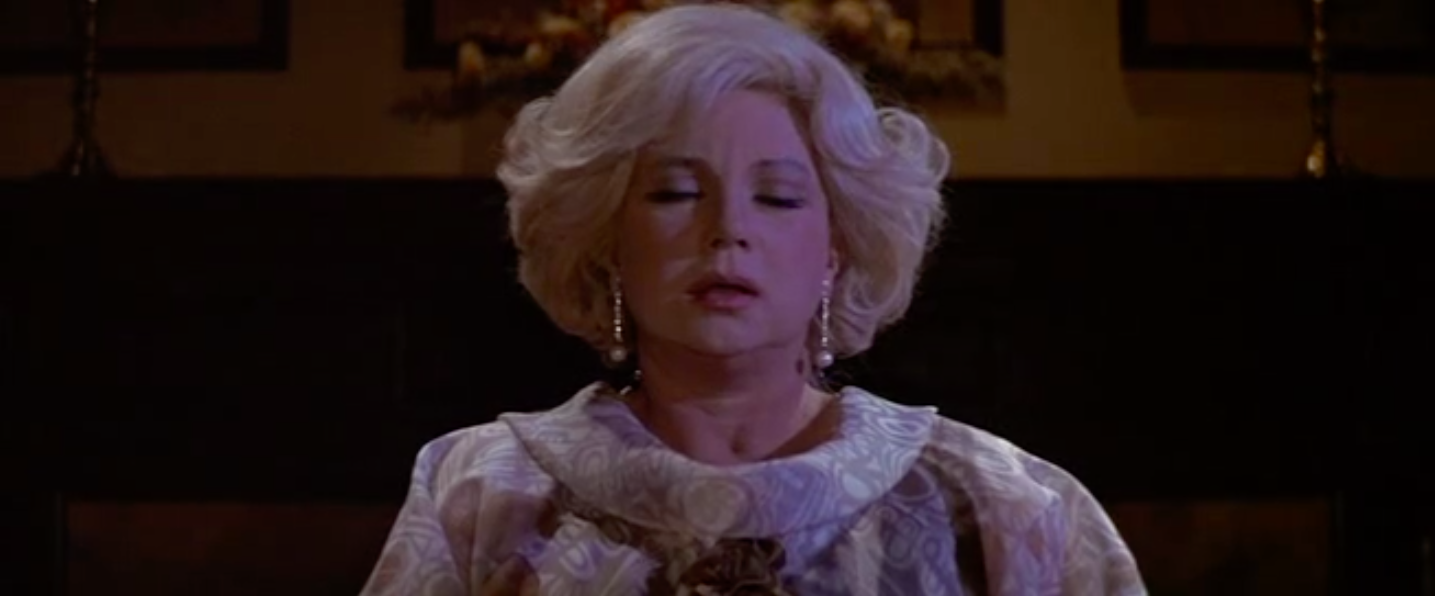
Okay, yes, Ann Sothern IS in this film but so is Tony Curtis. As a tarot reader and a psychic. Yup. His friend/love discovers a tumor on her neck. The doctors find it weird, not like tumors they’re used to at all. In the end it turns out that this is a problem more for someone of Tony’s line of work.
Tony Curtis scamming sweet old ladies
Ann Sothern’s role is very small (she’s the aunt of the sick woman) and not half as juicy as the one in The Killing Kind. She does take a part in a seance they have. But it is not easy to steal the scene in a film including [SPOILER] an ancient Native American shaman growing in a tumor on a woman’s neck. This is much more of a Tony Curtis’s psycho-biddy film than Ann Sothern’s.
I know that the psycho-biddy movies are controversial and considered sexist for basically existing to exploit aging actresses who do not get better parts in Hollywood anymore. But that’s the thing – these films created characters for actresses who were considered has-beens. And those are interesting roles in which they truly can go wild. Maybe for a diva like Joan Crawford it seemed degrading but I unironically love her performances in films likes Strait-Jacket. I think these films deserve more credit than they get.
I started the week watching tons of films every day and I’m finishing it with a few single-movie posts. I feel like I’m maybe being unfair to the stars whose filmography I did not feature more strongly. Just so you know, I have already seen most of Bogart’s oeuvre so I feel like I could relax a bit today.
Invisible Stripes (1939)
The film starring Bogie I still had to check out was Invisible Stripes from 1939. It is a „socially conscious” film one might say, about prisoners being released from Sing Sing and struggling to adjust to their new lives as free men.
Humphrey Bogart, who is one of said prisoners, is actually the one who talks about the titular „invisible stripes” – even though they might not be wearing the prison clothes anymore, they would still be seen as prisoners on the outside. This turns out to be true, as George Raft can feel the distrust of those once close to him and as he struggles to find a job.
Overall, it is a George Raft movie, Bogart is fourth billed. William Holden is also in this movie – he’s so young I barely recognized him.
It is a well done, sad, slice of life story with great acting.
Even though I only watched one film today and Humphrey wasn’t really the star, I feel like I spent a lot of time with him lately as I read the book Humphrey Bogart by Nathaniel Benchley just two days ago and I’m about to start Tough Without a Gun: the Life and Extraordinary Afterlife of Humphrey Bogart by Stefan Kanfer. Of course, the Bogart-adjacent book I recommend most is Lauren Bacall’s autobiography By Myself.
I don’t know why but up until yesterday, when I saw Rita Moreno’s Instagram post inviting everyone to watch her films on TCM the following day, I was convinced that today’s star is Natalie Wood – and that’s what I prepared for. I had to improvise today and as a result I didn’t even watch an Old Hollywood film. Oops.
Let’s start in a really odd place:
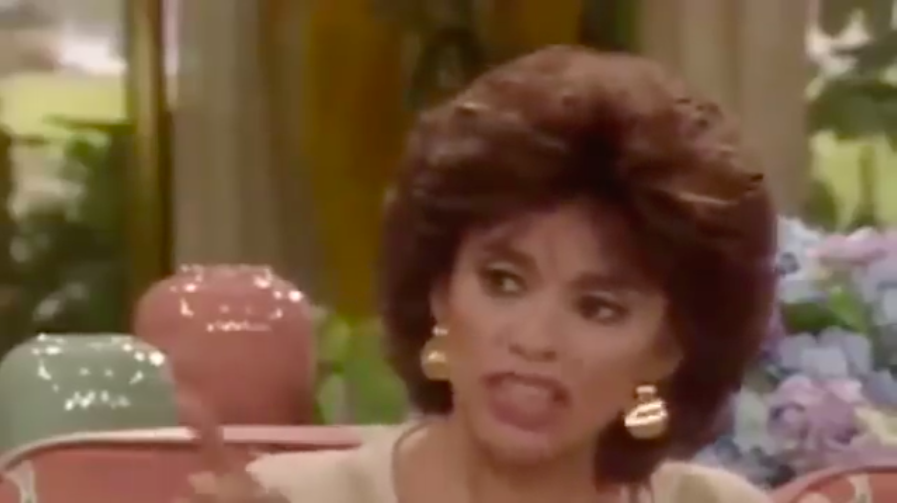
Golden Girls S2E26, „Empty Nests”
I’ve never seen Golden Girls before and I can’t imagine a worse place to start than the episode starring Rita Moreno. I do know that the show is iconic, though, so I will give it another chance in the future, don’t worry.
Empty Nests is a backdoor pilot (ugh) about a couple (Rita is the wife) whose children grew up and left the house. Rita is feeling lonely and as if her husband is not paying enough attention to her.
It is extremely boring and pointless (it’s the lowest rated episode of the show on IMDb with a score of 3.6) and I am not going to talk about it any further out of respect for the Golden Girls legacy and Rita Moreno.
MF watching this episode
I Like It Like That (1994)
Today’s film is from 1994. Yup. 1994. Probably at least thirty years too late for an actual TCM. I was born in 1994 so clearly it was not long ago at all.
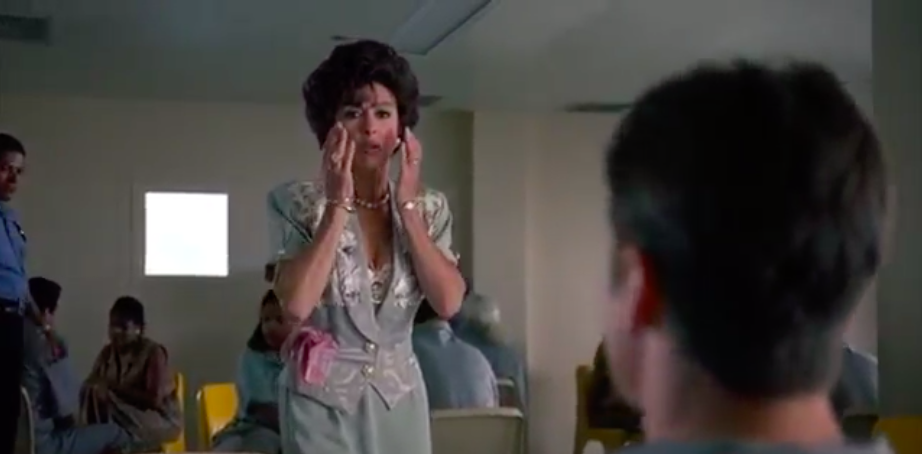
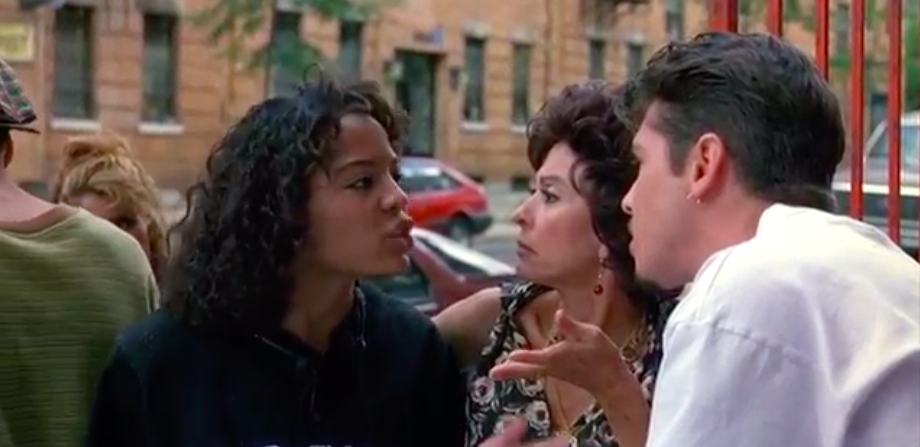
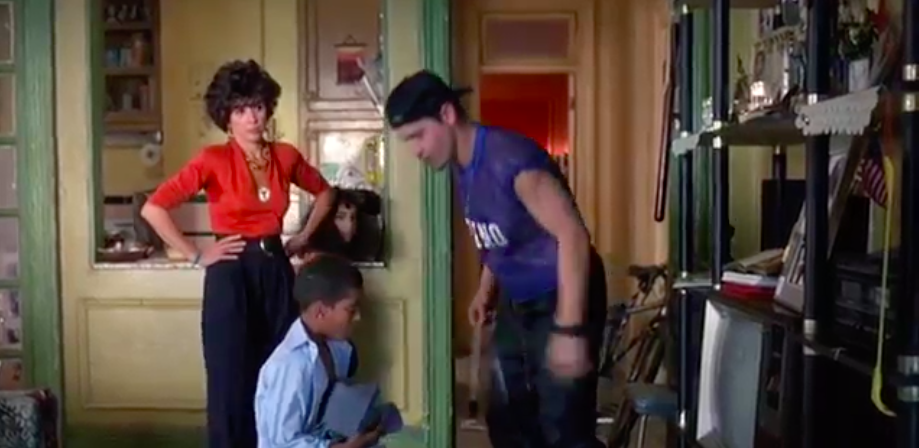
What we have here is a story of a young mother of three (Luna Velez) who becomes the breadwinner of the family after her husband goes to jail for looting. Then she finds a job in music production and meets a new man, the husband makes a deal with another woman he has a baby with and they all try to work out their lives.
Rita plays the mother of Luna’s husband Chino (Jon Seda) and her character was a bit confusing to me, she seems to encourage him to abandon one of his families in favor of the other one, but also she calls him useless? She does not get a lot of depth, which is kind of fine since it isn’t her story but also frustrating to me as a person who was watching the film for her. But she looked amazing.
I can’t say I loved I Like It Like That but if there is one reason why I’m glad I watched it is that it may be my only film this month that was directed by a woman (Darnell Martin). Lt’s be honest, there are only so many films made by Dorothy Arzner and Ida Lupino and so far we did not get to see them during Summer Under the Stars.
Law and Order: Special Victims Unit S6E20, „Night”
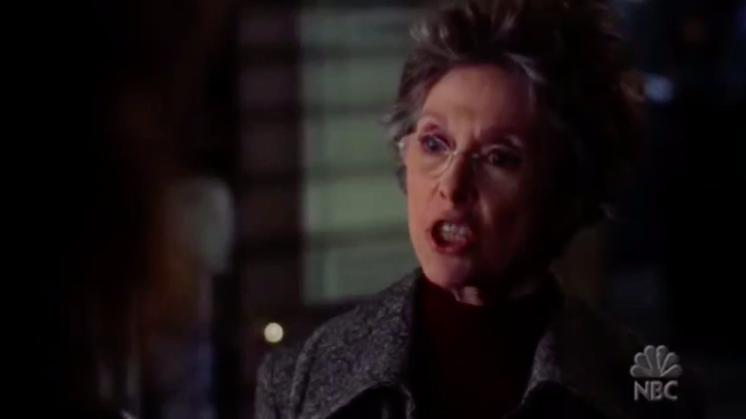
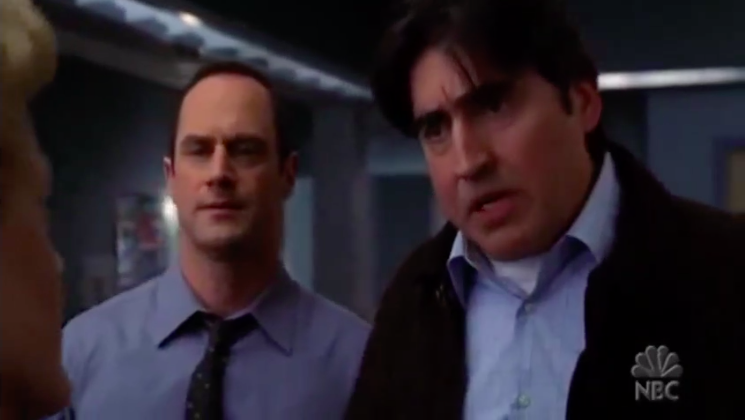
And another TV appearance by Rita. This episode of SVU is very upsetting, like most of them are to me. It deals with the rape of an immigrant woman. Rita gets a role of an activist fighting for the victims so that’s great.
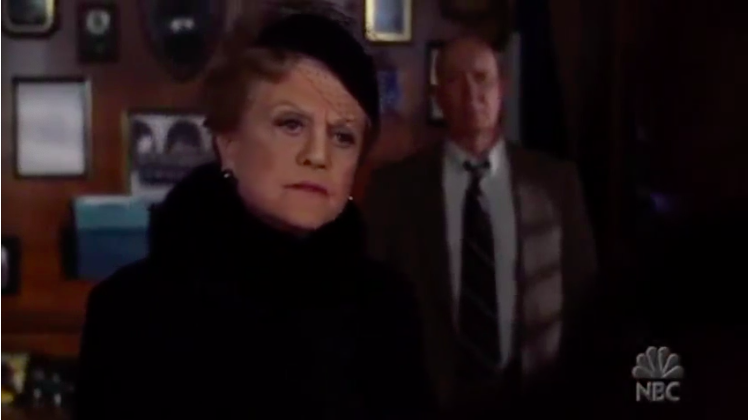
Honestly, I feel like if you’ve seen one episode of Law & Order you’ve seen them all but this one not only has Rita Moreno but also [SPOILER] Alfred Molina plays the rapist and ANGELA LANSBURY plays his mom. Yup.
After seeing like twenty films the last few days I decided that I need a little break. So I’m very sorry, Red Skelton, but I only watched one of your movies.
Three Little Words (1950)
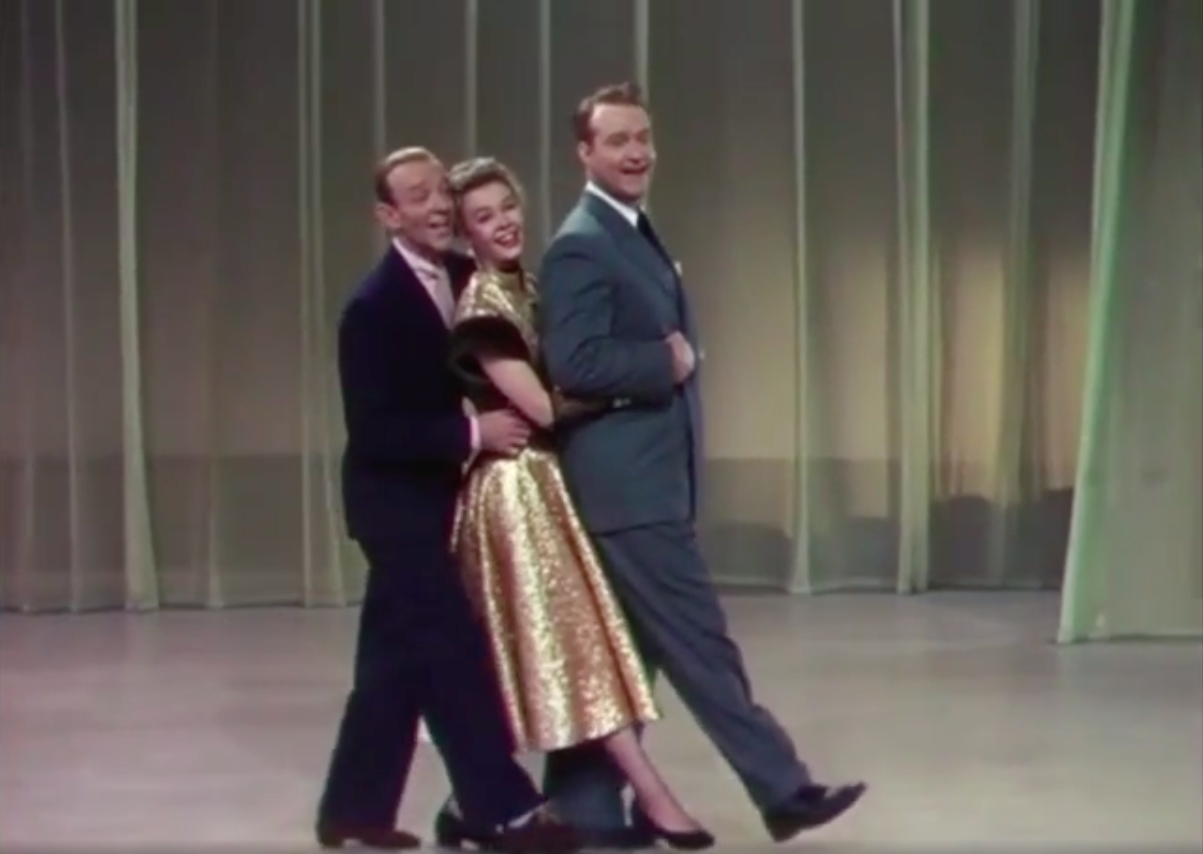
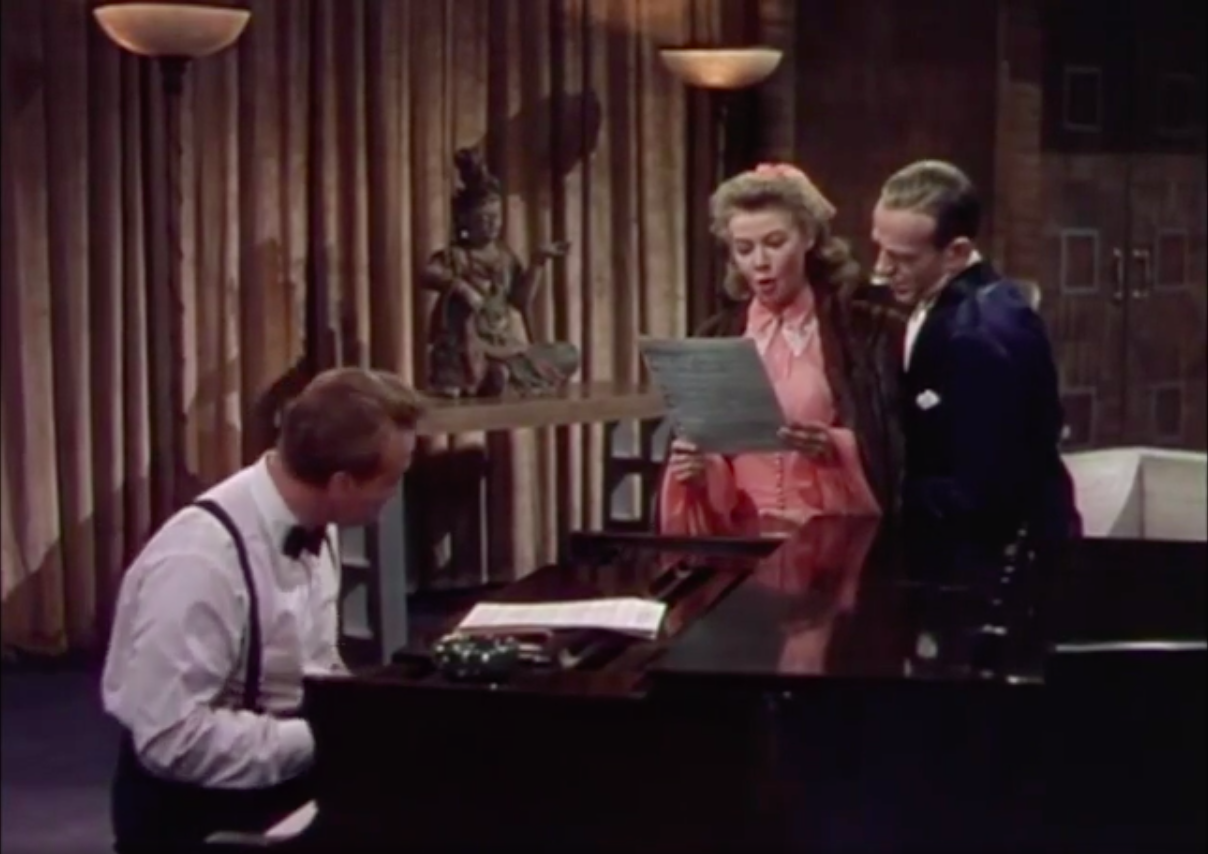
The film I watched is the biopic of the songwriting duo Kalmar & Ruby, starring Fred Astaire and Red Skelton. Another prominent player is Vera Ellen who is Fred’s dancing partner – until he gets injured and has to take a break from performing. After unfortunate first meeting, he is assigned to work on a song with a newbie Red Skelton who is dreaming of becoming a serious songwriter.
While Three Little Words does present the life story of Kalmar & Ruby, so it could definitely be called a biopic, it does include a lot of comedy (for Red’s sake, I imagine) and TONS of musical numbers. Of course, it makes sense since it’s a story of two songwriters, and it’s always a delight to watch Vera and Fred dance.
It’s mostly a fun musical with some funny moments but it can get more serious at points. There is a very touching and quite heartbreaking scene in which Fred Astaire is dancing on an empty stage alone after his injury and finding out that Vera Ellen is getting a new partner.
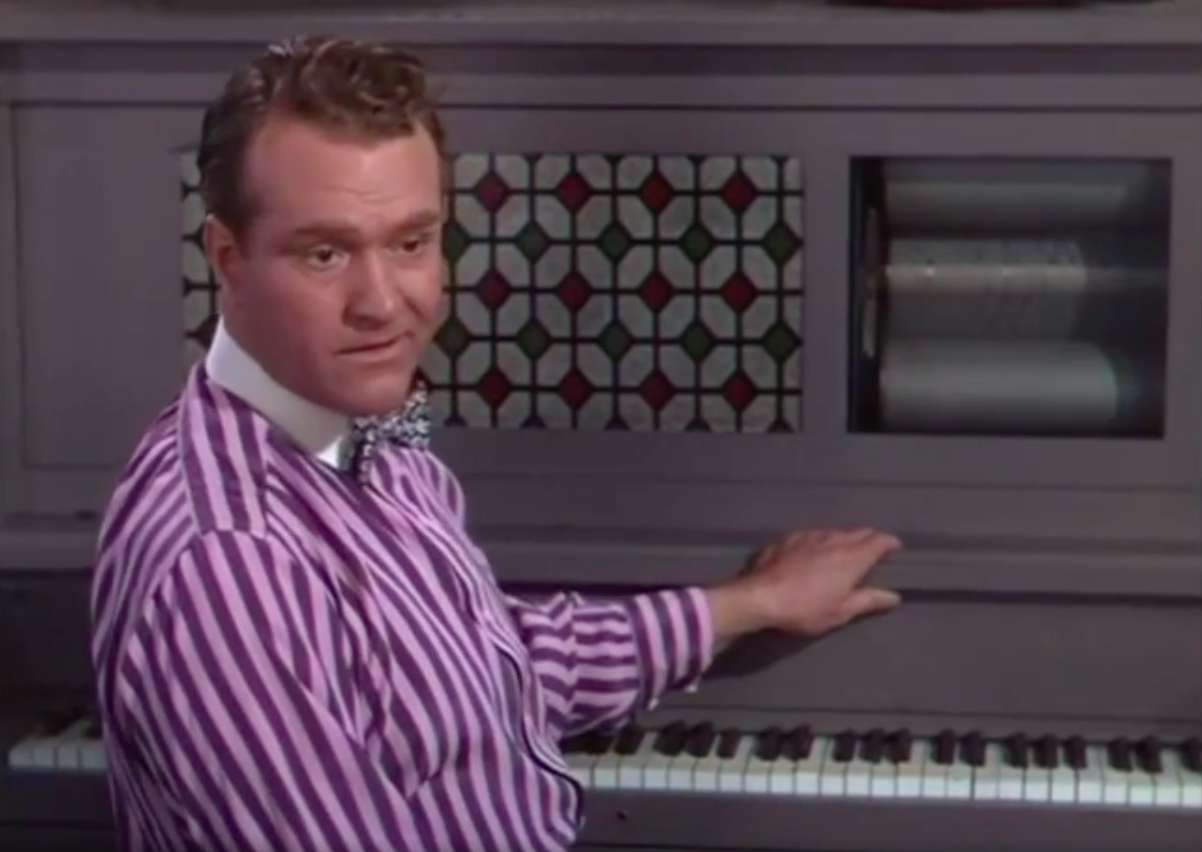
Red Skelton definitely got the less „juicy” part than Astaire. I saw him in Neptune’s Daughter not long ago and he was playing a completely different character there. Despite Three Little Words having humorous moments, Red pretty much portrays a nice, kind, soft-spoken man rather than a joke machine. And it works.
One more thing: at one point they’re writing I Wanna Be Loved by You on the street and they get approached by a young girl who starts doing the famous „boop-boop-a-doop”. She was only on the screen for a few short moments but I thought she was incredibly charismatic and just had to check out who that was. Turns out, it was Debbie Reynolds!
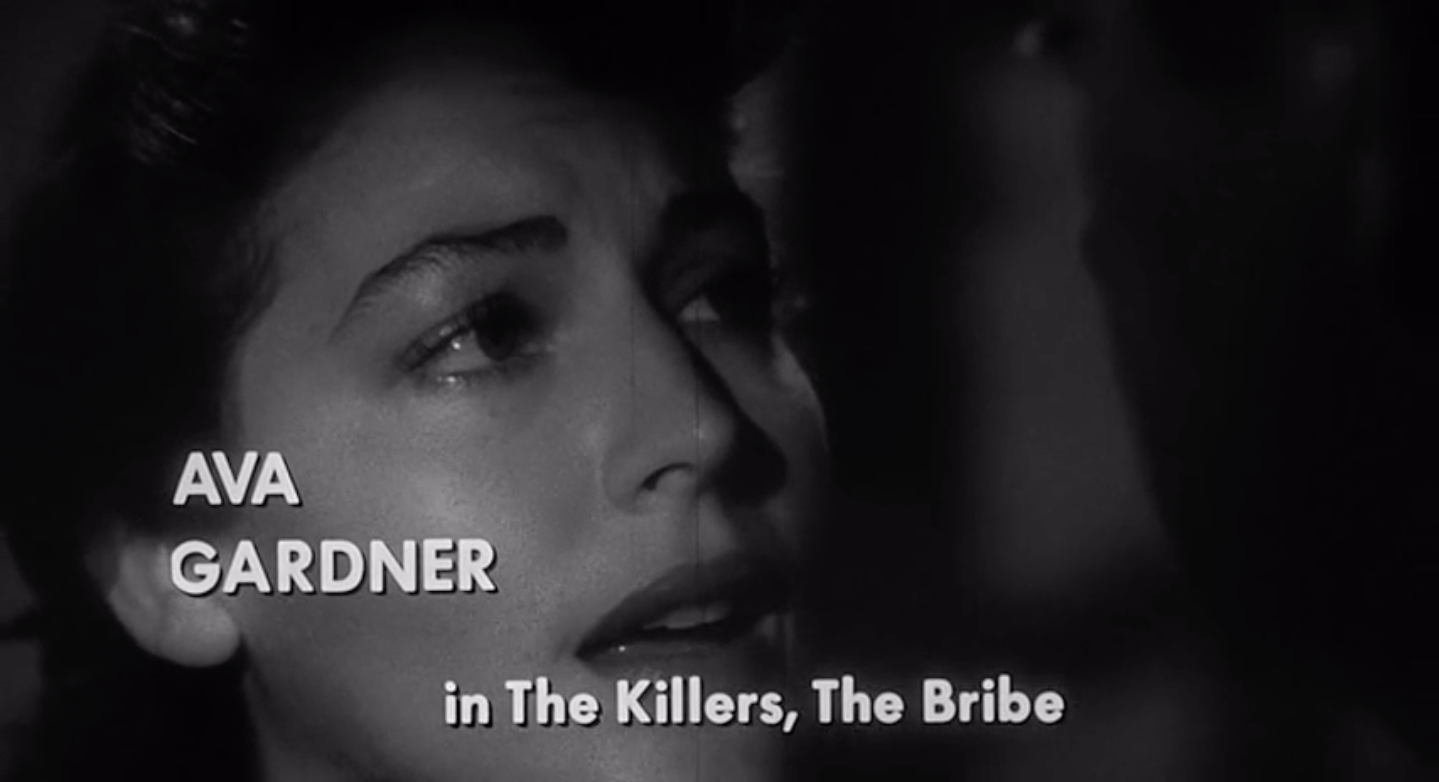
Ava Gardner is one of my newest obsessions. I have seen a few of her iconic films already but I am glad that today I have an excuse to watch more. Without further ado…
The Sun Also Rises (1952)
Hemingway adaptation about, surprise, surprise, a bunch of disillusioned people traveling around the world and drinking. These here do carry war trauma, though, especially the main character played by Tyrone Power. His suffering is very specific – he is impotent. But also madly in love with Ava Gardner who used to be his nurse.
The only Sun screen cap I made, excuse the quality
The film begins in Paris and then all the characters go to Spain together. And there is a LOT of bullfighting happening there. *vegan voice* I’m a vegan so I could really do without that whole thing, but I’ve read Ava’s biography (Love Is Nothing – a fantastic book, I highly recommend it) and I know she was kind of obsessed with this „sport”, even dated a bullfighter. So when I saw her fascinated by the cruel entertainment in the film, it was quite a mixture of movie reality and reality reality. Interesting yet uncomfortable.
I did not care much about the story and apart from Tyrone Power no one gets any depth or character development, but the music was incredibly beautiful and one could not deny the crew’s filmmaking skills.
The Angel Wore Red (1960)
Would you look at that: a Spanish Civil War film again. Like the very first film of my Summer Under the Stars, Blockade with Henry Fonda.
It is ultimately a tale of love and revolution. Dirk Bogarde plays a priest disillusioned with the Church which he feels is betraying the poor during the war. After resigning his priesthood he meets Ava Gardner – she’s a sex worker but he doesn’t mind. He’s seen as a revolutionary and becomes a wanted man and she helps him hide („a whore with a heart of gold”). They soon fall in love.
Oh, and Joseph Cotten is there. With an eyepatch.
This film is supposed to be set in the 1930s but at some points it looks very much like 50s. And that’s just the characters’ looks. According to some things I read, the story is historically inaccurate as well (I wouldn’t know). I guess that’s what you get when a bunch of Brits, Americans, and Italians (allegedly that includes the Mafia) set out to make a film about Spanish history – a film Spain doesn’t want so much they won’t let you film in their country.
This is a black-and-white films I cannot confirm if the Angel did in fact wear red.
The Night of the Iguana (1964)
An Ava Gardner classic that I have not seen until today. Now that I finally have I am angry at myself for having waited so long.
The film starts with Richard Burton as a very dramatic priest. He is giving a sermon and at one point begins to have, what seems like, a nervous breakdown. Next thing he’s no longer wearing priest robes and instead is a guide on trips in Mexico. And he’s taking care of a bus full of older ladies – and one teen. The teen, Sue Lyons, is trying to seduce Burton which her aunt, Grayson Hall, blames on him. Soon he brings the entire bus to a remote hotel ran by Ava Gardner and essentially traps the group there so that Grayson won’t report him and get him fired. Soon they are joined by Deborah Kerr and her grandfather who make their living scamming tourists around the world.
Yes – it IS amazing.
I guess we could start with the performances – the entire cast is perfect. Burton is absolutely wild in his role. Ava is playing a character different from the ones I’m used to from her, I guess this could be called her Virginia Woolf moment. She’s sassy, she’s sexy, she’s running around wearing TROUSERS… Deborah Kerr and Grayson Hall are also killing it.
Butch queenAnd that was BEFORE Who’s Afraid of Virginia Woolf?
I loved The Night of the Iguana because it’s just so wild and weird and everyone is such a unique character played so wonderfully. Of course, my problem was the Sue Lyons plot and creating a character of a literal child as some kind of irresistible seductress. Especially when you hear Grayson Hall or the young driver character who likes Sue say things that are supposed to sound silly to us, unfair to Burton – but really they’re kind of right. The other problem is the weirdly racist stuff. The film takes place in Mexico and Ava Gardner has two Mexican servants who, and I am not exaggerating, walk around topless and play maracas around her. Yup. Oh, and she sleeps with them when she wants to (kind of goals, kind of gross).
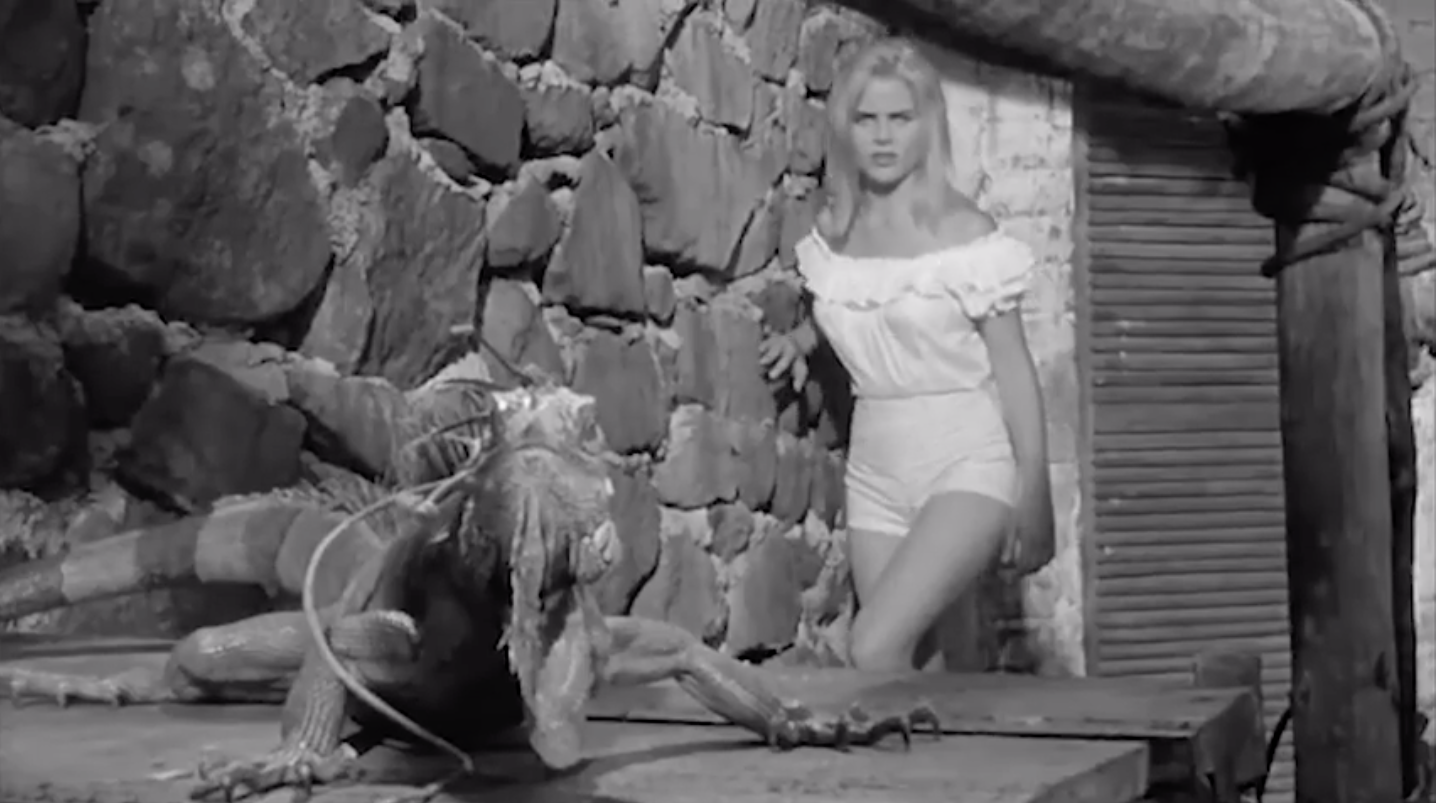
Sue Lyons and the Iguana
There are so many themes to explore with The Night of the Iguana I should really write a whole post about it. Maybe I’ll revisit it once the Summer Under the Stars madness is over.
Mayerling (1968)
Omar Sharif as the unhappily married crown prince of Austria and Catherine Deneuve as the young girl he falls for and starts an affair with. The story is full of politics, Omar is depressed and it all leads to tragedy.
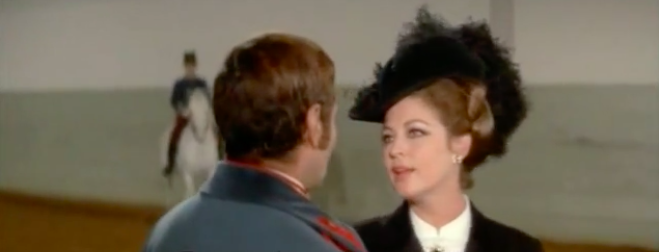
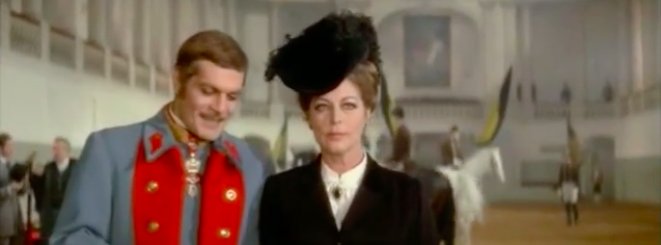
Ava plays Omar’s mother, Empress Elizabeth. She is very regal but her appearances on the screen are pretty brief. I don’t know if she looks old enough to be Sharif’s parent but I guess it was expected of the royalty to have children young. Plus, maybe she’s just so beautiful that time doesn’t do her any harm.
There was a brief moment in my life when I was fascinated by the Mayerling tragedy, or Mayerling mystery as some might say. This version of the story is probably very close to what actually happened, but it really did not present it in a compelling way. As much as it might be terrible to say because people died, this is a very boring film.
Tam Lin (1970)
Twenty seconds into Tam Lin I was sold. I continue to be amazed and convinced that I was watching the greatest film of all time for like an hour more. But then the last fifty minutes happened and I realized that Tam Lin is half an hour too long. And it’s a shame because it could be a truly under appreciated cult classic.
This is the first scene!
According to Wikipedia, Tam Lin is a character from Scottish legend who gets the virginity of every maiden who passes through his forest (yikes!) – mostly Janets and Margarets (okay). Then they become pregnant by him. This is a bizarre story but I still wish we would get more of that folk tale in the film.
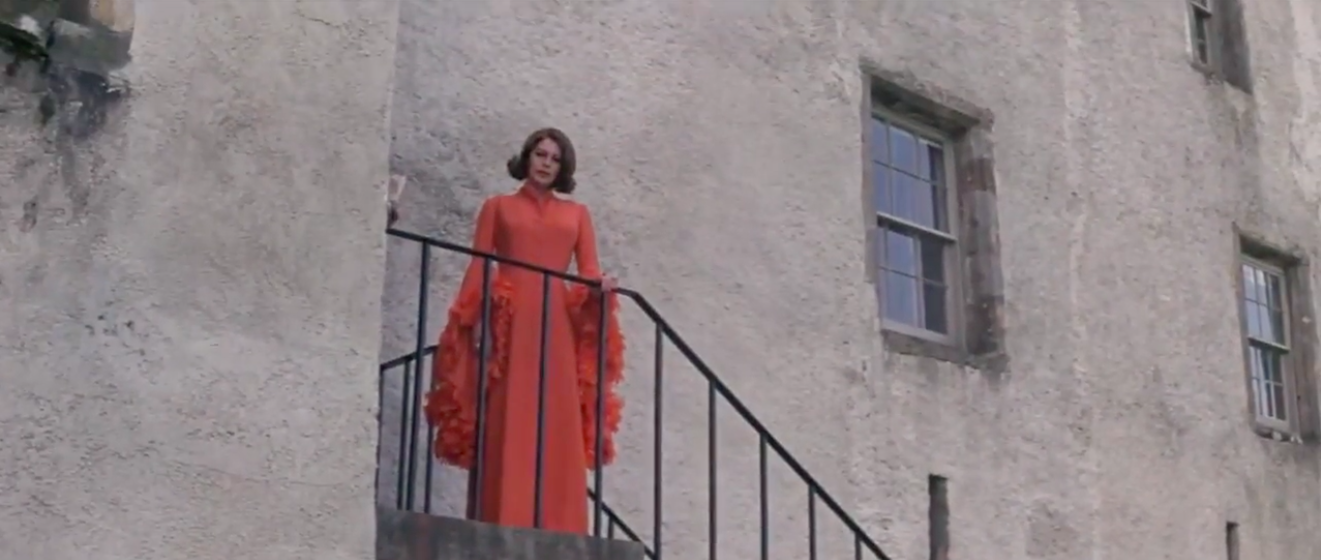
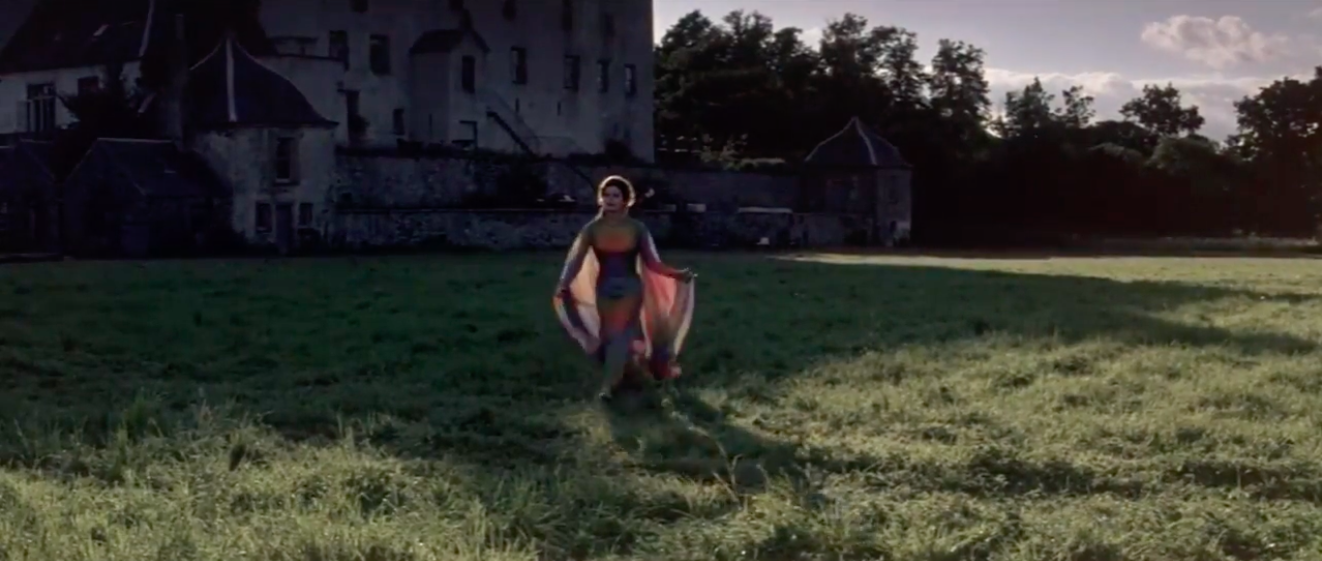
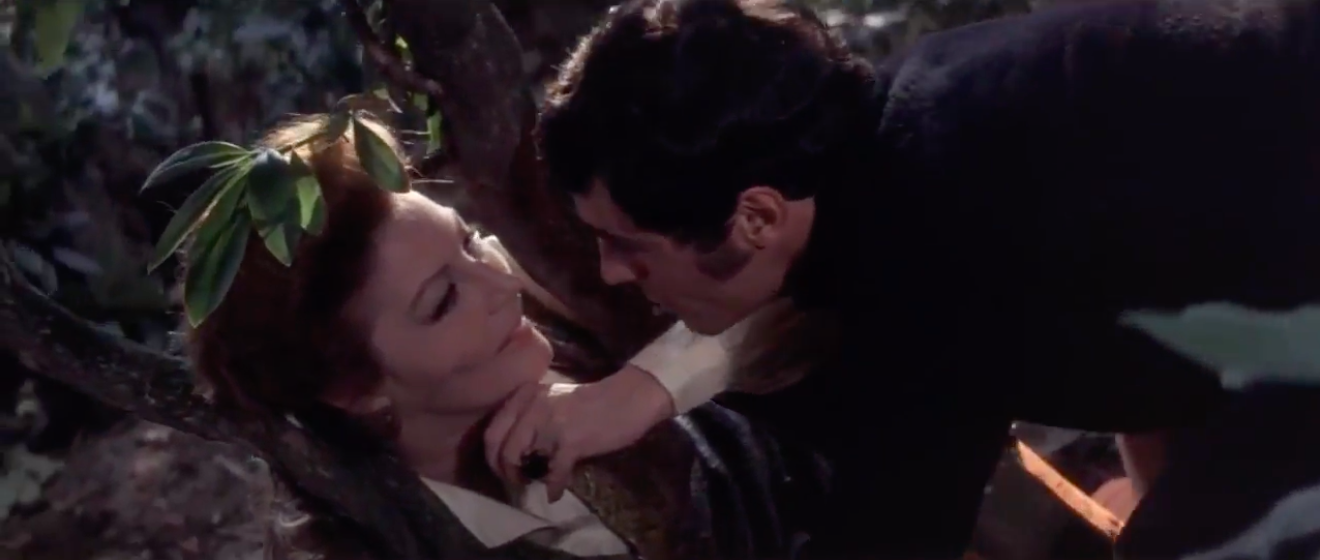
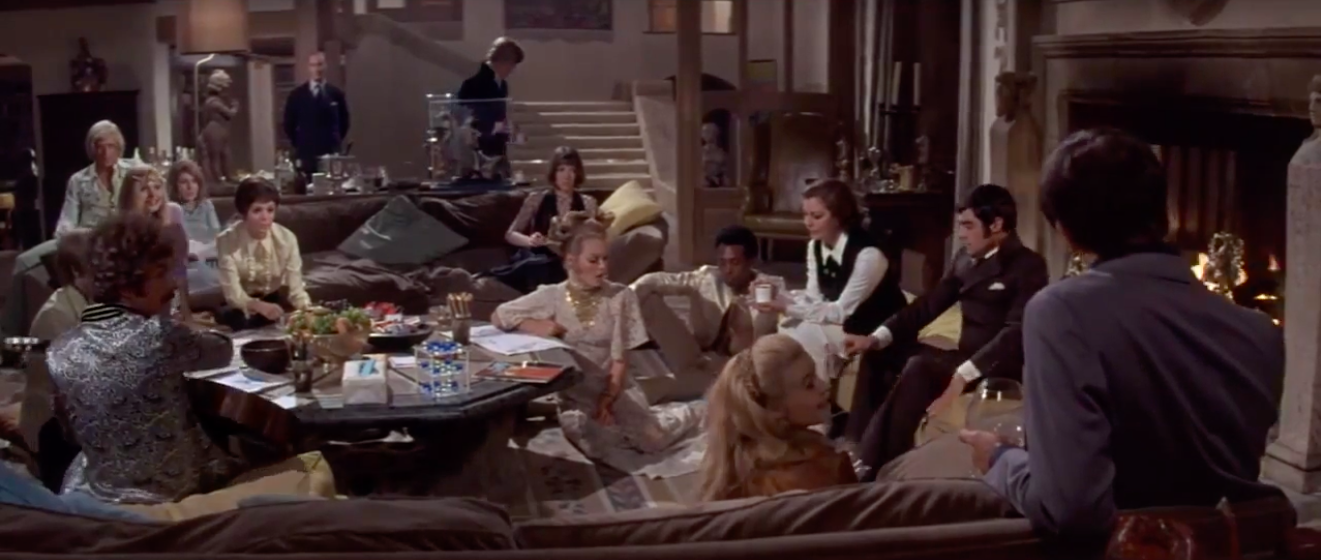
Not that what we do get is not bizarre. Tam Lin has the most incredible premise ever. Ava Gardner is a rich woman who keeps a mansion in English (Scottish?) countryside full of young people she just invites to come live with her. There is a scene of her running through the fields in a rainbow dress-caftan kind of thing and apparently putting the „kids” in couples? She also likes one of the guys a lot and has a sort of relationship with him. That is until he falls for a local girl and the trouble starts. In addition to British countryside loveliness, we also get late 60s psychedelia, funky music, drugs, and hippies. It’s amazing.
I MEAN
Also, I loved the theme song heard throughout the film because folk music is my weakness.
I actually loved Ava in this and I don’t know why this film is so unheard of. I had a psycho-biddy phase a few years back and I watched all the Baby Janes and Aunt Alices in the world. Why wasn’t Tam Lin included among those films?
The kids. So groovy!
Five films once again. I am tired. I need to take a little break.
BONUS: A few screen caps from Dead Mean Don’t Wear Plaid (1982) in which footage from Ava’s (among others’) films was used
Today’s featured player is one of the men (and I admit I am more biased towards actresses) who made me fall in love with not only Old Hollywood but cinema in general, I think. And celebrating my becoming newly unemployed, I watched six films!
Speed (1936)
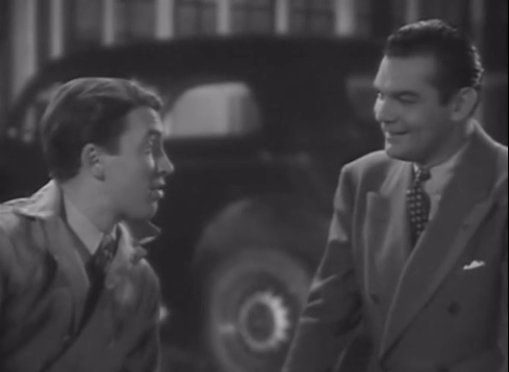
Not the most fascinating story. There is no Keanu, no Sandy, not even a bus. What IS there is a whole lot of cars. Jimmy’s job is to test them, but in his spare time he works to create a whole new engine. He doesn’t want any of the engineers helping him, especially not his arch-nemesis, Weldon Heyburn. He’s even more done with him when a publicist played by Wendy Barrie shows up at the factory and they both fall for her.
This is essentially a love triangle story with cars in the background. Not necessarily something for me. I think that a big problem is the miscasting of… Jimmy, I guess. Barrie and Heyburn seem pretty compatible and have some chemistry. But when Barrie is with Jimmy, she seems more like an older sister who has enough patience to tolerate her kid brother’s antics.
Difficult moments for Jimmy
Speed is not a film that’s going to stay with me for a long time but it IS Jimmy’s first starring role so I guess it was worth seeing for the historical value.
Seventh Heaven (1937)
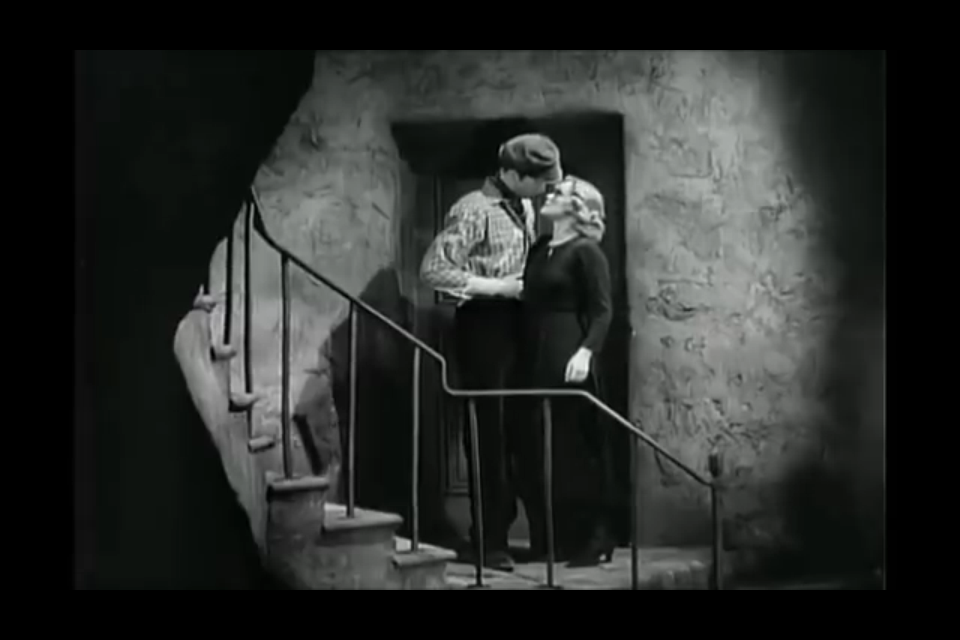
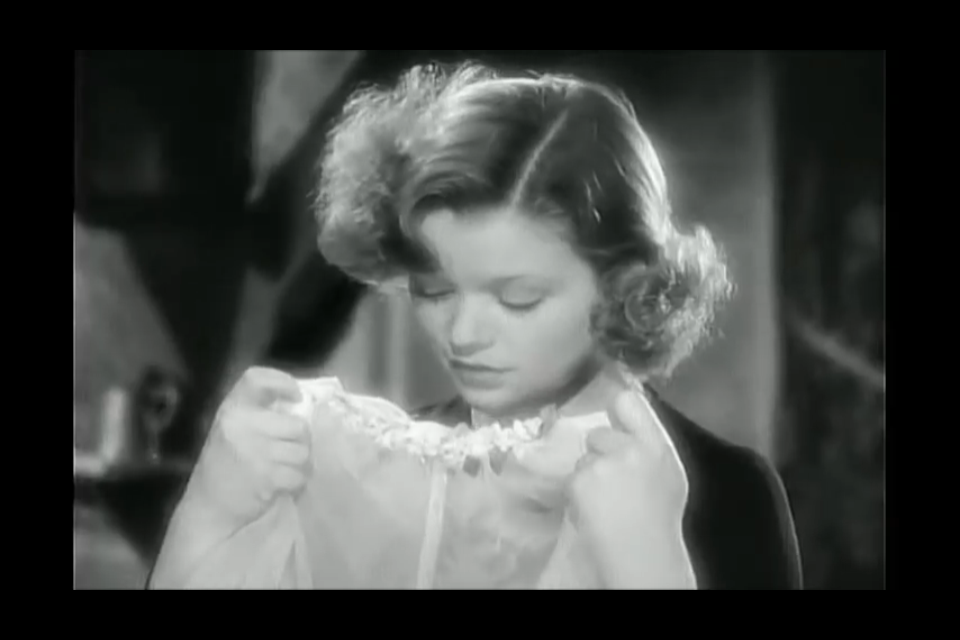
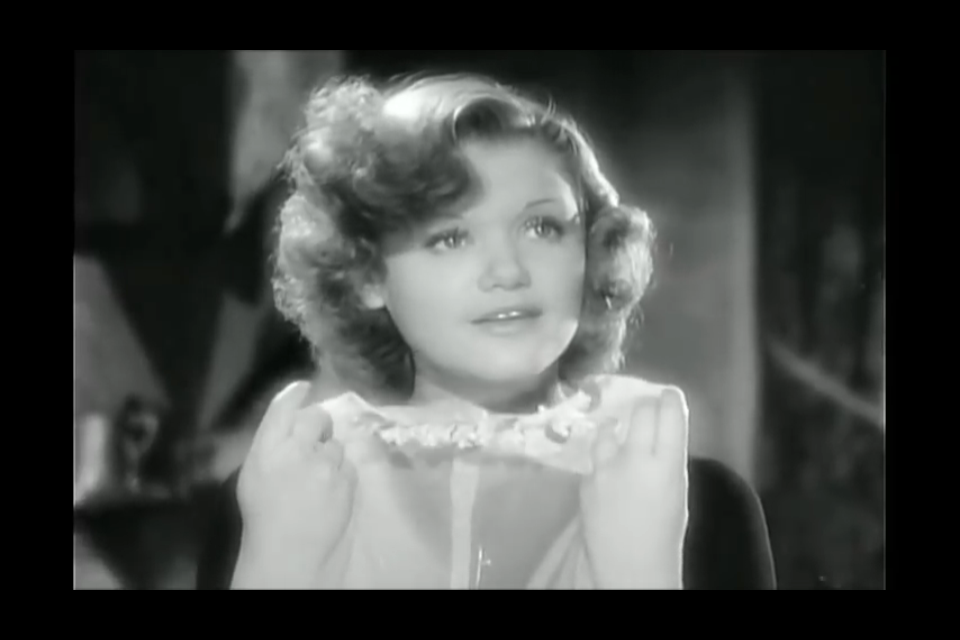
A remake. Paris, 1914. Jimmy plays a sewer worker. Simone Simon plays a young girl employed by her sister in her… um… dance hall but she refuses to be kind to old, creepy men. At one point she’s about to be arrested but Jimmy sees that and convinces the cop she is his wife. They pretend to be married and in love but in time there’s less and less pretending.
Also, Jimmy is *gasp* an atheist, something that excites a local priest who feels Jimmy might find God in the end – you can take a wild guess whether he does or no (yeah, I’m not trying to be judgmental but this plot was not my favourite).
Stewart is wonderful in the film, absolutely adorable. Simone Simon is good too but I can’t help but think about the absolutely incredible Janet Gaynor who played the role before. No one could even come close to her.
Overall, I prefer the original but James was fantastic.
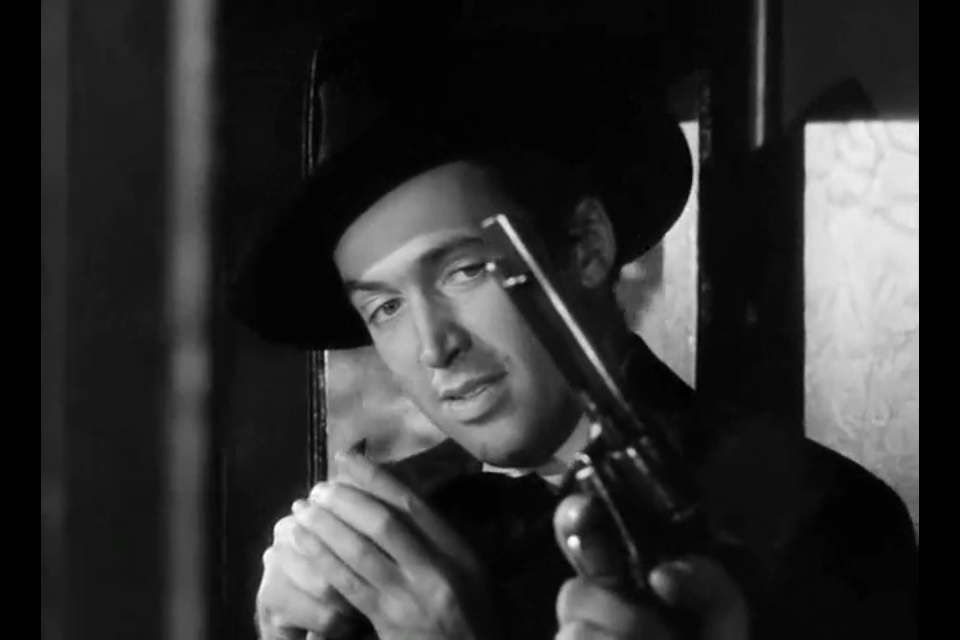
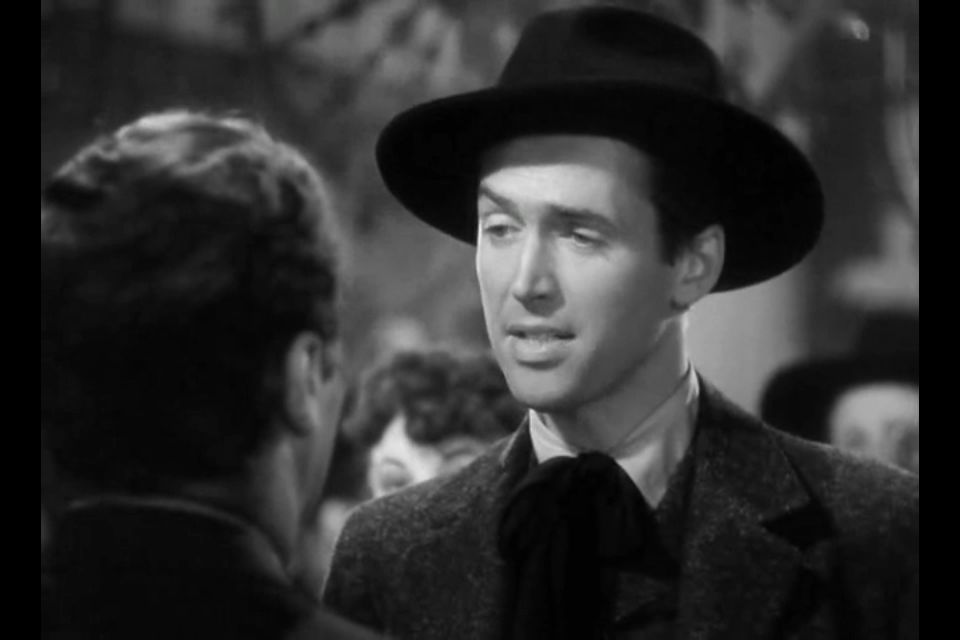
Destry Rides Again (1939)
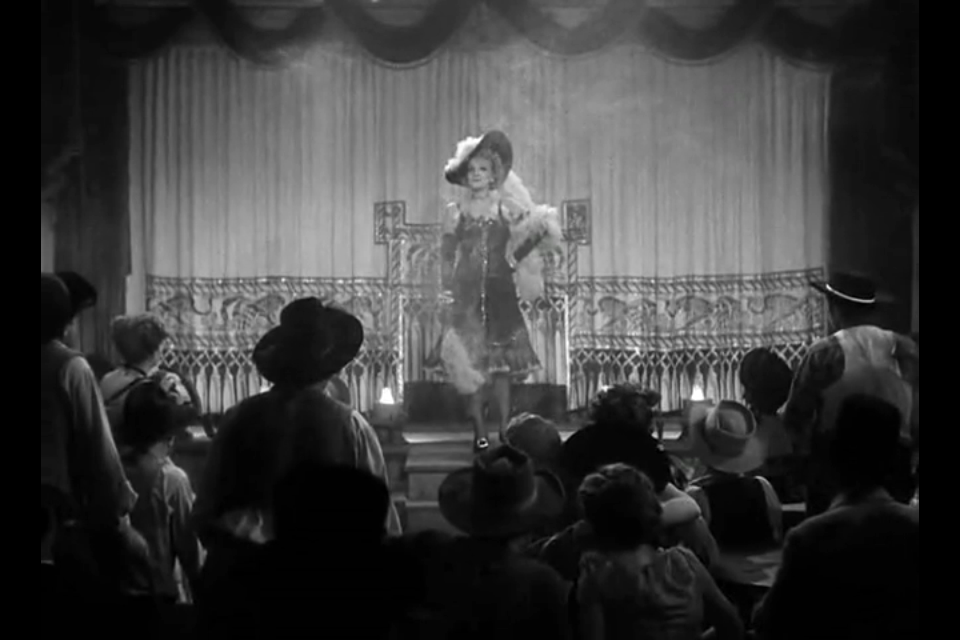
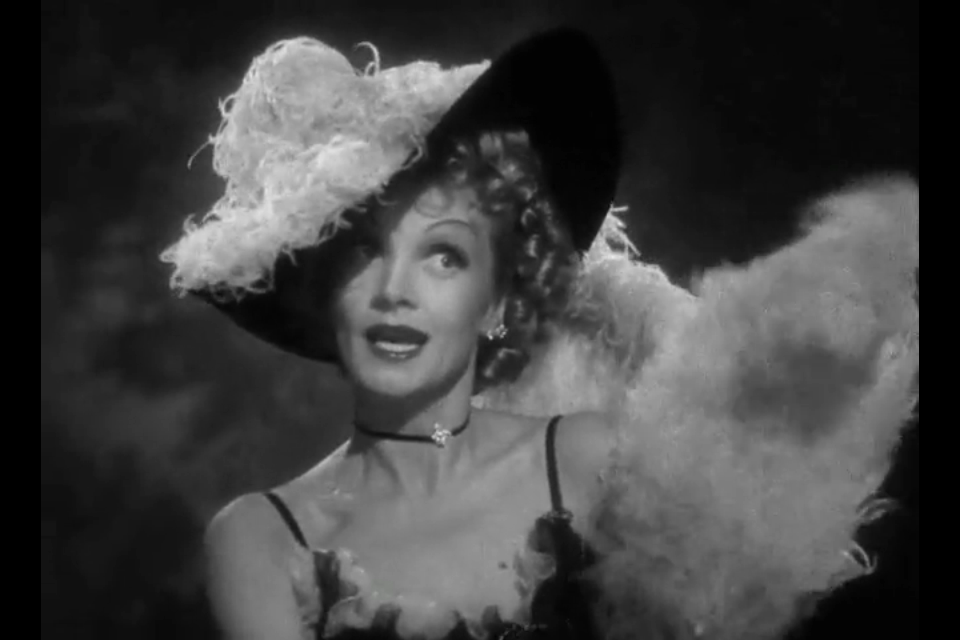
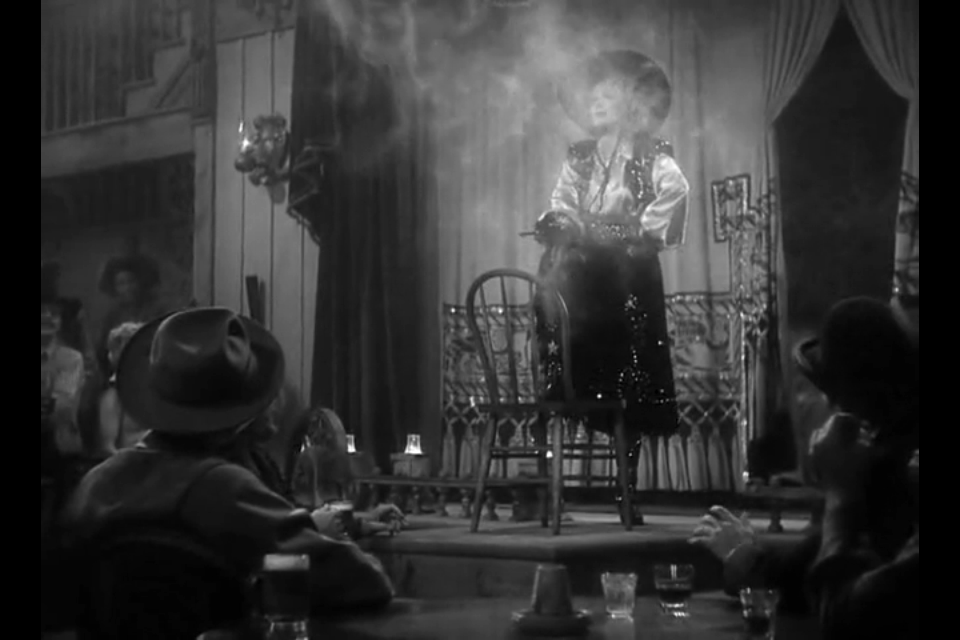
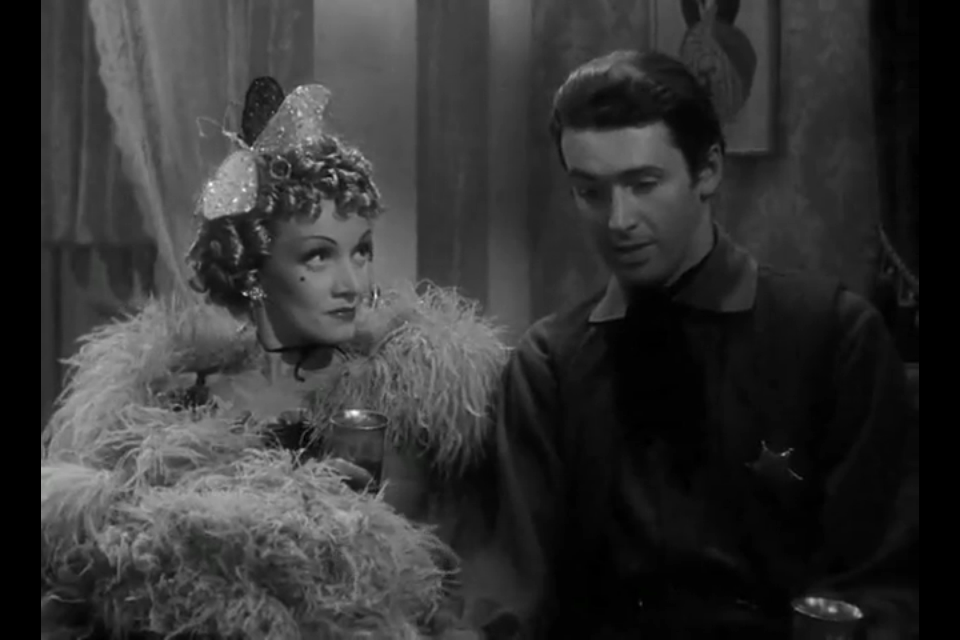
Oh, how wonderful it is that despite not having a Marlene Dietrich day this Summer Under the Stars I got to see her twice already! And what a treat she was this time: watching her in the western setting I couldn’t help but think that she was made for saloons.
Marlene plays a shady character dating another shady character, and together they kill the sheriff and appoint a local drunk the new sheriff so that they can get control over the town. But, the drunk finds Jesus and sobriety and also asks Jimmy to come by and help him whip the town into shape. Shenanigans ensue.
Oh yeah, he’s here too.
I’m sorry but I have to say this – James Stewart was very hot in this film.
Destry was really fun to watch and it was mostly, again, because of Marlene who got to not only look fabulous but also do her stage entertainer bit quite a bit.
Them.
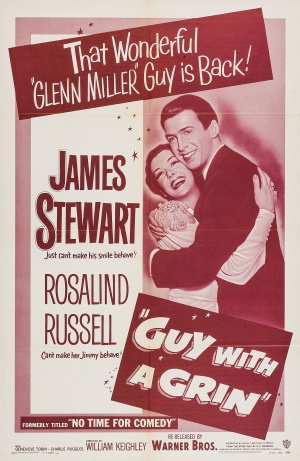
No Time for Comedy (1940)
That Wonderful “GLENN MILLER” Guy is Back!
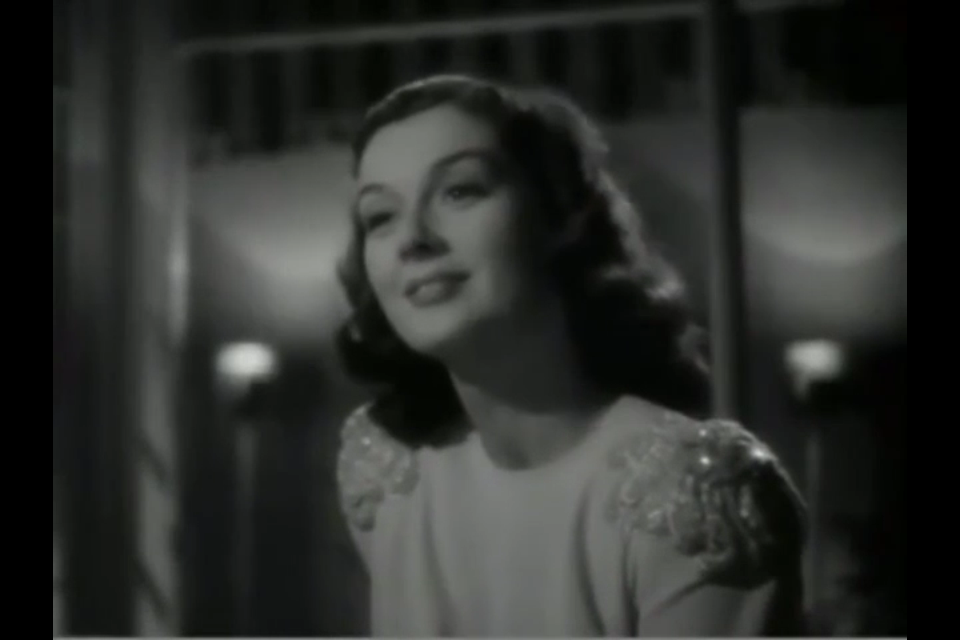
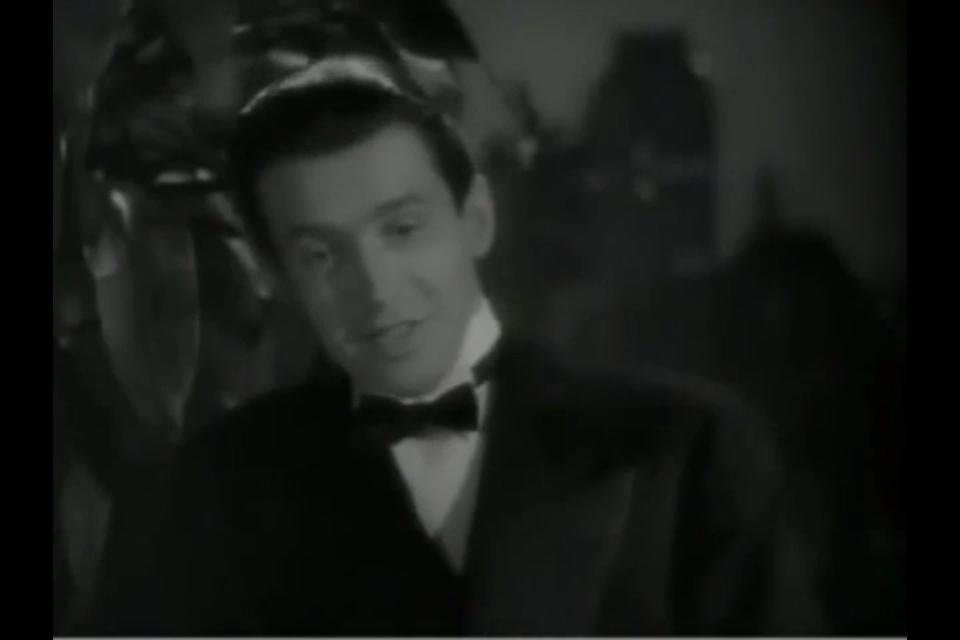
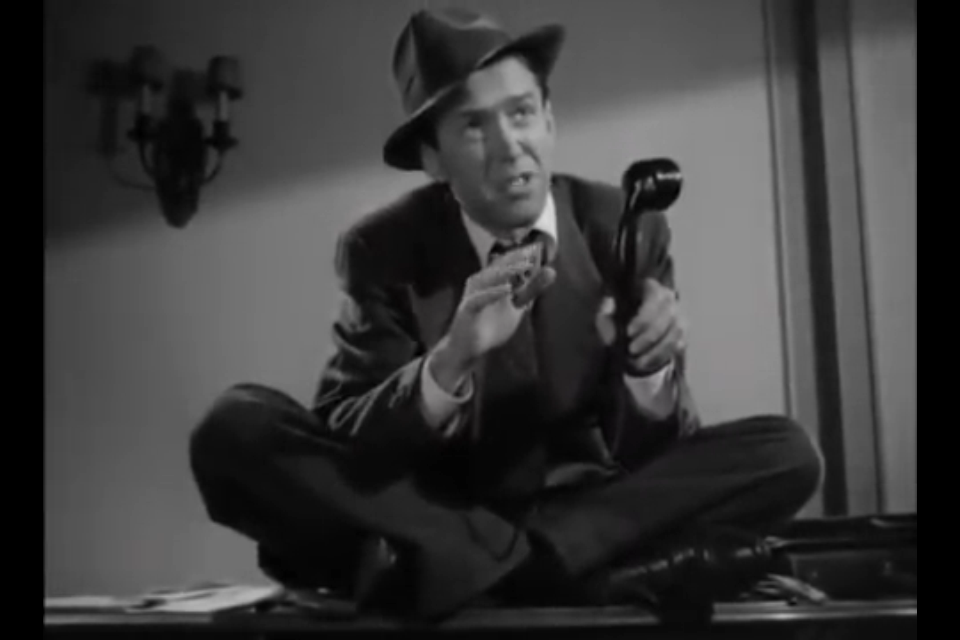
Jimmy as a playwright. Rosalind Russell (another one of my absolute faves) as an actress. He writes a hit play (a comedy) in which she stars. Then he continues to write comedies for her and they get married and everything is going lovely until he meets a girl who thinks comedies are a waste of his talent.
Beautiful Rosalind
I bet James Stewart had someone tell him comedies were a waste of his time once or twice as well (they were wrong, even if No Time for Comedy is not the greatest film)..
No Time for Comedy has a cute premise and, obviously, charming leads but it is, sadly, kind of boring and the conflict does not feel organic or necessary at all.
Magic Town (1947)
James Stewart plays a man doing surveys across America. One day he discovers that one single town’s survey answers match the American (as in, of the whole country) answers perfectly. But there is a woman in the town who wants to enlarge it by building a civic center outside city limits. Jimmy doesn’t want to lose his perfect town so he needs to stop her.
Magic Town is cute – that’s it. It’s a cute movie about a cute town. Jimmy is cute in his role. I find the premise unusual enough for it to stay interesting despite being, after all, „just” a romantic comedy.
Winchester ’73 (1950)
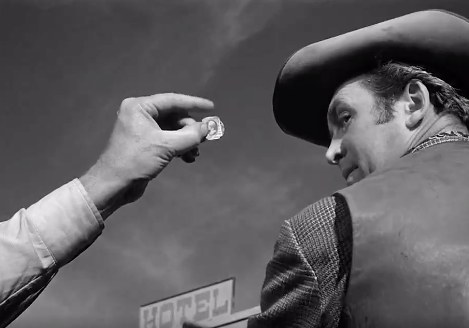
Now for a film that I definitely cannot name „just a western”. Winchester ’73 shows the Wild West for what it really was – a wild west. This is a brutal look at a town where everyone is just trying to survive and they all do it the one way they find effective – guns.
While I can certainly have fun watching a western (despite the ever-present racist depictions of Native Americans – I mean ROCK HUDSON plays one here), I couldn’t help but get a little reflective watching Winchester ’73. The title alone is a reference to a rifle, apparently the most amazing gun, the object of desire of the characters. They surely love this gun and will do a lot to get it. And isn’t it what so many people in America are doing today? Not letting go of the gun? And doesn’t the news start to resemble westerns a bit? It’s terrifying.
I’ve noticed that I spent today watching either Jimmy’s romantic comedies or westerns, two genres he really was making a lot. But he’s played so many roles I feel like I could watch a lot more (and I watched SIX films today!). Maybe he’ll get his Summer Under the Stars day again next year.
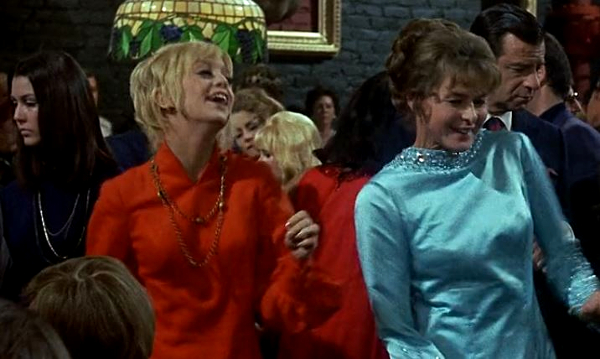
Let me end today with something completely different. I adore James Stewart, like I said, he was one of the first Old Hollywood stars I fell in love with. BUT. Last night I watched something on TV: Cactus Flower, from 1969. Starring Goldie Hawn, Walter Matthau, and Ingrid freaking Bergman. And I am crazy about Cactus Flower. Not only is it hilarious, the cast is stellar (Goldie got an Oscar) but also the A E S T H E T I C S! I watched it as part of the Once Upon a Time in Hollywood Tarantino list of films to check out (OUaTiH comes out on August 16th where I live and I want to watch them all before, even if I’m almost losing my mind from watching so much) and I am so happy that I checked it out. What a treat! Sorry Jimmy I am gushing about other actors’ work on your day but Cactus Flower is worth it.



 Swingin' at the Seance