I realized some time ago that I am a big fan of Kim Novak, I have known for a long time that I am not at all a fan of Kirk Douglas. But I sat down to watch Strangers When We Meet with an open mind, especially since it became clear pretty quick that the film was a bit of a Sirkian melodrama (other people have pointed it out too) and I love Sirkian melodramas.
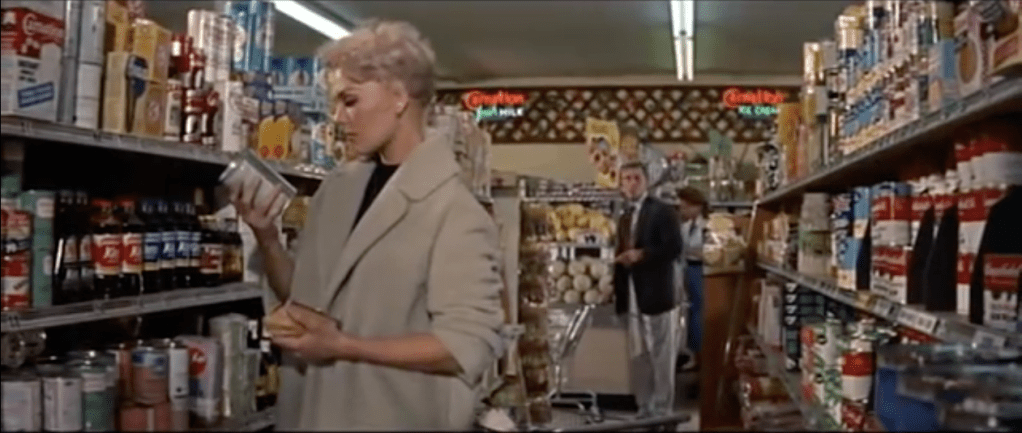
I also love 60s Los Angeles and that is the time and place the story is set in. Douglas plays an architect who is about to start a big and interesting project for a famed writer. Kim Novak plays his neighbour, mother of his son’s friend. The two are unhappy in their marriages, for different reasons, and soon begin the affair. But apart from them both being married, Kim deals with some darkness in her past that makes the love harder.

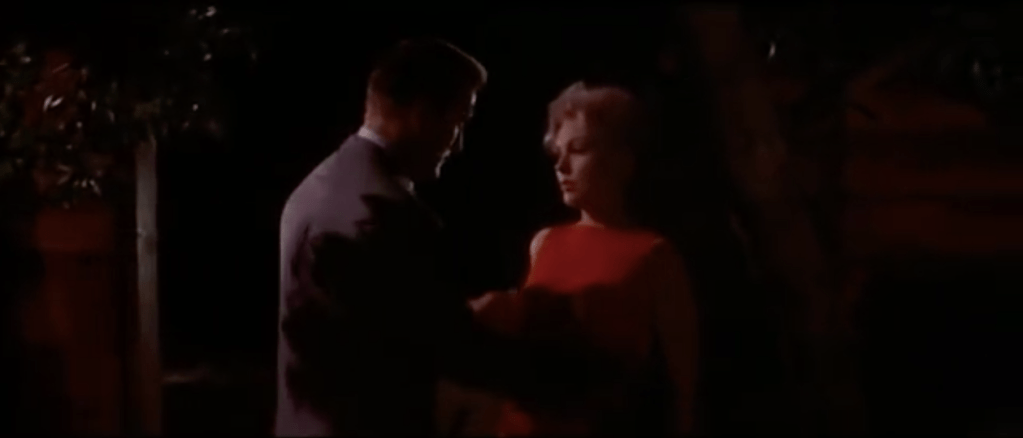
This might be my bias, but Kim Novak is the best part of the film. She is mesmerizing: sad, beautiful, and somehow otherworldly and so normal at the same time. She is given some difficult material to work with in the film. Fairly early in the film we find out that she has a stalker who calls her. Her husband doesn’t want to sleep with her (an interesting and unexplored part of the screenplay, I wonder if there could be a gay reading of the character to be made), which obviously hurts her a lot. She harbours a terrible secret. She seems to long for love.

And here we come to the most important part of the premise, which is, of course, the love story between the two leads. At first, when they are strangers who do meet, it works really well (again, in large part because Novak is so good). Despite my less than warm feelings towards Douglas, I did feel something when he took her to show her a house he was working on.
But then the romance starts to disappoint: while Kim Novak’s home situation makes it understandable why she would want to seek passion, it is difficult to me to excuse Douglas’s actions: his wife seems, frankly, really nice. I felt bad about her being mistreated by her husband, when her one crime seems to be not being exciting enough. Then again, maybe that’s a good thing? At the beginning of the film I said to myself: “They just don’t make adultery dramas like they used to!” And that could be it — one of my film pet peeves is when a romance blossoms between characters who are already in relationships and their partners are shown as the worst people on earth just to justify the new affair (WHY were you together in the first place?!). It is nice to be presented with complex and, yes, problematic characters.
But I also think that these days it is harder to excuse adultery. Of course, cheating was always a horrible betrayal of trust and an unbelievably hurtful thing to do to someone you are supposed to love, but let’s be real — there were TONS of reasons why you would have to stay in an unhappy marriage, even if all the love was gone. There are still people who have to stay for different reasons, sadly, but those Sirkian housewives would at least be able to open a bank account today.
Still, there are other things I was disappointed with in Strangers When We Meet. There is one incredibly difficult scene in which Kim Novak’s character shares a painful memory with Douglas and is met with nothing but victim-blaming. It is awful, but also, sadly, very real — and that is something that can be seen as a good thing, like an uncomfortable truth about how men view women. But it also makes it a bit harder to get invested in the love story. At the end of the movie (I don’t think it’s necessarily a spoiler, you know a melodrama won’t have a happy ending), my heart aches for the sad, tragic Kim but doesn’t care about the affair. Is it a failure of the screenplay, or is it an understandable way of looking at these characters? Regardless of my previous criticisms, I choose to see the latter.
But come on, Walter Matthau was a terrible choice for a villain.
 Swingin' at the Seance