OK. Let’s do this.
The Bitter Tea of General Yen (1933), dir. Frank Capra
At this point I have seen most of the Barbara Stanwyck biggest hits. I’m pretty sure this is the most famous of her movies we have here today. If I’m not mistaken, The Bitter Tea of General Yen is (or was) even a part of the 1001 Movies You Must See Before You Die list.
I can understand why. There is a lot of beauty in this film. Capra’s camera work is impeccable. Barbara looks beautiful. It is not hard to get enchanted by this film.
Except, it is. Or at least, it should be for anyone watching it today. This is a particularly prominent example of a potentially great piece of art being ruined by racism. And it did not necessarily have to be. Introducing white people to a Chinese setting and making them protagonists is a disaster waiting to happen in itself, but at the beginning of the film what we see first, are those white characters having a party, while the Chinese characters are their servants or just an uneasy crowd in the street. The contrast is striking and it may even look like a commentary on the exploitative and oblivious white „missionaries” who in reality ignore any hardships the native population faces and are content to exploit them.
But then General Yen himself shows up. Oh my God.
General Yen is played by a Swedish actor Nils Asther in yellowface. To add to that, Stanwyck has visions in which his features and mannerisms are even more caricatural and offensive. It is rough. Not to mention that their story is basically that of kidnapping. I have managed to avoid seeing 365 Days but I imagine it is similar (don’t worry, I am just joking).
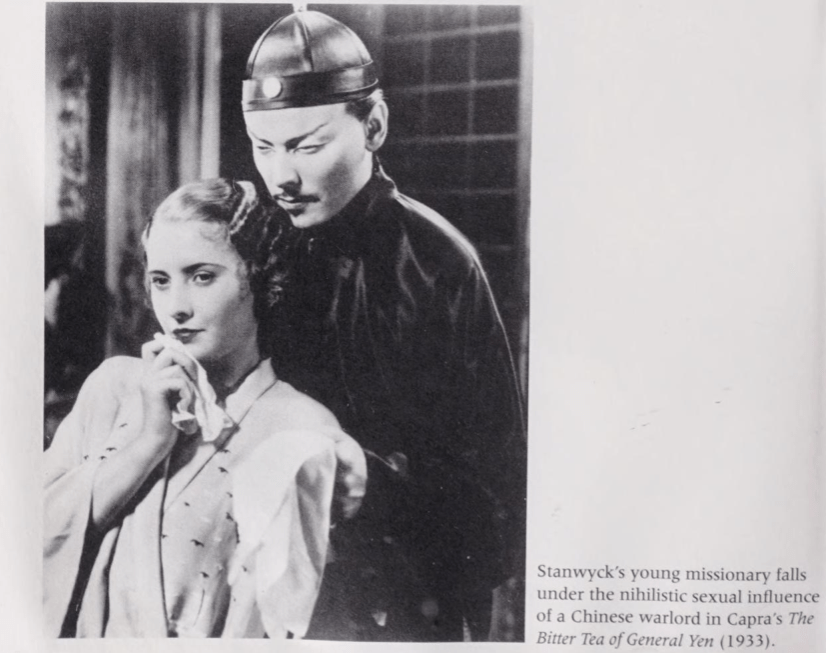
A very telling part of this whole mess is that there are actual Asian actors in the film. One might suppose that the reason why General Yen is played by a white actor is because of the romantic liaison between the characters of him and Stanwyck. And God forbid we show an ACTUAL interracial relationship, right?
The Bitter Tea of General Yen had the potential to be a beautiful, subversive Pre-Code drama, but instead it is hard to be viewed as anything other than a shameful legacy of racist Hollywood.
The Bride Walks Out (1936), dir. Leigh Jason
This Summer Under the Stars is really not off to a good start because the second film I watched is also pretty… problematic (yikes!).
One of the first things we see on the screen in The Bride Walks Out is Hattie McDaniel, as a servant of Barbara Stanwyck, giving her a piece of her mind in a sassy way. Oooof course! And this movie does not stop at „just racism”. The misogyny is also strong. The main plot concerns Barbara and her boyfriend who really wants to marry her, but she’s not sure because she has a job and does not want to resign from it because she’s worried they won’t have enough money. It seems to me like there could a really simple solution for that but I guess „times were different”.
The story itself is boring, there is a rich guy who shows up and jealousy ensues, marriage falls apart as soon as it begins etc. The misogyny is what stands out the most. Apart from the old-school problem I mentioned above, this film is obsessed with… domestic violence humour? The rich guy says to Barbara (TW): „If I were your husband, I’d beat you within an inch of your life”. What a charmer, am I right, ladies? It’s no wonder she is into him! Especially since she follows it later on in the movie with (spoken to her husband): „Hit me – that would be the manly thing to do!”
Call me a snowflake, but I think that something like that in a context of a (allegedly) romantic comedy is pretty messed up (and no, domestic violence was never okay, not even in the 30s).
There are a few fine moments, like a pretty cute impromptu party they have (Helen Broderick is pretty great in the film), but overall I would advise you to avoid this stinker.
His Brother’s Wife (1936), W.S. Van Dyke
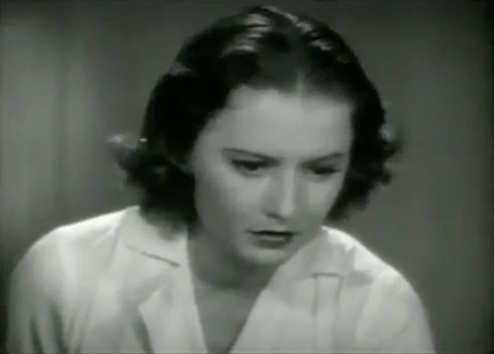
His Brother’s Wife begins with… ticks. Actual ticks. This is important for me personally because I am TERRIFIED of ticks. Let’s keep using this word: ticks transmit a disease, a fever and our protagonist, Mr. Stanwyck himself, Robert Taylor, is a scientist who is going to find a cure! That is, if that mysterious woman he meets right before he leaves for The Jungle, won’t occupy his mind too much…
(And later there is a love triangle introduced when Stanwyck „goes after” Taylor’s brother).
This is definitely the least problematic of today’s movies so far, but I struggle to call it a „good” movie because it is, frankly, pretty bizarre.
A problem I have with His Brother’s Wife is that I have no idea how I feel about Stanwyck’s character because I don’t really know what kind of character she is. At least for a portion of the film she is quite a femme fatale and then… she’s not? Obviously, character development is a thing but here it feels like the film barely focuses on her (especially when the tick storyline is in full swing) so we don’t really get to see that. Taylor seems to get much more attention.
Here’s the thing about Robert Taylor – I really dislike him as a person and I don’t know him as a performer too well (although I LOVE Waterloo Bridge), but I have to admit that he is quite attractive and charismatic here and Barbara and him have great chemistry. But it still seems to me that, even though she seems like a good co-star for him, she is perhaps miscast in the film. I couldn’t help but wonder if it wouldn’t have worked better as a Crawford vehicle.
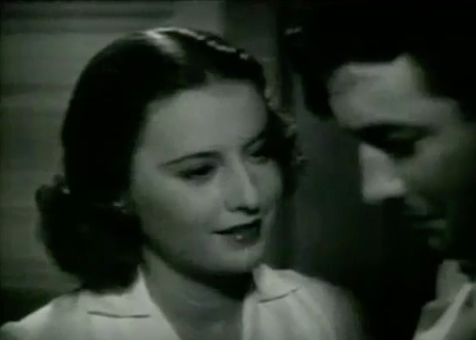
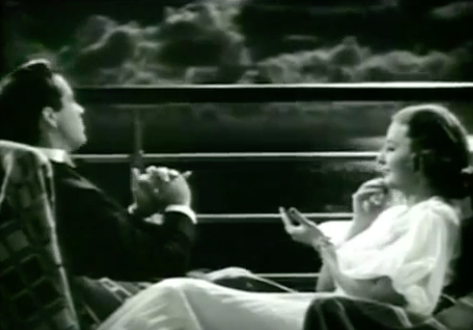
Side-note: towards the end, they are frantically searching for a cure for the tick fever… It really hit close to home.
Side-note 2: at one point Taylor says (more or less), „There are no two men on this Earth who would inject woman with a deathly serum” and it’s embarrassing how funny I found it.
Breakfast for Two (1937), dir. Alfred Santell
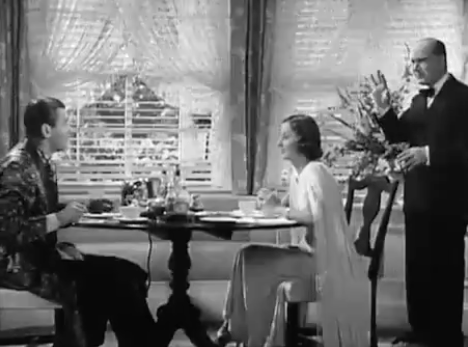
Incredible! The curse has been broken! The evil has been defeated! Breakfast for Two is actually a good film! And Barbara gets to play a role that is actually perfect for her (that of an intelligent high society woman). And this is a comedy with actual jokes!
The story goes: Barbara spends a night together with a man (get you mind out of the gutter, this is 1937, they spend a night together in his apartment, in separate rooms) after a pub crawl. Then he gets into business trouble and she buys him off which he does not appreciate him. In the meantime, he tries to marry his fiancée, an aspiring actress (it’s a whole thing).
It is just really sweet, domestic, and actually funny. And it’s barely longer than an hour so it gives you just the perfect little bit of fun. Barbara even gets to say the immortal words of every woman who expresses interest in something non-stereotypically feminine: „I grew up with six brothers”.
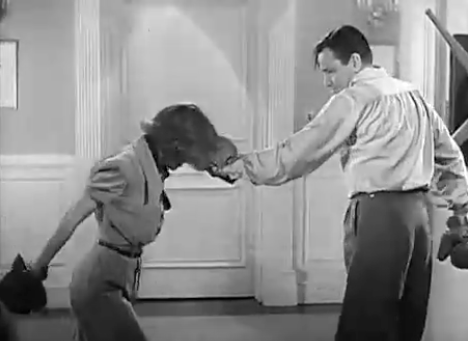
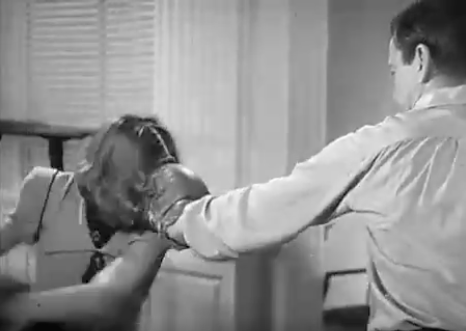
Side-note: I don’t think I have ever really noticed how odd and obviously-built-in-the-studio those 1930s apartments in movies look.
Golden Boy (1939), dir. Rouben Mamoulian
(…born to love…)
Golden Boy is William Holden’s first starring role (and he truly is SUCH a baby in this) and Barbara Stanwyck very much seems like a mother figure for him (although I don’t think this was intetional). He plays a violin prodigy whose family encourages him to pursue music. He wants to help them financially, though, and the way to do this is through a boxing career (even though it is very risky as hand injuries are common). Is this not a tale as old as time – music vs. sports? Just think about such iconic literary heroes like Troy Bolton or Archie Andrews.
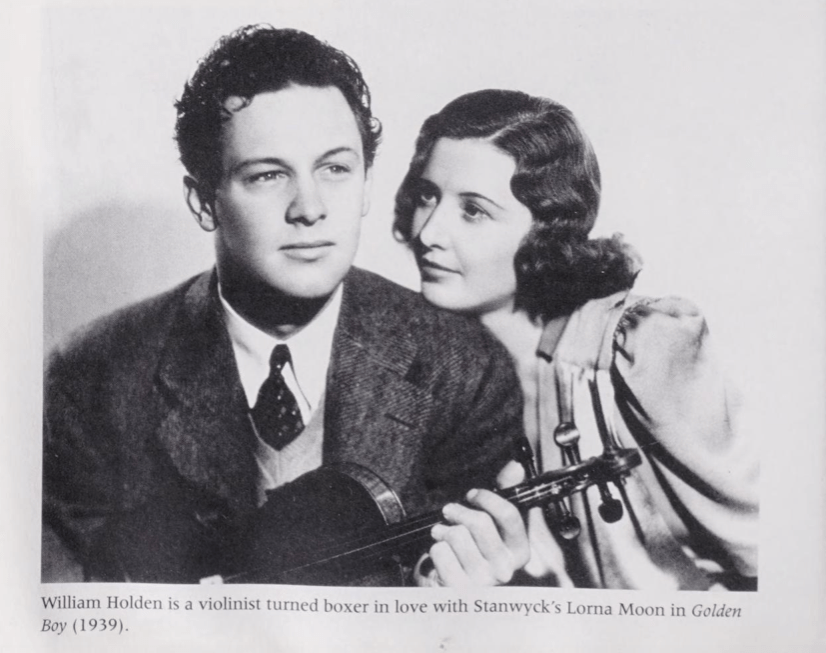
This was my fifth watch of the day and he difference between it and the previous ones is striking, not just in the quality of the picture (even though the camera work is nowhere near as good as in, say, General Yen), but also in Hollywood’s obvious shift to the heartfelt family dramas of the 40s.
I have to admit, usually I am a sucker for those slice of life tearjerkers. But some things just don’t work for me here and I’m afraid Barbara is one of them. It’s like they had no idea how to treat her, how to use her talents and the quality she can bring to a performance. Also, I found it kind of odd how all Holden plays is Brahms Lullaby, but I guess it represents childlike wonder and innocence (the symbolism!).
Bitter side-note: the character Barbara plays was apparently originated on stage by Frances Farmer (and the character was much rougher, from the wrong side of the tracks).
The Bride Wore Boots (1946), dir Irving Pichel
The Bride Wore Boots tricked me when it began, I actually though he might be getting something good here. In the opening scene, we get a butch queen Barbara riding a horse. She is talking to her husband about how wonderful it is to be riding horses until she realizes his is riding solo as the hubby he’s fallen. This is a set-up for us to realize that those two are from different worlds – she loves horses, this farming life, the outdoors, and he is a writer who prefers to sit at his desk. This is not the worst starting place for a comedy and opens the door to maybe even some examination of gender roles.
But the movie does not go there. It does evolve into a marital problems drama but it is all very standard, with jealousy and potential affairs introduced and it all just gets very dull quickly.
The most interesting thing about The Bride Wore Boots is that Stanwyck’s daughter is played by tiny Natalie Wood (who is actually going to come back this Summer Under the Stars because they quietly replaced John Wayne with her. Yikes)!
The Other Love (1947), dir. André De Toth
It’s a bit embarrassing but the first word that came to my mind as The Other Love started was „boss”. The film opens with Barbara Stanwyck playing the piano* amazingly.
It only got worse from there.
In this movie, I can’t even really criticize anything, my main complaint is just that it is very boring.
It is a story of a genius pianist who checks herself into a Swiss sanatorium because she feels ill. The doctor discovers she is terminally ill and advises her to take good care of herself. But she sneaks out to the town with a new friend, meets a guy, and soon goes off for a night of partying in Monte Carlo.
I actually really liked Barbara in this, she got to play some lovely, subtle and emotional scenes which I feel like I have not seen too many today. AND her sanatorium couture is amazing. I just wish the story itself kept me engaged literally in any way.
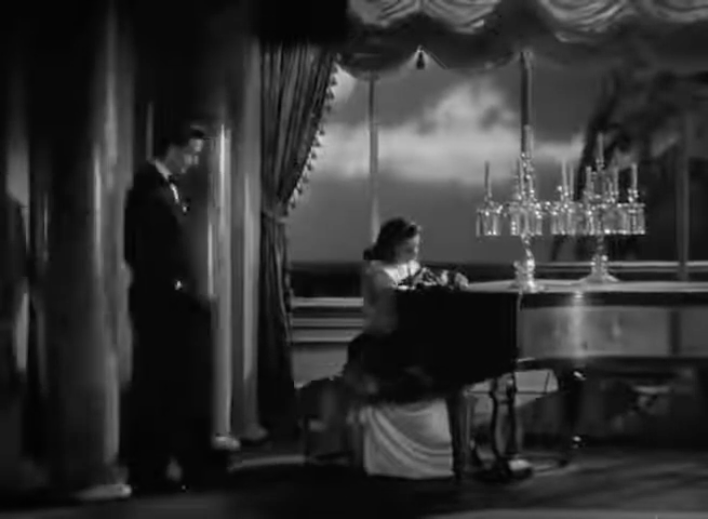
But I guess the commentary on the value of life and taking care of your own is pretty nice.
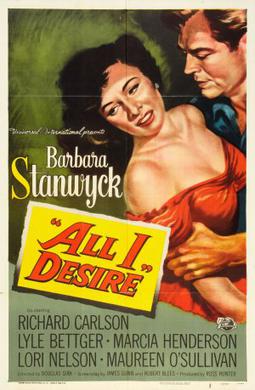
All I Desire (1953), dir. Douglas Sirk
Good news! The final film of today turned out to be good! And it’s probably thanks to the fact that it was directed by Douglas Sirk himself.
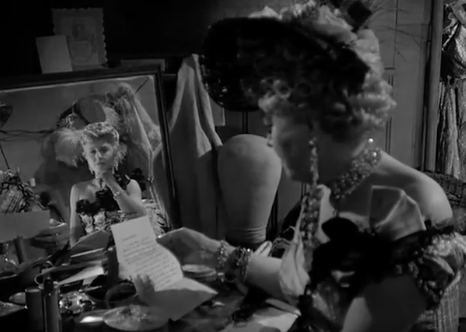
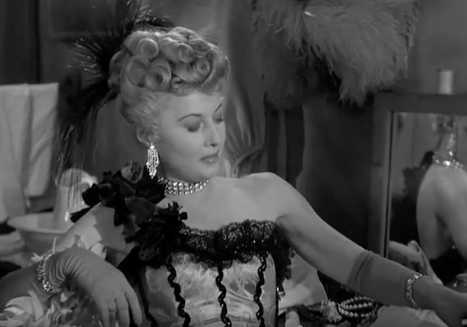
Barbara plays a struggling vaudeville actress (I KNOW). She actually used to be a wife and mother but she abandoned her family and ran away from the town of Riverdale (I gasped because I have a problem). But one day she gets a letter from her daughter who wants her to come see her school play. She decides to go but is ashamed. And so Barbara pretends to be a successful actress (HMMMM… – I’m just saying, the 50s were not exactly the biggest for her) and has to deal with (some of) her family members’ doubts.
This is not among the greatest Douglas Sirk films I have seen, it is much more modest (black-and-white, less than 80 minutes long), but his examination of human (especially female) psyche is still there, the melancholy is still there, the skill is still there.
That was a busy day! And so much marriage content! I originally had two more movies planned. But I think I won’t be watching massive amount of movies this Summer Under the Stars. I hope to write at least a little bit, though, so stay tuned!
 Swingin' at the Seance